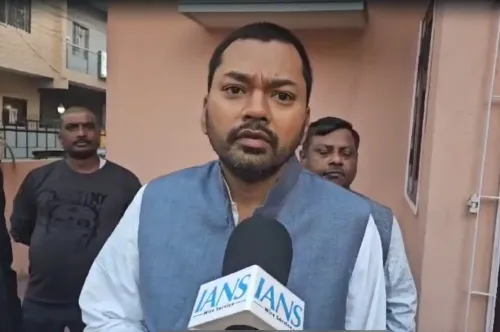
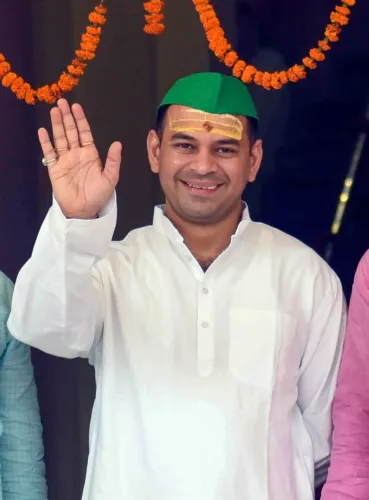
Nishant Kumar vows no compromise on crime, corruption
Synopsis
Bihar Health Minister Nishant Kumar pledged not to compromise on crime, corruption or communalism, invoking father Nitish Kumar's political principles. At a Patna party event, he also outlined travel-time and green-cover targets while defending initiatives from his father's tenure.
Key Takeaways
Bihar Health Minister Nishant Kumar made the pledge at a Good Governance Day event in Patna on 24 November .
He said he would not compromise on crime, corruption or communalism, principles he attributed to former chief minister Nitish Kumar .
Nishant claimed prohibition had improved women's dignity and helped reduce domestic violence.
He said Bihar aimed to bring all parts of the state within four hours of Patna by 2027 and three hours by 2035 .
He claimed Bihar 's green cover had risen from around 9 per cent in 2001 to 15 per cent , with a 17 per cent target for 2028 .
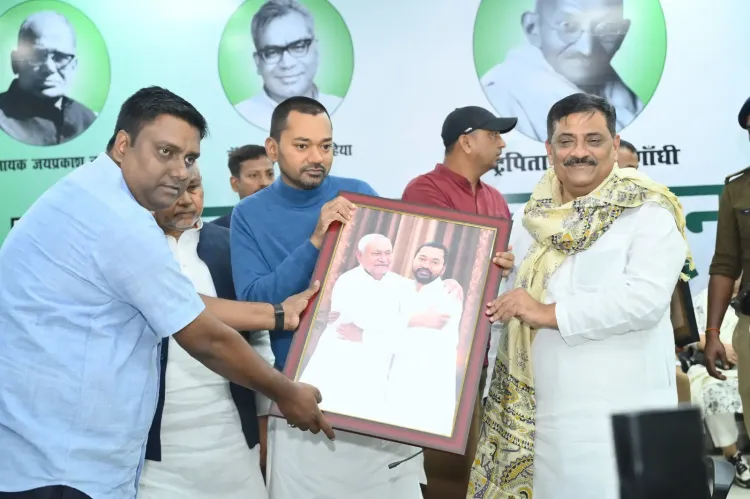
Bihar Health Minister Nishant Kumar pledged in Patna on 24 November to uphold the political principles of his father, former chief minister Nitish Kumar, saying he would not compromise on crime, corruption or communalism. Addressing party leaders and workers at the JD(U) state office on Good Governance Day, he also reviewed initiatives from his father's 20 years in power.
Nishant said he had learnt from his father that politics was about serving people rather than seeking positions or prestige. He urged party leaders, workers and elected representatives to maintain the same commitment.
Commitment to Nitish Kumar's principles
“I have learnt from my father that there should never be any compromise on crime, corruption and communalism. I will also never compromise on these principles,” Nishant Kumar said.
The health minister said he would discharge his responsibilities sincerely and coordinate with senior party leaders, grassroots workers and elected representatives. He also said he would work to strengthen the JD(U) organisation.
His remarks placed the former chief minister's approach at the centre of his own stated political priorities. He said Nitish Kumar had shown over two decades that politics could bring social change.
Prohibition and minority welfare claims
Discussing the prohibition policy introduced during his father's tenure, Nishant claimed it had improved women's dignity and helped reduce domestic violence. He also argued that families were increasingly spending money previously used for alcohol on children's education and other essential needs.
On minority welfare, he said the community's condition, particularly that of Muslim teachers, had been poor before 2005. He cited the construction of boundary walls around nearly 9,000 graveyards and measures addressing cases arising from the 1989 Bhagalpur riots.
Nishant said efforts had been made to secure justice for victims and punishment for those responsible. He also referred to welfare initiatives for divorced Muslim women and the role of the Urdu Academy, Bihar State Madrasa Education Board, Shia Waqf Board and Minority Commission.
Road connectivity and travel targets
The minister recalled what he described as the poor condition of roads in Bihar before 2005 and cited the construction of roads, bridges and flyovers under various programmes, including the Mukhyamantri Gram Sampark Yojana.
He said the state had achieved its 2024 target of bringing every part of Bihar within five hours of Patna. According to Nishant, the government now aims to reduce that travel time to four hours by 2027 and three hours by 2035.
Those targets set out a longer-term measure for the connectivity initiatives he discussed, although his remarks did not specify further implementation details.
Green cover, water and the road ahead
Nishant said the Jal-Jeevan-Hariyali campaign was among the initiatives associated with a rise in Bihar's green cover. He claimed the figure had increased from around 9 per cent in 2001 to 15 per cent currently, with a target of 17 per cent by 2028.
He also cited the Gangajal Udbhav Yojana, saying Ganga water had been supplied to Gaya, Rajgir, Nalanda and Nawada through the programme.
The minister expressed confidence that his father's development initiatives were continuing under Chief Minister Samrat Choudhary, with support from the Centre led by Prime Minister Narendra Modi. He said the objective was to improve lives and ensure development reached every section of society, while pledging to carry out his ministerial duties with integrity.
Point of View
But a pledge against crime, corruption and communalism must be judged against measurable outcomes. His claims about prohibition, green cover and road connectivity also warrant scrutiny of the underlying evidence and access to public data. The travel-time targets offer an opportunity for the state to publish consistent progress reports rather than rely on assurances alone.
NationPress
24 Nov 2026
Frequently Asked Questions
What did Nishant Kumar say about Nitish Kumar's principles?
Nishant Kumar said he would not compromise on crime, corruption or communalism, principles he said he learnt from his father, Nitish Kumar. He made the remarks at a Good Governance Day event in Patna.
What did Nishant Kumar claim about Bihar's prohibition policy?
Nishant Kumar claimed prohibition had improved women's dignity and helped reduce domestic violence. He also argued that families were spending more on children's education and other essential needs instead of alcohol.
What are Bihar's targets for travel time to Patna?
According to Nishant Kumar, Bihar aims to bring every part of the state within four hours of Patna by 2027 and three hours by 2035. He said the state had achieved its five-hour target in 2024.
What did Nishant Kumar say about Bihar's green cover?
Nishant Kumar claimed Bihar's green cover had risen from around 9 per cent in 2001 to 15 per cent currently. He cited a target of 17 per cent by 2028.
Which minority welfare initiatives did Nishant Kumar highlight?
Nishant Kumar cited boundary walls around nearly 9,000 graveyards, measures concerning the 1989 Bhagalpur riots and welfare initiatives for divorced Muslim women. He also mentioned the work of several minority institutions.