NITI Aayog Unveils Insightful Reports on R&D Facilitation
Synopsis
NITI Aayog's latest reports unveil critical insights into India's research environment, offering actionable recommendations aimed at enhancing funding, governance, and innovation in R&D. Discover how these findings could transform the research landscape.
Key Takeaways
NITI Aayog's reports focus on improving India's R&D ecosystem.
Actionable recommendations are provided for better funding and governance.
Emphasis on private sector involvement to enhance research.
Reports were based on extensive consultations with over 850 scientists.
Call for a more flexible and collaborative research environment.
New Delhi, April 10 (NationPress) NITI Aayog has unveiled two essential reports entitled Facilitating Research & Development in India and The Survey Findings on R&D in India on Friday. These reports are designed to foster a more efficient, supportive, and innovation-centric research environment in the nation.
These documents offer a thorough evaluation of the state of India's research and development landscape and propose actionable strategies to enhance funding approaches, institutional management, regulatory standards, and the application of research.
Shared with pertinent ministries and departments, the reports emphasize the necessity for a more trust-based, results-driven, and supportive atmosphere that empowers researchers and institutions to reach their full capabilities.
Originating from a detailed nine-month initiative, the reports involved outreach to over 400 institutional leaders and gathered insights from more than 850 eminent scientists and researchers nationwide, as stated by NITI Aayog.
Formal release of the reports was performed by Suman Bery, Vice Chairman of NITI Aayog, alongside Chief Guest Jitendra Singh, Minister of State (Independent Charge) for the Ministry of Science and Technology, with senior officials and representatives from academia and industry in attendance.
During his address, Jitendra Singh highlighted that the report is grounded in empirical evidence and accurately portrays the current research ecosystem.
He pointed out that research thrives in an unobstructed environment and acknowledged India's robust human resource base.
He also advocated for increased participation from the private sector, particularly through corporate social responsibility efforts, to support and sustain research and innovation, especially in emerging fields and startups.
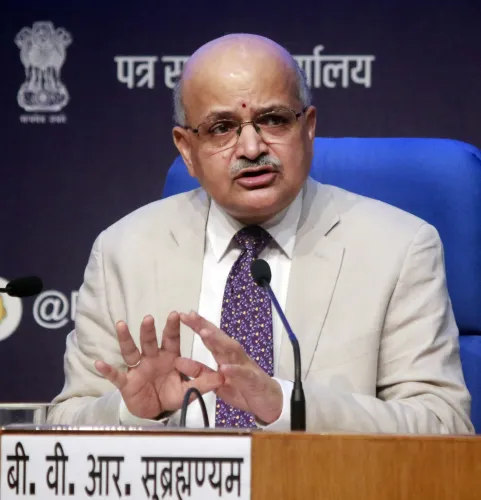
Suman Bery stressed the importance of translating research into real-world applications as a primary focus. He underscored the need for institutional frameworks for mission-oriented research and development, which should include greater private sector involvement.
He further noted that as research increasingly transcends various domains, the demand for flexible and responsive systems becomes crucial, as rigid structures may hinder collaboration, while adaptable frameworks can facilitate new lines of inquiry.
Bery urged attendees to view this report as a guiding document for enhancing the overall research and development ecosystem in the country.
The event began with a welcome address and presentation by Prof. Vivek Kumar Singh, Senior Adviser at NITI Aayog, who outlined the report’s aims, methodology, and key findings.
He pointed out that the report identifies obstacles across multiple thematic domains and offers actionable recommendations derived from a data-driven approach that includes nationwide surveys, stakeholder consultations, and regional meetings.
Prof. Ajay Kumar Sood, Principal Scientific Adviser to the Government of India, remarked that improving the ease of conducting research and development is an ongoing endeavor and stressed the importance of implementing the report’s suggestions, with the document serving as a dynamic working tool.
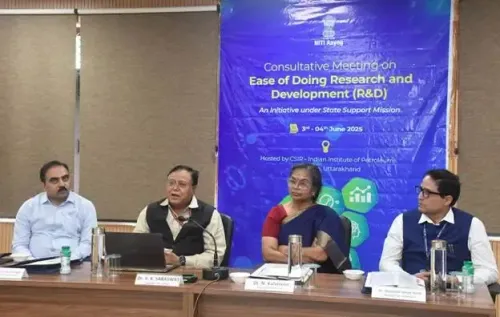
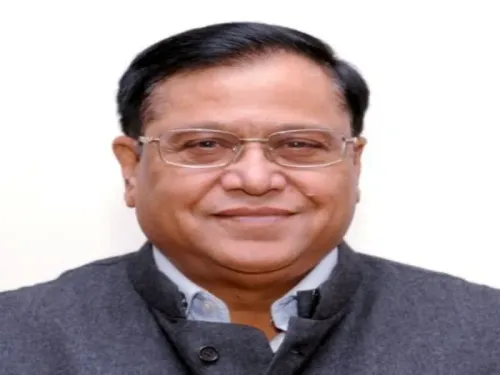
V. K. Saraswat, a member of NITI Aayog, emphasized the diversity of institutional contexts in which research is undertaken across India, while also noting a consistent set of challenges faced by researchers.
He pointed out that these challenges encompass both internal institutional processes and external ecosystem factors, including funding frameworks, policy regulations, and regulatory systems.
Point of View
The recent reports by NITI Aayog signify an important step towards revolutionizing India's research and development landscape. By addressing key challenges and advocating for a collaborative environment, these findings aim to empower researchers and institutions, positioning India as a global leader in innovation.
NationPress
19 Sept 2026
Frequently Asked Questions
What are the main objectives of the NITI Aayog reports?
The reports aim to assess India's R&D ecosystem and provide actionable recommendations to enhance funding, governance, and the overall facilitation of research activities.
Who were the key figures present at the report's release?
The reports were released by Suman Bery, Vice Chairman of NITI Aayog, and Jitendra Singh, Minister of State for Science and Technology.
How long did the research for these reports take?
The research and outreach for the reports took approximately nine months, involving extensive consultations with institutional leaders and scientists.
What is the significance of private sector participation in R&D?
Increased private sector participation can enhance research capabilities, drive innovation, and support emerging startups through initiatives like corporate social responsibility.
What are the expected outcomes of implementing the report's recommendations?
Implementing the recommendations is expected to create a more efficient, supportive, and innovation-driven research ecosystem in India.