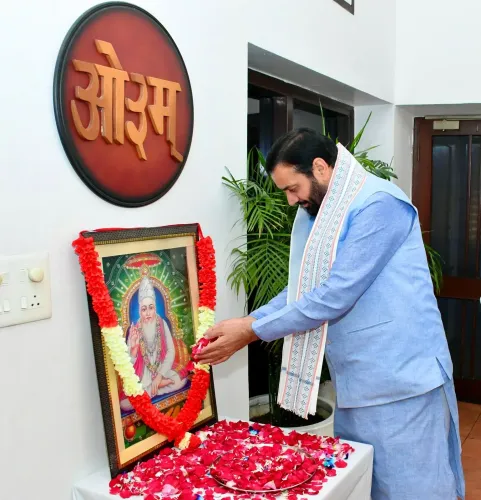
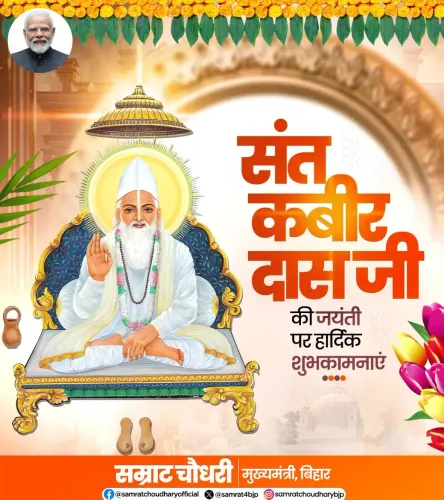
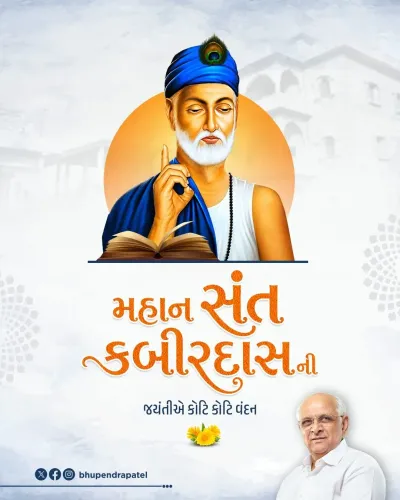
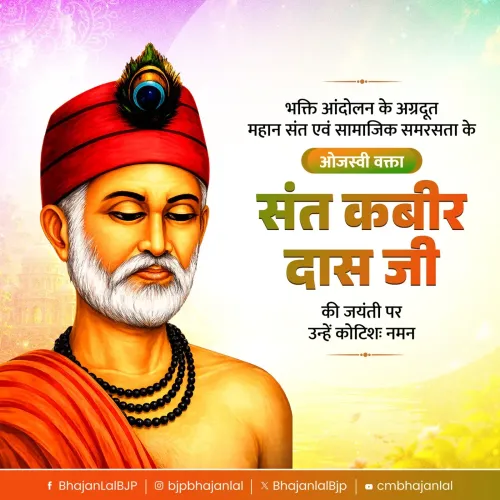
Nitish Kumar greets nation on Kabir Jayanti 2026

Synopsis
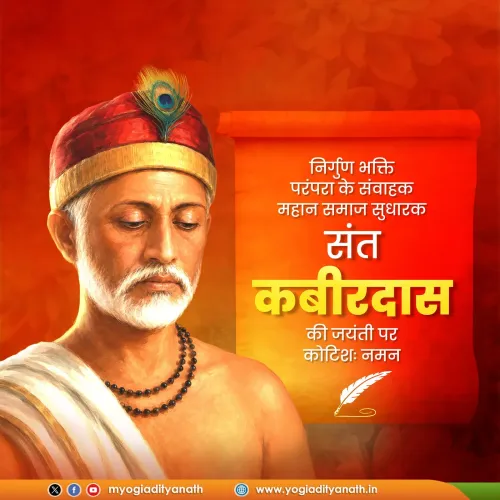
Former Bihar CM Nitish Kumar marked Kabir Jayanti on 29 June 2026 by honouring Sant Kabir Das as a towering Bhakti-era poet who fought social evils through verse, calling his life philosophy inspirational and worthy of emulation for all.
Key Takeaways
Former Bihar Chief Minister Nitish Kumar posted Kabir Jayanti greetings on 29 June 2026 .
He described Sant Kabir Das as a great poet of the Bhakti period of Hindi literature.
Kumar highlighted Kabir's role in opposing social evils of his era through his compositions.
He called Kabir's life philosophy and poetry 'inspirational and worthy of emulation for all.' Kabir Jayanti is observed on the Purnima of the Hindu month of Jyeshtha each year.
The occasion holds political significance in states like Bihar with large Kabir Panth and OBC communities.
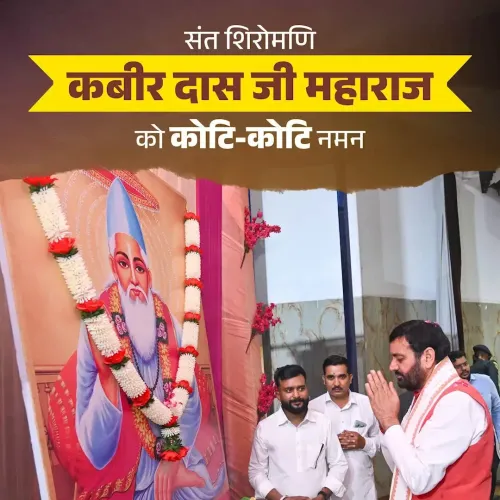
Former Bihar Chief Minister and Janata Dal (United) national president Nitish Kumar on Monday, 29 June 2026 extended warm greetings to the nation on the occasion of Kabir Jayanti, honouring the 15th-century poet-saint's enduring legacy of social reform and devotional verse.
In his post, Kumar wrote: 'कबीर जयंती के अवसर पर हार्दिक शुभकामनाएं' ('Heartfelt greetings on the occasion of Kabir Jayanti'), describing Sant Kabir as a great poet of the Bhakti period of Hindi literature who used his compositions to oppose the social evils prevalent in his time. He added that Kabir's life philosophy and poetry are 'inspirational and worthy of emulation for all of us.'
Context
Kabir Jayanti is observed annually on the full moon day (Purnima) of the Hindu month of Jyeshtha, commemorating the birth anniversary of Sant Kabir Das. The saint is believed to have been born around 1440 CE in Varanasi (present-day Uttar Pradesh) and is revered across religious communities for his inclusive spiritual message. His dohas (couplets) remain widely taught in Indian schools and recited in households across the country.
Kumar's tribute comes as Bihar, a state with deep historical and cultural ties to the Bhakti movement, prepares for various state-level programmes marking the occasion. The Bhakti movement, which flourished between the 14th and 17th centuries, produced poets who challenged caste hierarchies and religious orthodoxy through vernacular verse.
Policy Backdrop
Sant Kabir Das occupies a significant place in India's official cultural memory. The Kabir Chaura Math in Varanasi and the Maghar site in Uttar Pradesh — where the saint is said to have spent his final years — receive state patronage and draw pilgrims from across South Asia. Bihar's government has periodically invoked Kabir's egalitarian philosophy in social welfare messaging, particularly in campaigns against caste discrimination and untouchability.
Nitish Kumar, who has led Bihar for most of the period since 2005, has frequently referenced Bhakti-era saints in public communication, aligning state governance narratives with themes of social harmony and reform that these figures represent.
Stakeholders and Impact
Kabir's followers — the Kabir Panth community — number in the millions across Bihar, Uttar Pradesh, Chhattisgarh, Madhya Pradesh, and the diaspora. His teachings, which reject idol worship and caste distinctions, have made him a unifying figure for communities across Hindu and Muslim traditions. Greetings from senior political figures on Kabir Jayanti carry symbolic weight in states with large Dalit and OBC constituencies, where Kabir is particularly venerated.
For Nitish Kumar and the JD(U), publicly honouring Kabir reinforces the party's positioning as a champion of social justice and backward-class interests — a constituency that has been central to Bihar's political arithmetic for decades.
What's Next
State governments across northern and central India are expected to hold official commemorations, cultural programmes, and doha-recitation events through the day. The Bihar government typically organises district-level events on Kabir Jayanti, and Kumar's public message is likely to set the tone for the party's outreach on the occasion. The broader political significance lies in how Bhakti-era icons continue to serve as touchstones for inclusive governance messaging in an election-conscious landscape.
Point of View
Kumar subtly aligns his party with Dalit and OBC aspirations without making an explicitly political statement. The tribute fits a broader pattern among northern Indian leaders of using Bhakti-era saints as politically safe but symbolically loaded reference points. In an election-conscious environment, such messaging serves to consolidate communities for whom Kabir is not merely a historical figure but a living cultural identity.
NationPress
27 Sept 2026
Frequently Asked Questions
Why did Nitish Kumar post about Kabir Jayanti?
Nitish Kumar extended greetings on Kabir Jayanti on 29 June 2026 to honour Sant Kabir Das, describing him as a great Bhakti-era poet who opposed social evils and whose philosophy remains inspirational.
When is Kabir Jayanti celebrated in 2026?
Kabir Jayanti in 2026 falls on 29 June, observed on the Purnima (full moon) of the Hindu month of Jyeshtha to mark the birth anniversary of Sant Kabir Das.
Who was Sant Kabir Das?
Sant Kabir Das was a 15th-century poet-saint born around 1440 CE in Varanasi, revered as a major figure of the Bhakti movement in Hindi literature. His couplets, or dohas, challenged caste hierarchies and religious orthodoxy.
What is the Bhakti movement that Nitish Kumar referenced?
The Bhakti movement was a devotional tradition that flourished in India between the 14th and 17th centuries, producing poet-saints who spread spiritual messages through vernacular languages and opposed caste discrimination and ritual orthodoxy.
What is the political significance of Kabir Jayanti in Bihar?
Kabir Jayanti holds considerable political weight in Bihar because the Kabir Panth community and OBC groups who venerate the saint form a significant part of the state's electorate, making public tributes by leaders like Nitish Kumar symbolically important.