CM Nitish Kumar Unveils 'Triple T' Framework, 9 Vigilance Courts for Bihar
Synopsis
Chief Minister Nitish Kumar has announced a 'Triple T' — Transparency, Technology and Trust — framework to make Bihar corruption-free, along with Special Vigilance Courts in all nine administrative divisions of the state.
Key Takeaways
The Chief Minister's Office of Bihar announced the 'Triple T' framework — Transparency, Technology and Trust — as the guiding principle for anti-corruption governance.
Special Vigilance Courts will be established in each of Bihar's nine administrative divisions to handle corruption and vigilance cases.
Chief Minister Nitish Kumar has led Bihar's governance agenda since 2005 , with anti-corruption institutional measures a recurring priority.
Bihar enacted the Lokayukta Act in 2012 , establishing an independent anti-corruption ombudsman — a precursor to the current push.
The announcement follows a broader national pattern of state governments using specialised courts and digital tools to address public-sector corruption.
Formal executive or legislative orders, budget allocations, and judicial appointments will be needed to operationalise the nine courts.
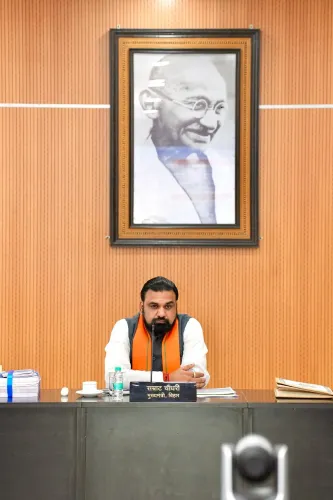
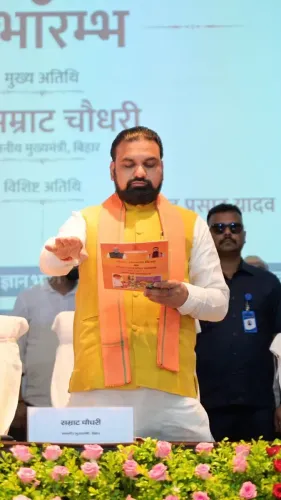
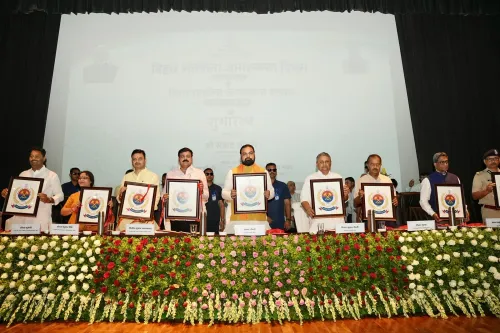
The Chief Minister's Office of Bihar announced on 2 July 2026 that Chief Minister Nitish Kumar has unveiled a governance framework centred on 'Triple T' — Transparency, Technology and Trust — to make Bihar corruption-free and strengthen good governance. A key element of the announcement is the establishment of Special Vigilance Courts in all nine administrative divisions of the state.
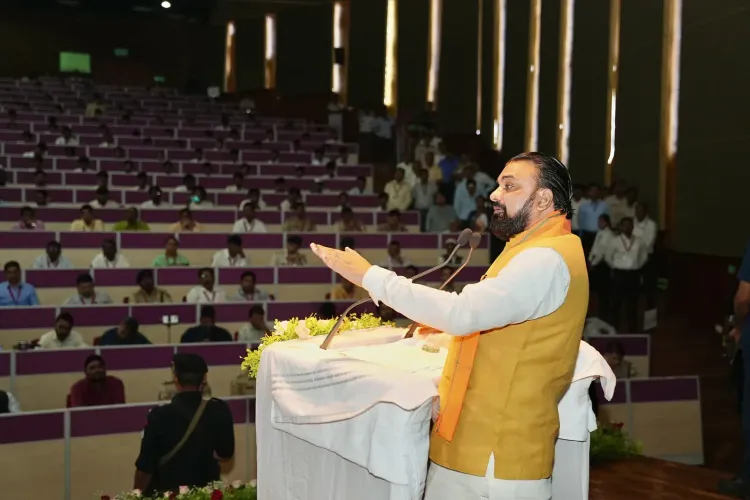
Addressing the occasion, the Chief Minister stated, as quoted by his office: 'Triple T (Transparency, Technology aur Trust) ke madhyam se Bihar ko bhrashtachar mukt banaya jaayega' — 'Through Triple T (Transparency, Technology and Trust), Bihar will be made free of corruption and good governance will be given new strength.'
Context
Nitish Kumar, who has governed Bihar across multiple terms since 2005, has repeatedly placed institutional anti-corruption measures at the centre of his administration's agenda. The 'Triple T' formulation encapsulates a three-pronged approach: making government processes transparent, deploying technology to reduce human discretion, and rebuilding public trust in state institutions. The announcement was made at an official event, the precise details of which have not been independently confirmed. The decision to establish Special Vigilance Courts in each of Bihar's nine divisions — Patna, Tirhut, Saran, Darbhanga, Kosi, Purnia, Bhagalpur, Munger, and Magadh — signals an intent to decentralise anti-corruption adjudication and bring it closer to affected communities across the state.Policy Backdrop
Bihar's institutional anti-corruption architecture has been built incrementally over two decades. The state enacted the Lokayukta Act in 2012, creating an independent ombudsman to receive and investigate complaints against public officials. Successive administrations have also worked to digitise land records, public distribution systems, and beneficiary databases — all aimed at reducing points of human intervention where corruption can occur. The 'Triple T' framework appears to consolidate these strands into a named policy identity, pairing judicial mechanisms — the vigilance courts — with technology-enabled transparency. Comparable fast-track anti-corruption or vigilance court structures have been introduced in several other Indian states over the past decade, reflecting a wider sub-national trend.Stakeholders and Impact
State officials and public servants across Bihar's bureaucracy will be the primary subjects of the vigilance courts' jurisdiction. For ordinary Bihar residents, dedicated divisional courts could mean faster disposal of corruption complaints that might otherwise languish in overburdened general courts. Civil society groups tracking governance have long argued that the absence of specialised anti-corruption benches is a structural bottleneck in securing convictions. The judiciary will need to absorb the institutional and resource demands of nine new courts, raising questions about bench strength, infrastructure, and staffing — details that will emerge through the legislative or executive orders required to operationalise the announcement.What's Next
The operationalisation of the nine Special Vigilance Courts will require formal executive or legislative action, and the timeline for that process has not yet been made public. Observers will watch for gazette notifications, budget allocations, and the appointment of dedicated judicial officers to each divisional court. The pace at which cases are registered and disposed of will ultimately determine whether the 'Triple T' framework translates from a governance slogan into a measurable reduction in public-sector corruption across Bihar.Point of View
Institution-building governance — adding a catchy framework to a policy lineage that stretches from the Lokayukta Act to land-record digitisation. Anchoring the initiative in nine divisional vigilance courts is a structural move, not merely rhetorical: it attempts to decentralise anti-corruption adjudication in a state where centralised oversight has historically struggled to reach district-level malfeasance. The political timing is also notable — framing governance as a deliverable reinforces the Chief Minister's positioning as an administrator rather than a purely ideological actor. Whether the courts are staffed and functional within a credible window will determine if 'Triple T' joins Bihar's list of durable reforms or becomes another aspirational acronym.
NationPress
1 Oct 2026
Frequently Asked Questions
What is Bihar's 'Triple T' framework announced by CM Nitish Kumar?
'Triple T' stands for Transparency, Technology and Trust — a governance framework announced by Chief Minister Nitish Kumar to make Bihar free of corruption and strengthen good governance through institutional and digital measures.
How many Special Vigilance Courts will be set up in Bihar?
Nine Special Vigilance Courts will be established, one in each of Bihar's nine administrative divisions, to handle corruption and vigilance-related cases.
What are Bihar's nine administrative divisions?
Bihar's nine divisions are Patna, Tirhut, Saran, Darbhanga, Kosi, Purnia, Bhagalpur, Munger, and Magadh.
What is Bihar's Lokayukta and how does it relate to this announcement?
Bihar enacted the Lokayukta Act in 2012 to create an independent anti-corruption ombudsman. The new vigilance courts build on that institutional foundation by adding dedicated judicial forums at the divisional level.
When did Nitish Kumar first become Chief Minister of Bihar?
Nitish Kumar first became Chief Minister of Bihar in 2005 and has served multiple terms since, with governance reform and anti-corruption measures as consistent policy priorities.