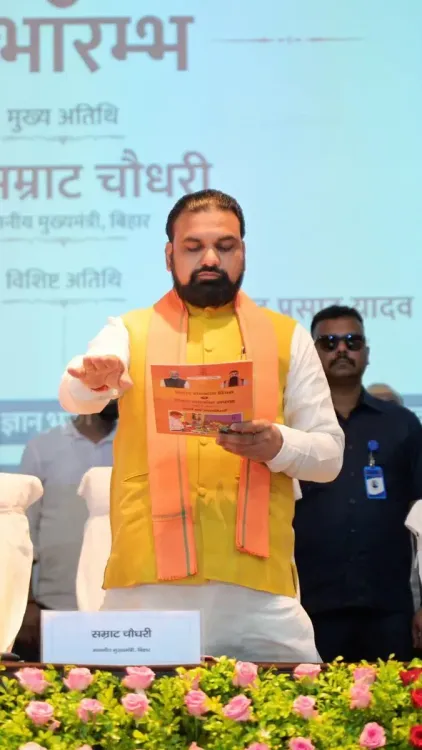
CM Samrat Choudhary Launches Bihar Vigilance Awareness Day
Synopsis
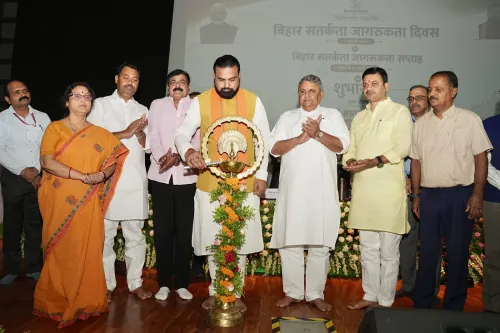
Bihar Chief Minister Samrat Choudhary launched Bihar Satarkata Jagrukta Diwas on 2 July 2026, pledging transparent, accountable, and corruption-free government services for every citizen under the #NewBihar vision.
Key Takeaways
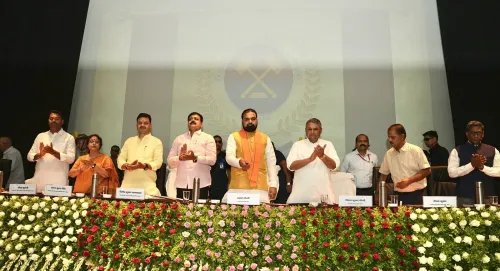
Bihar CM Samrat Choudhary launched Bihar Satarkata Jagrukta Diwas on 2 July 2026 .
The initiative commits to time-bound, transparent, accountable, and corruption-free delivery of government services.
The campaign is framed as a resolve to strengthen good governance and public trust , not merely a symbolic event.
India's Central Vigilance Commission has run a national Vigilance Awareness Week since 1999 , which state-level drives like this build upon.
The launch aligns with Bihar's broader administrative modernisation efforts, including right-to-service legislation and digital grievance portals.
Follow-up announcements on grievance redressal mechanisms and performance audits are anticipated.
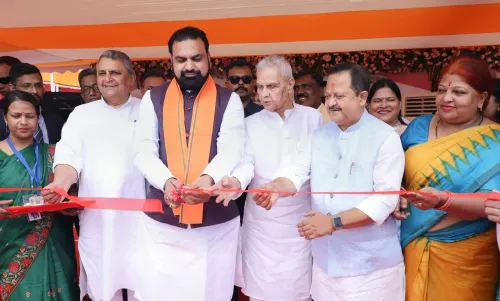
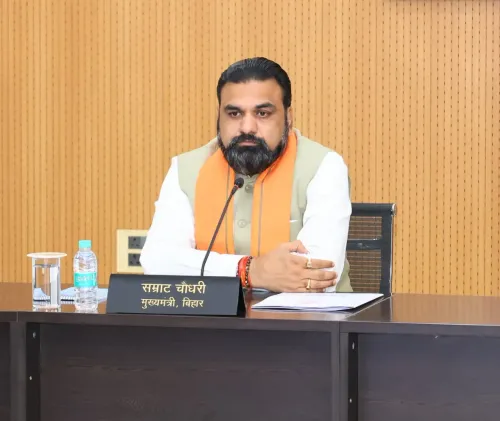
Bihar Chief Minister Samrat Choudhary on Thursday, 2 July 2026, launched the Bihar Satarkata Jagrukta Diwas (Bihar Vigilance Awareness Day), framing the initiative as a commitment to strengthening good governance, transparency, and public trust in the state's administrative machinery.
Context
Posting on X, CM Choudhary described the day as more than a campaign — calling it a 'sankalp' (resolve) to empower citizens. In his words: 'This is not merely a campaign, but a resolve to further strengthen good governance, transparency, and public trust. Our government's goal is that every citizen receives government services in a time-bound, transparent, accountable, and corruption-free manner.' The post was accompanied by a video and tagged #NewBihar, the ruling dispensation's signature development hashtag.
Policy Backdrop
India's Central Vigilance Commission has observed an annual Vigilance Awareness Week since 1999, encouraging government departments at both central and state levels to promote integrity in public administration. Bihar's initiative mirrors this national template while anchoring it within the state's own governance reform agenda. NDA-governed states have increasingly linked such awareness drives to measurable targets — time-bound service delivery, reduced administrative leakages, and digitisation of grievance redressal.
Bihar has in recent years pursued right-to-service legislation and online grievance portals as part of broader administrative modernisation. The Bihar Satarkata Jagrukta Diwas fits within that continuum, reinforcing anti-corruption messaging at the grassroots level and signalling accountability benchmarks to state government employees.
Stakeholders and Impact
The primary beneficiaries of such an initiative are Bihar's ordinary citizens — particularly those who interact with frontline government services such as land records, welfare scheme disbursements, and public health delivery. For state government employees, the day carries an implicit accountability signal: services must be delivered transparently and within stipulated timelines. Civil society groups and anti-corruption watchdogs are also key stakeholders, as awareness campaigns of this nature typically invite public participation in reporting malpractice.
The broader political significance lies in CM Choudhary's effort to position the BJP-led government in Bihar as a credible steward of clean administration — a narrative that carries electoral weight in a state with a historically complex relationship with governance and accountability.
What's Next
The launch of Bihar Satarkata Jagrukta Diwas is expected to be followed by departmental-level programmes, training sessions for public servants, and potentially new announcements on grievance redressal mechanisms or performance audits. Whether the state rolls out measurable targets — such as response-time mandates for specific services or a public dashboard for complaint resolution — will determine how substantive the initiative proves beyond its symbolic opening. Observers will watch for follow-up policy circulars from the Bihar government in the coming weeks.
Point of View
Timed to reinforce the BJP's 'clean administration' credential in a state where public trust in government services has historically been contested. By anchoring the campaign in the language of 'sankalp' and citizen entitlement, the Chief Minister is signalling a shift from reactive anti-corruption enforcement to proactive accountability culture. This fits a wider NDA pattern of pairing administrative digitisation with high-visibility awareness campaigns, though the real test will lie in measurable service-delivery outcomes rather than the launch optics. If the day generates concrete follow-up — performance dashboards, response-time mandates — it could meaningfully advance Bihar's governance reform arc.
NationPress
1 Oct 2026
Frequently Asked Questions
What is Bihar Satarkata Jagrukta Diwas?
Bihar Satarkata Jagrukta Diwas, or Bihar Vigilance Awareness Day, is a state government initiative launched by Chief Minister Samrat Choudhary on 2 July 2026 to promote transparency, accountability, and corruption-free delivery of public services in Bihar.
Who launched Bihar Vigilance Awareness Day 2026?
Bihar Chief Minister Samrat Choudhary launched the Bihar Satarkata Jagrukta Diwas on 2 July 2026, announcing it as a commitment to good governance and public trust.
What is the goal of Bihar's vigilance awareness campaign?
The campaign aims to ensure that every citizen of Bihar receives government services in a time-bound, transparent, accountable, and corruption-free manner, as stated by CM Samrat Choudhary.
Is Bihar Satarkata Jagrukta Diwas linked to the Central Vigilance Commission?
Bihar's initiative mirrors the spirit of India's Central Vigilance Commission, which has observed an annual Vigilance Awareness Week since 1999 to promote integrity in public administration, though the state campaign is a separate, Bihar-specific launch.