Rajasthan CMO pushes for in-state use of refinery outputs
Synopsis
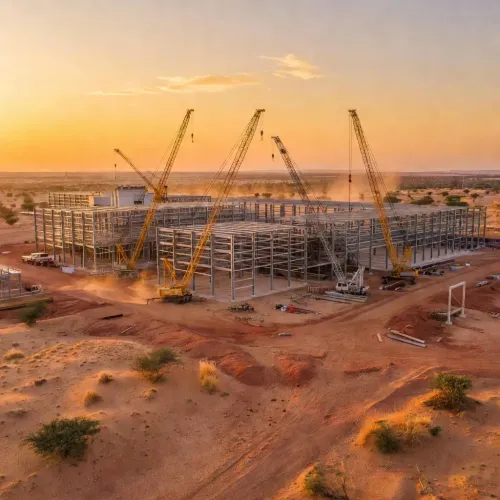
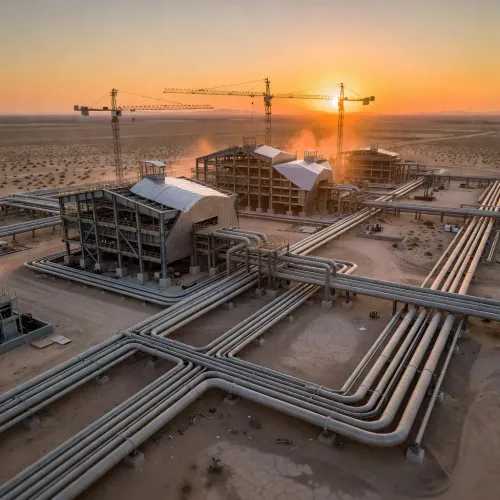
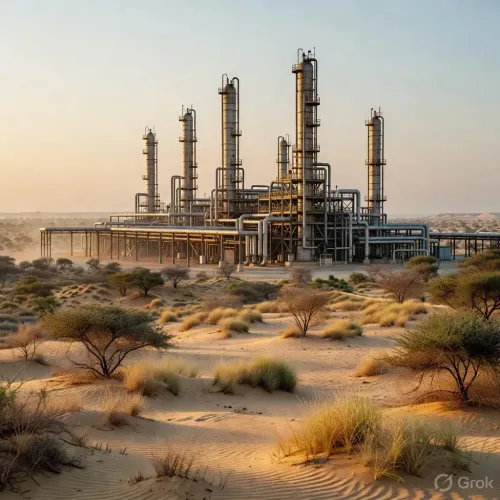
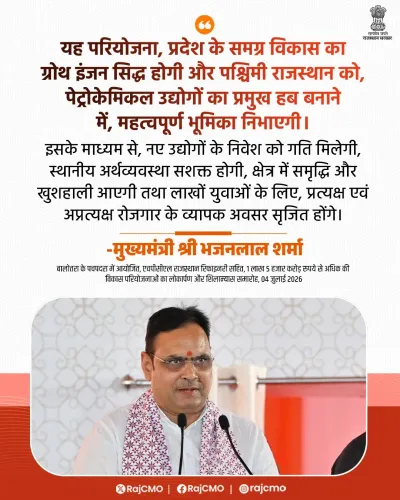
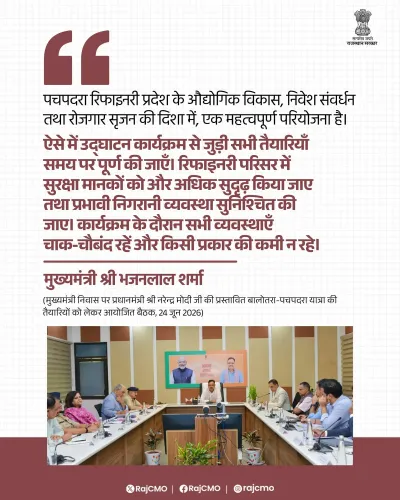
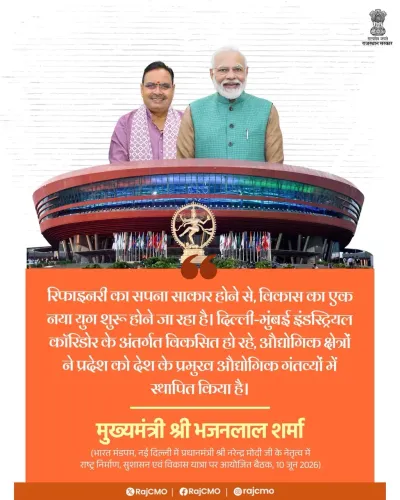
The Chief Minister's Office of Rajasthan has called for the state's petrochemical zone to be developed so refinery-derived products are consumed by local industrial units within the state, backing CM Bhajanlal Sharma's push to build a downstream manufacturing ecosystem around Rajasthan's hydrocarbon resources.
Key Takeaways
The Rajasthan CMO posted on 15 November 2026 directing that the petrochemical zone be designed for in-state use of refinery outputs by local industrial units.
The directive is addressed to Chief Minister Bhajanlal Sharma and tagged with the government's branding campaign #आपणो_अग्रणी_राजस्थान .
Rajasthan holds significant hydrocarbon reserves in the Barmer basin , and policy since the early 2020s has targeted downstream value addition within the state.
A cluster-based petrochemical zone anchored to refinery feedstock would lower input costs for downstream manufacturers and generate employment within Rajasthan.
Specific details — land acquisition, investment MoUs, timelines — are yet to be announced publicly.
Rajasthan's industrial ambitions got a sharper edge on Sunday, 15 November 2026, when the Chief Minister's Office of Rajasthan posted a pointed directive on X: develop the state's petrochemical zone so that products derived from the refinery are consumed within the state itself, by its own industrial units — not shipped out as raw outputs for others to process and profit from.
The post, addressed to Chief Minister Bhajanlal Sharma and tagged with #आपणो_अग्रणी_राजस्थान ('Our Leading Rajasthan'), lays out the guiding philosophy in one clear sentence: 'The petrochemical zone should be developed with the vision that the products obtained from the refinery can be used within the state itself, by various industrial units.'Rajasthan's refinery-to-industry value chain goal
Rajasthan sits atop one of India's significant hydrocarbon reserves, centred on the Barmer basin in the state's west. For years, the challenge has been the same one that haunts resource-rich regions everywhere: raw output leaves the state, the value addition — and the jobs — happen elsewhere. The directive from the CMO is a direct answer to that problem.
By anchoring a dedicated petrochemical zone around refinery outputs, the state government is signalling a cluster-based industrial model — where plastics manufacturers, chemical processors, polymer-users and packaging units all set up shop close to the feedstock source. The logic is straightforward: shorter supply chains, lower input costs, and manufacturing jobs that stay in Rajasthan.
CM Bhajanlal Sharma's industrial push since December 2023
Chief Minister Bhajanlal Sharma, who took office in December 2023 leading a BJP government, has consistently framed industrial investment and infrastructure as the twin engines of Rajasthan's growth. The petrochemical zone directive fits squarely into that agenda — transforming the state from a supplier of raw hydrocarbons into a downstream manufacturing hub.
Rajasthan's policy lineage on this front stretches back to the early 2020s, when successive administrations linked Barmer's oil fields to refinery and downstream petrochemical ambitions. What the 15 November 2026 post signals is that the current government wants that vision to be operationalised with intent — with the zone explicitly designed for in-state consumption of refinery products, not just proximity to the refinery.
What the petrochemical zone directive means in practice
The specific details — land acquisition, investment proposals, any MoUs with anchor tenants — are yet to surface publicly. But the framing itself is significant. Industrial clusters built around guaranteed feedstock access are among the most effective magnets for downstream manufacturers. If the zone is designed from the ground up with that philosophy, it changes the investment pitch: companies are not just buying land, they are buying into a supply-chain ecosystem.
The hashtag #आपणो_अग्रणी_राजस्थान — the government's signature branding for Rajasthan as an 'agrani' (frontrunner) state — signals this announcement is intended as part of a larger, outward-facing narrative around economic leadership in western India.
The refinery sits at the centre of that story. How quickly the zone moves from directive to deadline will determine whether Rajasthan's hydrocarbon wealth finally stays home.
Point of View
But structurally incentivising domestic value capture through zone design. For CM Bhajanlal Sharma, it dovetails with BJP's broader 'Make in Rajasthan' narrative ahead of the state's next investment summit cycle. The harder test is execution: Rajasthan has articulated this refinery-to-industry ambition across multiple administrations without fully closing the loop, and investors will watch for anchor unit commitments and infrastructure timelines before treating the vision as a plan.
NationPress
15 Nov 2026
Frequently Asked Questions
What is the Rajasthan petrochemical zone?
It is a proposed industrial development area in Rajasthan designed to house manufacturing units that can use products derived from the state's oil refinery as raw material, reducing dependence on external feedstock supply chains.
What did the Rajasthan CMO post about the petrochemical zone?
On 15 November 2026, the Chief Minister's Office posted that the petrochemical zone must be developed with the specific vision that refinery outputs are used within Rajasthan itself by various industrial units, rather than being exported for processing elsewhere.
What refinery is the Rajasthan petrochemical zone linked to?
Rajasthan's petrochemical ambitions are broadly linked to oil production from the Barmer basin in western Rajasthan, which has been the focus of downstream industrial development plans over the past decade.
Who is Bhajanlal Sharma and what is his role in Rajasthan's industrial policy?
Bhajanlal Sharma has been Chief Minister of Rajasthan since December 2023, leading a BJP government that has prioritised industrial investment and infrastructure development, including the push for downstream petrochemical capacity.
What is #AapnoAgrani Rajasthan?
#आपणो_अग्रणी_राजस्थान , meaning 'Our Leading Rajasthan', is the Bhajanlal Sharma government's branding campaign positioning Rajasthan as a frontrunner state in economic development and industrial growth.