Piyush Goyal Greets Jharkhand on Its 26th Foundation Day
Synopsis
On Jharkhand's 26th Foundation Day, Union Minister Piyush Goyal hailed the state as a land of tribal pride and warriors, invoked Birsa Munda's legacy of resistance, and expressed hope that Jharkhand would lead India's Viksit Bharat journey.
Key Takeaways
Piyush Goyal greeted Jharkhand residents on Foundation Day, 15 November 2026 , marking the state's 26th anniversary .
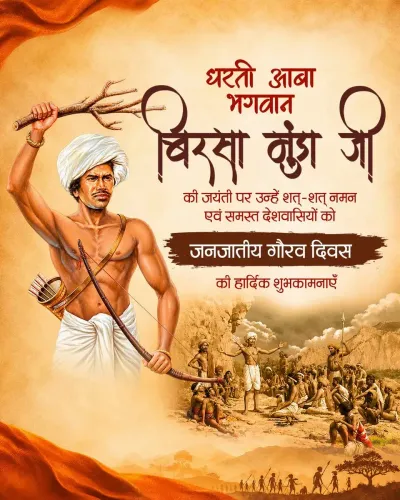
Goyal invoked Birsa Munda's struggle, courage, and self-respect as the guiding spirit for the state's development.
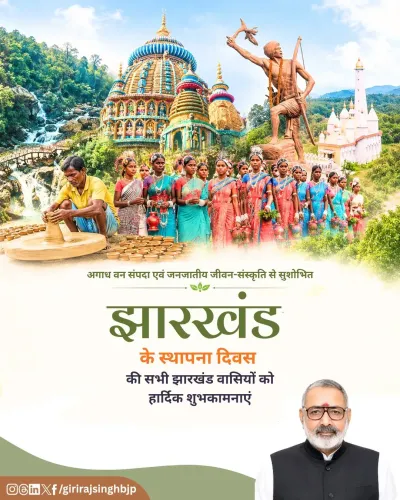
Jharkhand was created on 15 November 2000 from Bihar under the Bihar Reorganisation Act , becoming India's 28th state .
The date marks Birsa Munda's birth anniversary — his Ulgulan rebellion of 1899–1900 is the founding moral of the statehood movement.
Goyal linked Jharkhand's future to the Viksit Bharat national vision of developed-country status by 2047 .
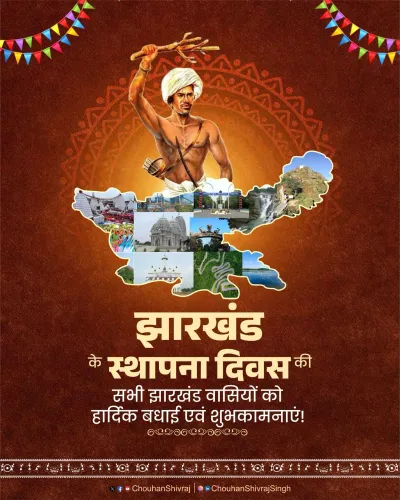
Twenty-six years after a movement forged in mineral hills and tribal pride finally won its own state, Union Commerce and Industry Minister Piyush Goyal extended greetings to the people of Jharkhand on its Foundation Day, 15 November 2026 — invoking the spirit of Birsa Munda and the ambition of a developed India in the same breath.
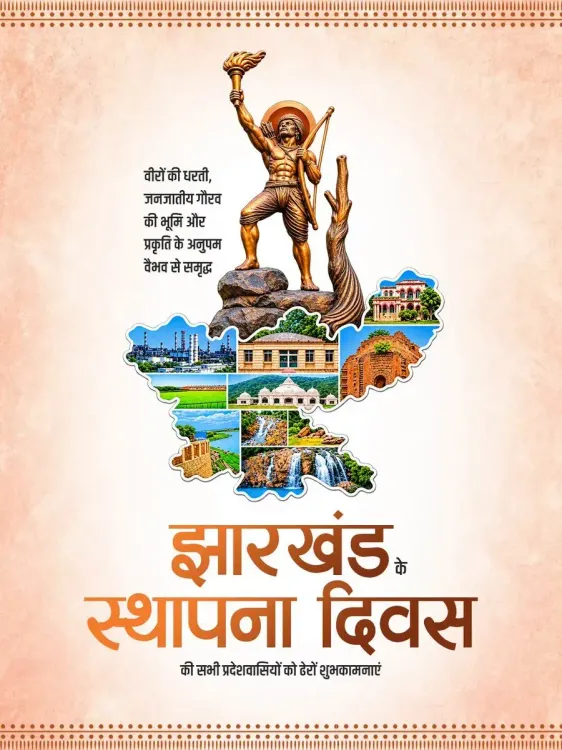
Posting on X in Hindi, Goyal described Jharkhand as 'वीरों की धरती, जनजातीय गौरव की भूमि' — 'the land of warriors and tribal pride' — and prayed that the state scale new heights of development guided by the 'struggle, courage and self-respect' of Birsa Munda.
The Rebellion That Made a State Possible
Birsa Munda's Ulgulan — the 'Great Tumult' of 1899–1900 — was a tribal uprising against British colonial land seizures in the Chotanagpur plateau. Though Munda died in British custody in 1900 at barely 25, his assertion of tribal identity and forest rights planted the seed of a separate statehood demand that took another century to bear fruit.
Jharkhand was finally carved out of Bihar on 15 November 2000 — Birsa Munda's birth anniversary — through the Bihar Reorganisation Act, becoming India's 28th state. The date was no accident; it was a deliberate act of historical homage.
Viksit Bharat and Jharkhand's Mineral Weight
Goyal's message anchors the state's future in the Viksit Bharat vision — the Government of India's drive to achieve developed-country status by 2047. For Jharkhand, that framing carries real economic gravity: the state sits atop some of the country's richest deposits of coal, iron ore, copper, and mica, making it structurally indispensable to India's industrial and energy ambitions.
Central ministers routinely mark state formation days with such messages, blending cultural homage with national development rhetoric. What sets Jharkhand's anniversary apart is that Birsa Munda is not merely a regional icon — he is a figure the BJP-led central government has elevated to national symbol status, with his portrait installed in the Central Hall of Parliament in 2021.
Point of View
A significant electoral constituency, while grounding a forward-looking economic pitch in a legitimising historical symbol. Foundation Day messages from central ministers rarely carry immediate policy weight, but they signal which regional identities the Centre considers nationally resonant. For Jharkhand, sitting on vast mineral reserves, that signal matters well beyond ceremony.
NationPress
15 Nov 2026
Frequently Asked Questions
When was Jharkhand formed and why on 15 November?
Jharkhand was formed on 15 November 2000 through the Bihar Reorganisation Act. The date was chosen to coincide with the birth anniversary of tribal leader Birsa Munda , honouring his central role in the region's identity and statehood movement.
Who was Birsa Munda?
Birsa Munda was a tribal leader from the Chotanagpur plateau who led the Ulgulan uprising of 1899–1900 against British colonial land seizures. He died in British custody in 1900 and remains a defining symbol of tribal resistance and self-respect across India.
What is Viksit Bharat and how does it relate to Jharkhand?
Viksit Bharat is the Government of India's vision to achieve developed-country status by 2047 . Jharkhand is considered strategically important to this goal given its enormous reserves of coal, iron ore, copper, and mica that underpin India's industrial and energy sectors.
What did Piyush Goyal say on Jharkhand Foundation Day 2026?
Goyal called Jharkhand 'the land of warriors and tribal pride,' wished all residents on the state's 26th Foundation Day , and prayed that inspired by Birsa Munda's spirit the state would reach new heights of development and play a leading role in the Viksit Bharat journey.
Which number state is Jharkhand in India?
Jharkhand is India's 28th state , carved out of Bihar on 15 November 2000 .