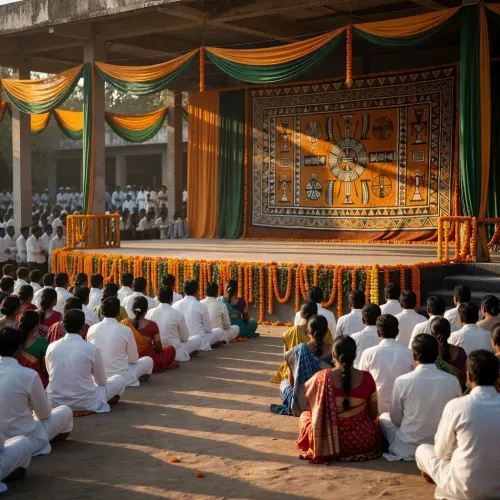
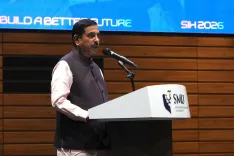
Sonowal speaks at Janjatiya Gaurav Diwas in Pathsala
Synopsis
Union Minister Sarbananda Sonowal addressed Janjatiya Gaurav Diwas in Pathsala, Assam on 15 November 2026 — the birth anniversary of tribal freedom fighter Birsa Munda — as part of the annual national observance instituted by the Government of India in 2021.
Key Takeaways
Sarbananda Sonowal , Union Minister of Ports, Shipping and Waterways, spoke live at Janjatiya Gaurav Diwas in Pathsala, Barpeta district, Assam on 15 November 2026 .
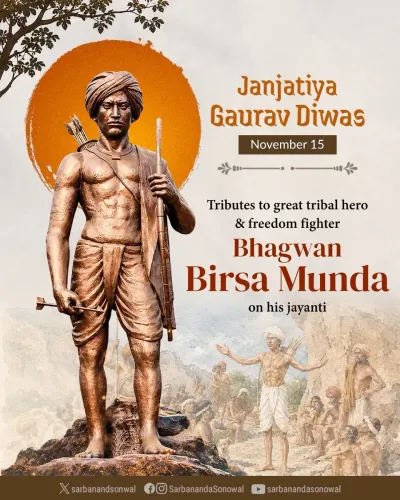
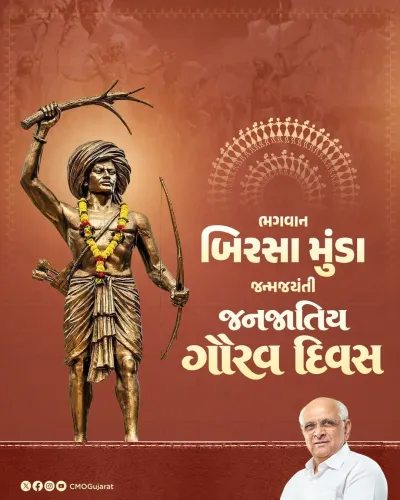
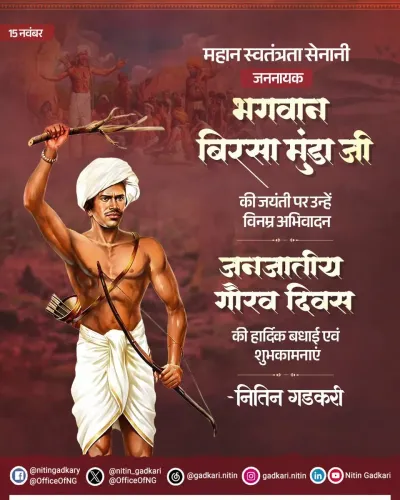
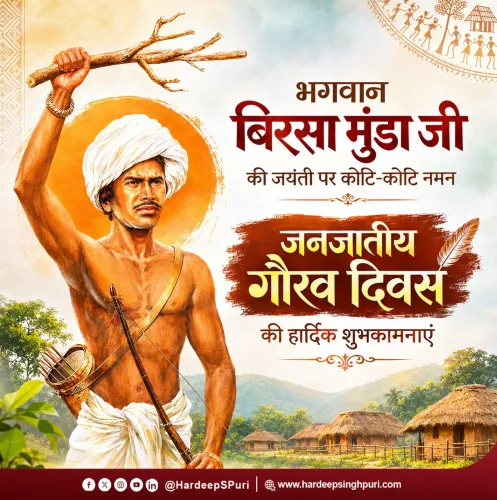
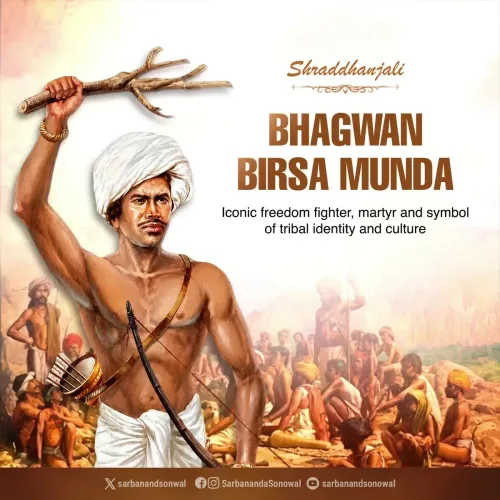
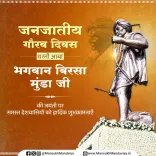
Janjatiya Gaurav Diwas is observed every 15 November to mark the birth anniversary of Bhagwan Birsa Munda , 19th-century Munda tribal leader and freedom fighter.
The Government of India formally instituted the observance in 2021 to honour tribal contributions to the independence struggle.
Sonowal, himself from the Sonowal Kachari tribal community, is one of the BJP's most prominent tribal leaders in the northeast.
The event in Pathsala reflects the central government's ongoing effort to integrate northeastern tribal histories into national commemorations.
On the birth anniversary of Bhagwan Birsa Munda, Union Minister of Ports, Shipping and Waterways Sarbananda Sonowal addressed the Janjatiya Gaurav Diwas celebrations in Pathsala, Assam on 15 November 2026 — joining a nationwide observance that honours the tribal communities whose sacrifices shaped India's freedom struggle.
Birsa Munda's legacy, brought home to Assam
Janjatiya Gaurav Diwas was formally instituted by the Government of India in 2021, anchoring the annual observance to 15 November — the birthday of Birsa Munda, the 19th-century Munda tribal leader whose armed resistance against colonial rule made him a symbol of indigenous defiance. The choice of date was deliberate: it places a tribal freedom fighter at the centre of India's national memory, alongside figures from the mainstream independence movement.
Pathsala, a town in Assam's Barpeta district, is itself embedded in a region with a substantial Scheduled Tribe population. Sonowal's presence there — as both a senior BJP leader and a former Chief Minister of Assam — carries particular resonance: he is himself from the Sonowal Kachari tribal community, lending the occasion a personal dimension beyond the political.
Northeast's tribal communities and the national commemoration arc
The event in Pathsala reflects a broader pattern in which the central government has worked to integrate northeastern tribal narratives into national commemorations. Assam and its neighbouring states are home to dozens of Scheduled Tribe communities whose histories of resistance and cultural identity have often been told at the margins of mainstream history. Janjatiya Gaurav Diwas is an explicit bid to change that.
Sonowal has consistently been among the BJP's most prominent tribal faces — a bridge between the party's national agenda and Assam's ethnically complex electorate. His participation in the Pathsala event underscores the continuing political and cultural weight the government attaches to this annual observance.
As tribal communities across the country mark the day, the question going forward is whether ceremonial recognition translates into substantive gains in development, land rights, and forest governance — the issues that define lived experience for India's 10.4 crore Scheduled Tribe citizens.
Point of View
Rather than a metro venue, signals a deliberate ground-level engagement strategy in a state where tribal identity is both politically powerful and deeply felt. The observance also reflects a wider recalibration of national memory, in which subaltern and regional freedom fighters are being elevated to mainstream iconography. Whether these symbolic gestures are matched by policy outcomes on tribal land rights, forest governance, and development spending will determine their long-term resonance.
NationPress
15 Nov 2026
Frequently Asked Questions
What is Janjatiya Gaurav Diwas and why is it celebrated on 15 November?
Janjatiya Gaurav Diwas is an annual national observance instituted by the Government of India in 2021 to honour tribal communities' contributions to India's freedom struggle. It is celebrated on 15 November because that is the birth anniversary of Bhagwan Birsa Munda , the revered 19th-century tribal leader and freedom fighter from the Munda community.
Who is Sarbananda Sonowal and why did he attend the Pathsala event?
Sarbananda Sonowal is the Union Minister of Ports, Shipping and Waterways, a senior BJP leader, and a former Chief Minister of Assam. He himself belongs to the Sonowal Kachari tribal community, making his presence at the Janjatiya Gaurav Diwas in Pathsala both politically and personally significant.
Where is Pathsala and why was it chosen for the event?
Pathsala is a town in Assam's Barpeta district . It lies in a region with a substantial Scheduled Tribe population, making it a fitting venue for a celebration of tribal heritage and freedom-struggle contributions in the northeast.
Who was Birsa Munda?
Birsa Munda was a 19th-century tribal leader from the Munda community who led an armed resistance movement against British colonial rule in the Chota Nagpur plateau region. He is revered as 'Bhagwan' (god) among tribal communities and is a symbol of indigenous rights and anti-colonial struggle.
When did the Indian government start Janjatiya Gaurav Diwas?
The Government of India formally instituted Janjatiya Gaurav Diwas in 2021 to give national recognition to the role tribal communities played in India's independence movement.