Jal Shakti Minister Paatil Pushes SIMP to Modernise Irrigation
Synopsis
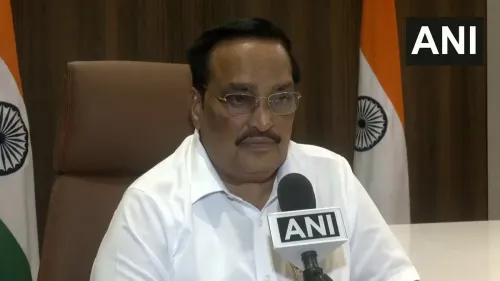
Jal Shakti Minister C. R. Paatil announced the Irrigation Modernisation Assistance Programme (SIMP) on 15 November 2026, pledging to overhaul major and medium irrigation projects using technology, citing PM Modi's leadership and the dual goals of farmer prosperity and water conservation.
Key Takeaways
SIMP (Sinchai Aadhunikaran Sahayata Karyakram) is the new programme to modernise major and medium irrigation projects across India.
Union Jal Shakti Minister C.
Paatil made the announcement on 15 November 2026 , attributing the initiative to PM Narendra Modi's vision.
The programme targets dual objectives: farmer prosperity and strengthened water conservation .
SIMP builds on existing frameworks including PMKSY (2015) , the Jal Shakti Abhiyan (2019) and the Atal Bhujal Yojana (2019) .
The Ministry of Jal Shakti , formed in 2019, is consolidating water governance under a unified framework of which SIMP is the latest addition.
Precise budget figures and roll-out timelines for SIMP have not yet been officially disclosed.
Every drop of water is now a policy priority. Union Jal Shakti Minister C. R. Paatil on Sunday, 15 November 2026 announced that the government is actively modernising the country's irrigation infrastructure through the Sinchai Aadhunikaran Sahayata Karyakram — the Irrigation Modernisation Assistance Programme (SIMP) — aimed at reshaping major and medium irrigation projects across India.
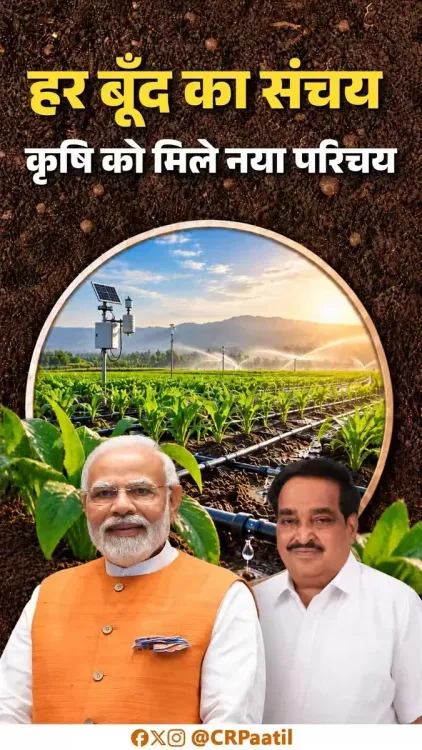
Posting on X in Hindi, Minister Paatil wrote: 'जल की हर बूंद का मान, तकनीक से मिले सिंचाई को नई पहचान!' ('Every drop of water deserves respect; let technology give irrigation a new identity!'). He credited Prime Minister Narendra Modi's 'visionary leadership' for steering the country's irrigation systems toward what he called a modern and empowered future, adding that SIMP was the vehicle to deliver that transformation to 'our farmers' and reinforce the country's water conservation resolve.
What SIMP Promises for India's Farmers
At the heart of the announcement is SIMP's focus on major and medium irrigation projects — the backbone of water delivery to millions of cultivated hectares. The objective, as Paatil framed it, is twin-edged: farmer prosperity and water conservation, two goals that have historically pulled at each other but which the Ministry of Jal Shakti is now betting technology can reconcile.
Canal lining, automation of water-distribution systems and precision irrigation tools are the kinds of interventions that successive governments have pursued under India's broader irrigation modernisation push. Reducing conveyance losses — where water simply seeps away before reaching a field — is among the most cost-effective ways to stretch an already-stressed national water budget. SIMP, as described by the minister, appears squarely aimed at that bottleneck.
Building on a Decade of Water Policy
The announcement fits neatly inside an architecture the Ministry of Jal Shakti — itself formed only in 2019 by merging the water resources and drinking water ministries — has been assembling since 2014. The Pradhan Mantri Krishi Sinchayee Yojana (PMKSY), launched in 2015, set the original ambition: 'Har Khet Ko Pani' (water to every field) and 'More Crop Per Drop.' The Jal Shakti Abhiyan, rolled out in 2019, widened the lens to community-level water conservation and aquifer recharge. The Atal Bhujal Yojana, also approved in 2019, zeroed in on groundwater management in stressed districts.
SIMP, if it integrates with these existing pillars, could represent the next logical layer: not just getting water to the field, but modernising the physical infrastructure that moves it there. The broader pattern across the last decade has been to consolidate fragmented water schemes under unified governance — and this announcement tracks that trajectory.
What State Governments and Farmers Will Watch Next
The real test of any central modernisation programme is what flows downstream to the states — literally and financially. Project-level approvals, fund-release timelines and how SIMP dovetails with existing PMKSY components will determine whether the ambition translates into renovated canals and working automation systems on the ground. India's agricultural communities, who remain acutely exposed to both erratic monsoons and waterlogging from inefficient delivery, have the most riding on that execution.
India manages one of the world's largest irrigated agricultural systems — and much of its physical infrastructure dates to the mid-twentieth century. Getting the plumbing right is not a bureaucratic nicety. It is a food-security calculation.
Point of View
Costlier phase than scheme design. For Minister Paatil, the programme is also a political statement: linking technological modernisation to the government's farmer-welfare narrative ahead of likely state-level agricultural assessments. The critical variable is whether central funding reaches state irrigation departments fast enough to reform ageing canal networks before the next monsoon cycle. If SIMP genuinely integrates with PMKSY's precision-irrigation targets, it could meaningfully reduce conveyance losses — but that integration has historically been the weakest link in India's water governance chain.
NationPress
15 Nov 2026
Frequently Asked Questions
What is SIMP in Jal Shakti Ministry?
SIMP stands for the Sinchai Aadhunikaran Sahayata Karyakram, or Irrigation Modernisation Assistance Programme — a scheme announced by Jal Shakti Minister C. R. Paatil on 15 November 2026 to modernise major and medium irrigation infrastructure using technology, with the goal of improving water efficiency and farmer income.
What is the difference between SIMP and PMKSY?
PMKSY (Pradhan Mantri Krishi Sinchayee Yojana), launched in 2015, focuses on expanding irrigation coverage and micro-irrigation adoption under the 'Har Khet Ko Pani' goal. SIMP appears to focus specifically on modernising the existing physical infrastructure of major and medium irrigation projects, potentially functioning as a new layer within the broader PMKSY framework.
What is the Jal Shakti Ministry responsible for?
The Ministry of Jal Shakti, formed in 2019, handles water resources, river development, irrigation and drinking water supply. It administers schemes such as PMKSY, Jal Shakti Abhiyan and Atal Bhujal Yojana.
Who is C. R. Paatil?
C. R. Paatil is India's Union Minister of Jal Shakti and a senior BJP leader. He previously served as the BJP's Gujarat state president and represents the Navsari constituency in Gujarat.
What is Jal Shakti Abhiyan?
Jal Shakti Abhiyan is a nationwide water conservation campaign launched in 2019 that focuses on community-level interventions such as watershed management, aquifer recharge and rainwater harvesting, complementing irrigation-focused schemes under the Ministry of Jal Shakti.