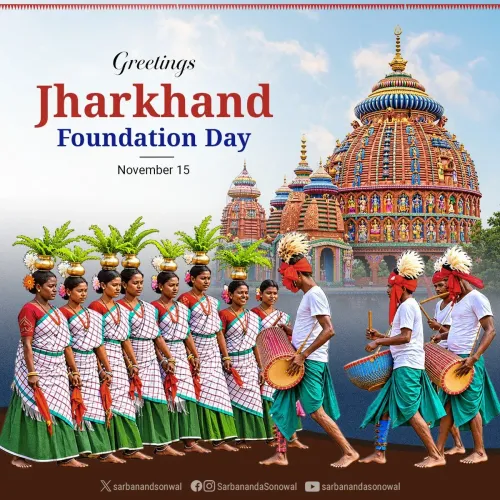
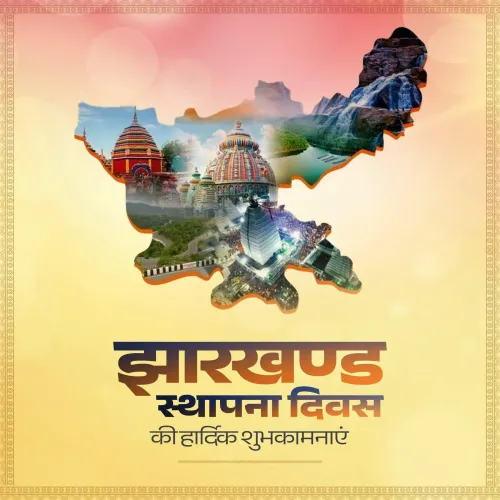
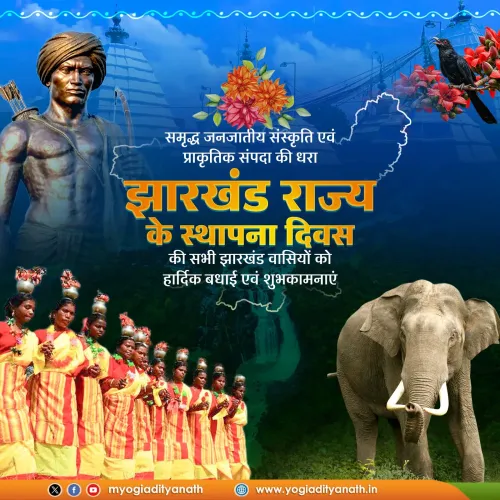
Shivraj Singh Chouhan greets Jharkhand on Foundation Day
Synopsis
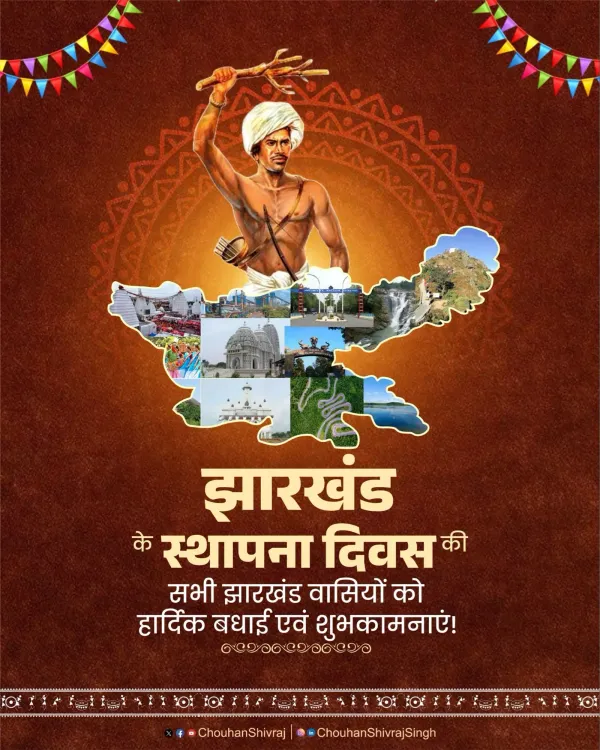
Union Agriculture Minister Shivraj Singh Chouhan extended Foundation Day wishes to Jharkhand on 15 November 2026, the state's 26th statehood anniversary, honouring its tribal heritage, natural beauty, and mineral wealth with the traditional Adivasi greeting 'Johar Jharkhand!'
Key Takeaways
Union Agriculture Minister Shivraj Singh Chouhan greeted Jharkhand residents on Foundation Day, 15 November 2026 , the state's 26th statehood anniversary .
Jharkhand was created as India's 28th state on 15 November 2000 , carved out of Bihar under the Bihar Reorganisation Act.
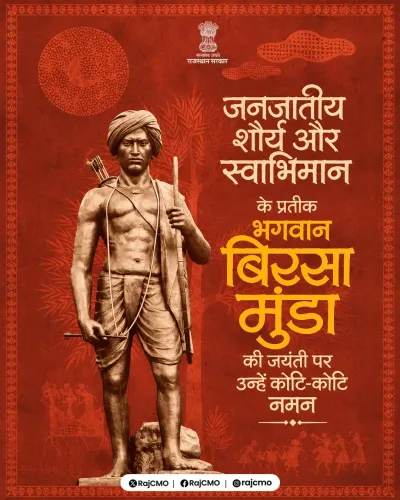
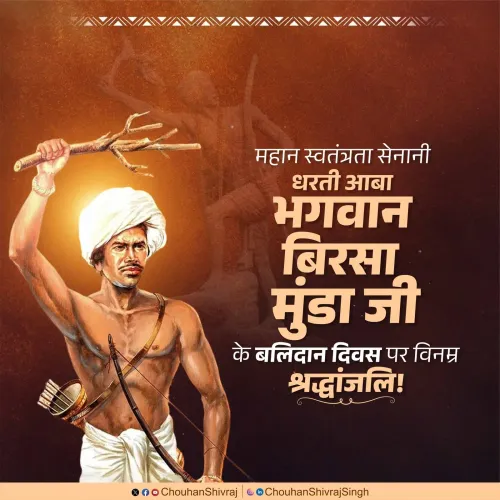
The date was chosen to coincide with the birth anniversary of Bhagwan Birsa Munda , the 19th-century tribal leader revered across the state's indigenous communities.
Chouhan's message highlighted Jharkhand's folk traditions, natural beauty, and mineral wealth , and closed with the Adivasi greeting 'Johar Jharkhand!' His Rural Development portfolio gives the message added significance, as a large share of Jharkhand's population depends on agriculture and rural livelihoods shaped by central schemes.
Twenty-six years after a forested, mineral-rich plateau in eastern India became its own state, Union Agriculture Minister Shivraj Singh Chouhan marked Jharkhand Foundation Day on 15 November 2026 with a warm public message honouring the land of Bhagwan Birsa Munda and its people.
In his post on X, Chouhan wrote — 'Johar Jharkhand!' — the traditional Adivasi greeting that has become the state's cultural salutation — and extended 'heartfelt congratulations and best wishes to all residents of Jharkhand.' He invoked the state's trinity of identity: its diverse folk traditions, its extraordinary natural beauty, and its abundant mineral wealth, before expressing the hope that Jharkhand 'touches new heights of development and that happiness, prosperity and well-being grow in the lives of all brothers and sisters.'
The land Birsa Munda made sacred
Jharkhand was carved out of Bihar on 15 November 2000 under the Bihar Reorganisation Act, becoming India's 28th state. The date was chosen deliberately — it is the birth anniversary of Birsa Munda, the 19th-century tribal leader from the Chota Nagpur plateau who led the Ulgulan (great tumult) uprising against British land policies and is revered as a deity and freedom fighter across Jharkhand's indigenous communities. Anchoring statehood to his birth date was an act of cultural assertion that continues to define the state's self-image.
Chouhan's reference to 'Bhagwan Birsa Munda's sacred land' is not incidental — it is the standard invocation in central government messaging about Jharkhand, one that signals both respect for tribal heritage and an awareness of the political weight that Adivasi identity carries in the state's 32 Scheduled Tribe-reserved assembly seats.
Minerals, identity, and the Centre-state conversation
Jharkhand sits atop some of India's richest mineral deposits — coal, iron ore, copper, mica, and uranium — making its development trajectory a matter of national economic interest as much as regional pride. Union ministers routinely use Foundation Day greetings to reaffirm Centre-state goodwill, particularly in a state where the federal relationship over mining royalties and tribal land rights has historically been a live political fault line.
Chouhan's dual portfolio — Agriculture & Farmers Welfare and Rural Development — gives his message added resonance: a significant share of Jharkhand's population depends on agriculture and rural livelihoods, sectors directly shaped by central schemes his ministry administers.
The simplest line in the post may be its loudest: 'Johar Jharkhand!' — two words that belong not to the language of policy briefs but to the living culture of the plateau. That choice, in a minister's public message, is itself a signal.
Point of View
Greeting Jharkhand by name-checking both its mineral wealth and its folk traditions threads the needle between economic ambition and Adivasi identity politics. With Jharkhand's tribal land-rights and mining-royalty debates perennially in play, such public gestures of solidarity — however ceremonial — are rarely politically neutral. The 'Johar' salutation, chosen over a standard Hindi valediction, underscores how consciously the Centre has worked to embed indigenous cultural markers into its official outreach.
NationPress
15 Nov 2026
Frequently Asked Questions
When is Jharkhand Foundation Day and why is it on 15 November?
Jharkhand Foundation Day is celebrated on 15 November every year. The date was chosen because it marks the birth anniversary of Bhagwan Birsa Munda, the revered tribal leader and freedom fighter. Jharkhand became India's 28th state on 15 November 2000 when it was carved out of Bihar under the Bihar Reorganisation Act.
Who was Birsa Munda and why is he important to Jharkhand?
Birsa Munda was a 19th-century tribal leader from the Chota Nagpur plateau who led an uprising known as the Ulgulan against British colonial land policies. He is worshipped as a deity and revered as a freedom fighter by Jharkhand's indigenous Adivasi communities, and his birth anniversary gives the state its founding date.
What does 'Johar' mean in Jharkhand?
'Johar' is a traditional Adivasi greeting used widely across Jharkhand as an expression of respect and welcome. It has become the state's cultural salutation and is frequently used by politicians and public figures to signal solidarity with the state's indigenous communities.
Why did Shivraj Singh Chouhan post about Jharkhand Foundation Day?
As a senior Union Cabinet minister and BJP leader, Chouhan extended greetings on Jharkhand's 26th statehood anniversary on 15 November 2026. Union ministers routinely acknowledge state foundation days to signal Centre-state goodwill and affirm recognition of regional identities.
What is Jharkhand known for in terms of natural resources?
Jharkhand is one of India's most mineral-rich states, with significant deposits of coal, iron ore, copper, mica, and uranium located largely under the Chota Nagpur plateau. The state's mineral wealth makes it a critical contributor to India's industrial and energy sectors.