Rajnath Singh Addresses NDT Aerospace Symposium

Synopsis
Union Defence Minister Rajnath Singh addressed the 36th Annual Conference on Non-Destructive Evaluation and Enabling Technologies and the 15th International Symposium on Non-Destructive Testing in Aerospace on 15 November 2026, spotlighting the role of inspection science in India's defence self-reliance push.
Key Takeaways
Rajnath Singh addressed the 36th Annual Conference on Non-Destructive Evaluation and Enabling Technologies on 15 November 2026 .
The event ran jointly with the 15th International Symposium on Non-Destructive Testing in Aerospace .
Non-destructive testing is critical to quality certification of aircraft, missiles and defence platforms.
India's Atmanirbhar Bharat drive has elevated NDT infrastructure as a strategic priority for DRDO and private defence industry alike.
The minister's presence signals political-level recognition of aerospace inspection science within the broader indigenisation agenda.
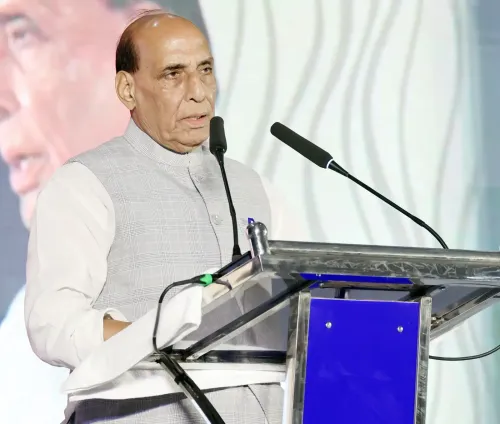
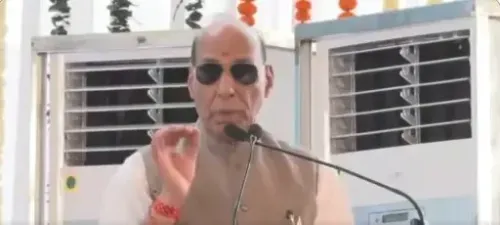
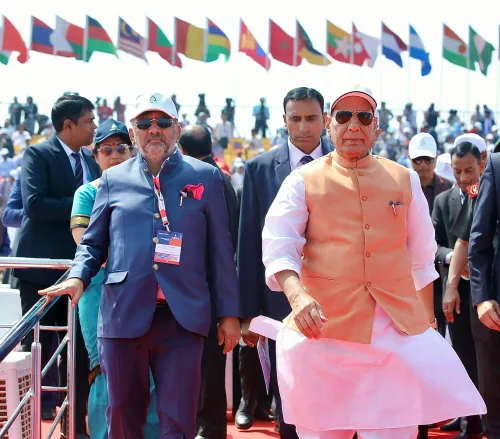
Where aerospace safety meets national ambition, Union Defence Minister Rajnath Singh stepped into the room on Sunday, 15 November 2026 — addressing the 36th Annual Conference on Non-Destructive Evaluation and Enabling Technologies alongside the 15th International Symposium on Non-Destructive Testing in Aerospace, a rare convergence of India's domestic NDT community and the global aerospace inspection world.
What Non-Destructive Testing means for India's aerospace ambitions
Non-destructive evaluation — the science of inspecting materials and structures without damaging them — is quietly foundational to every aircraft that takes off and every missile that launches. For a country scaling up indigenous fighter programmes, satellite launch vehicles and defence platforms, rigorous NDT is not optional. It is the difference between certification and grounding.
India's push for self-reliance in defence manufacturing, anchored in successive Atmanirbhar Bharat (self-reliant India) policy drives, has made quality-assurance infrastructure like NDT an urgent priority. DRDO laboratories, public-sector aerospace units and a growing private defence industry all depend on validated inspection methodologies to bring new platforms to operational readiness.
A ministerial presence at a technical table
Ministerial addresses at specialised scientific conferences carry a signal beyond the speech itself — they mark where political leadership chooses to place its attention. Rajnath Singh, who has overseen a period of significant defence procurement reform and indigenisation push since taking charge of the ministry in 2019, engaging directly with aerospace NDT specialists underscores the sector's growing strategic weight.
The joint hosting of both a domestic annual conference and an international aerospace symposium in the same forum reflects India's intent to align its testing standards with global benchmarks — a prerequisite for export-ready defence hardware and for joint-venture credibility with foreign aerospace partners.
The specific content of the minister's address and any announcements made remain to be confirmed through official records. What the moment marks is clear: India's most senior defence official spending a Sunday morning with the engineers and scientists who keep aircraft flying safely.
Point of View
Which is simultaneously ramping up indigenous fighter production, missile programmes and satellite launch capabilities, NDT standardisation is a bottleneck that political attention can help unclog by directing funding and inter-agency coordination. Rajnath Singh's consistent engagement with the scientific community since 2019 fits a broader pattern of using ministerial visibility to accelerate the credibility of India's defence-industrial ecosystem. The international dimension of this symposium also hints at India's ambition to become a certified exporter of aerospace hardware — something that requires globally recognised testing protocols.
NationPress
15 Nov 2026
Frequently Asked Questions
What is non-destructive testing in aerospace?
Non-destructive testing (NDT) is a set of inspection techniques used to evaluate the integrity of aerospace components and structures — such as aircraft fuselages, engine parts and missile casings — without damaging them. It is essential for safety certification and quality assurance.
Why did Rajnath Singh attend an NDT conference?
As Union Defence Minister, Rajnath Singh addressed the joint 36th NDT conference and 15th International Aerospace NDT Symposium on 15 November 2026, reflecting the government's focus on building robust quality-assurance infrastructure to support India's indigenous defence manufacturing push.
What is the 36th Annual Conference on Non-Destructive Evaluation?
It is a recurring Indian conference series focused on non-destructive evaluation methods and enabling technologies, bringing together scientists, engineers and defence researchers to advance inspection science.
How does NDT support India's Atmanirbhar Bharat defence goals?
Indigenous defence platforms require rigorous inspection and certification to meet operational and export standards. NDT infrastructure allows DRDO, public-sector units and private manufacturers to validate components without destructive testing, accelerating the path from prototype to certified hardware.
What is the 15th International Symposium on Non-Destructive Testing in Aerospace?
It is a recurring international symposium dedicated to advancing NDT techniques specifically for aerospace applications, bringing global expertise to bear on the inspection of aircraft and aerospace structures.