CM Bhajanlal Backs Rajasthan Petrochemical Zone for Jobs
Synopsis
The Chief Minister's Office of Rajasthan on November 15, 2026 called the proposed Rajasthan Petrochemical Zone a key driver of new industries, local production, investment expansion, and job creation, tagging CM Bhajanlal Sharma under the hashtag 'Our Leading Rajasthan'.
Key Takeaways
The Chief Minister's Office of Rajasthan on November 15, 2026 publicly backed the development of a Rajasthan Petrochemical Zone .
The zone is positioned to drive new industry establishment, local-level production, investment expansion, and fresh employment creation.
The post was tagged to Chief Minister Bhajanlal Sharma , who has led Rajasthan since December 2023 after the BJP's assembly election win.
The HPCL Rajasthan Refinery at Barmer , announced in 2018 , provides the upstream feedstock foundation for downstream petrochemical development.
Key milestones to watch include land acquisition, environmental clearances, and investment commitments at future state investor summits.
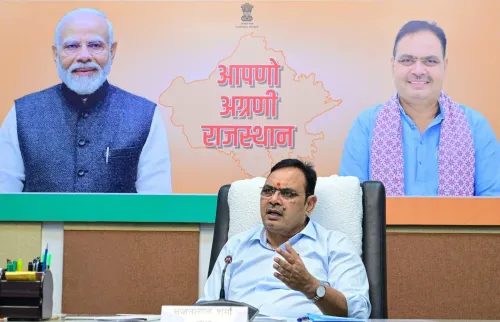
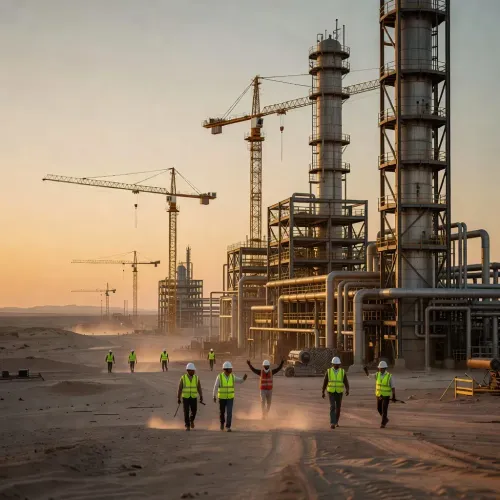
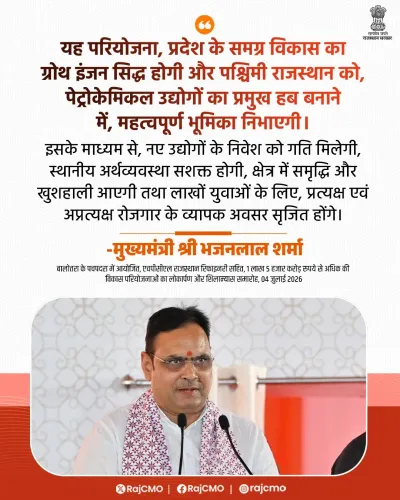
A new industrial corridor is taking shape on Rajasthan's economic map — and the state's Chief Minister's Office is signalling that it could redefine the region's manufacturing identity. On Sunday, November 15, 2026, the Chief Minister's Office of Rajasthan posted on X, calling the development of a Rajasthan Petrochemical Zone a potentially transformative step toward new industries, local production, expanded investment, and fresh employment opportunities in the state.
The post, tagged to Chief Minister Bhajanlal Sharma and carrying the hashtag #आपणो_अग्रणी_राजस्थान ('Our Leading Rajasthan'), framed the petrochemical zone as a convergence point for several economic goals at once: upstream industrial development, downstream value-added manufacturing, and — critically — jobs at the local level.
From Barmer's Refinery to a Petrochemical Corridor
The ambition did not emerge in a vacuum. The foundation was laid years earlier when the HPCL Rajasthan Refinery project at Barmer was announced in 2018, creating a potential upstream feedstock base that petrochemical units could draw from. A refinery without downstream processing is an opportunity half-realised; a dedicated petrochemical zone is the logical next step that completes the value chain.
Rajasthan has historically pursued dedicated industrial zones to pivot its economy from agriculture and mining toward manufacturing and value-added processing. The petrochemical zone fits squarely within that arc — and aligns with national incentives designed to deepen India's manufacturing base.
What the Zone Promises — and What Must Follow
The CMO's framing highlights four distinct gains: new industry establishment, local-level production, investment expansion, and employment creation. For a state with a large young workforce and significant economic migration, that last point carries particular weight. Chemical industries and downstream manufacturing typically generate layered employment — from skilled plant operators to logistics and ancillary services.
What the announcement does not yet detail are the specifics that will determine success: land acquisition progress, environmental clearances, and firm investment commitments. Those markers will be the real test of whether the petrochemical zone moves from policy vision to ground reality — and state investor summits in the coming months are likely to be the arena where those numbers emerge.
Rajasthan is placing a deliberate bet that petrochemicals can do for its industrial economy what IT parks did for other states. Whether the infrastructure and investment follow through will determine if the hashtag 'Our Leading Rajasthan' becomes a headline or a promise.
Point of View
The announcement's vagueness on timelines and investment figures means it currently functions more as a policy signal than a concrete milestone. The real test will come when land, clearances, and capital commitments are on the table.
NationPress
15 Nov 2026
Frequently Asked Questions
What is the Rajasthan Petrochemical Zone?
The Rajasthan Petrochemical Zone is a proposed dedicated industrial zone intended to host petrochemical units and downstream manufacturing facilities in the state, building on the upstream feedstock base created by the HPCL refinery project at Barmer.
Who is Bhajanlal Sharma and what is his role in this?
Bhajanlal Sharma is the Chief Minister of Rajasthan, in office since December 2023 following the BJP's assembly election victory. The CMO's post on the petrochemical zone was tagged directly to him, signalling his backing for the initiative.
How does the Barmer refinery connect to the Rajasthan Petrochemical Zone?
The HPCL Rajasthan Refinery at Barmer, announced in 2018, is designed to supply the raw petrochemical feedstock that downstream processing units in the proposed zone would use, completing an industrial value chain within the state.
What jobs and industries could the Rajasthan Petrochemical Zone create?
The zone is expected to attract chemical industries and downstream manufacturing investors, generating employment across skilled plant operations, logistics, and ancillary services at the local level, though specific numbers have not yet been announced.
What are the next steps for the Rajasthan Petrochemical Zone?
The key milestones to watch are land acquisition progress, environmental clearances, and firm investment commitments — details likely to emerge at future state investor summits.