Nitish Kumar visits Biharsharif dargah, prays for peace
Synopsis
Former Bihar Chief Minister Nitish Kumar visited the historic Sufi shrine in Biharsharif on 7 July 2026, praying for the peace and prosperity of Bihar's people and meeting devotees gathered at the site — continuing his long record of cross-community religious outreach.
Key Takeaways
Nitish Kumar visited the Sufi shrine (mazar) in Biharsharif, Nalanda district on 7 July 2026 .
He offered prayers for the peace, tranquility and prosperity of Bihar's residents.
Kumar personally met with people present at the shrine during the visit.
Biharsharif is home to a historically significant Sufi dargah that draws devotees from across Bihar.
The visit reflects Kumar's long-standing practice of cross-community religious outreach as a senior Bihar political figure.
Observers are watching his subsequent schedule for statements on minority welfare or communal harmony ahead of Bihar political events.
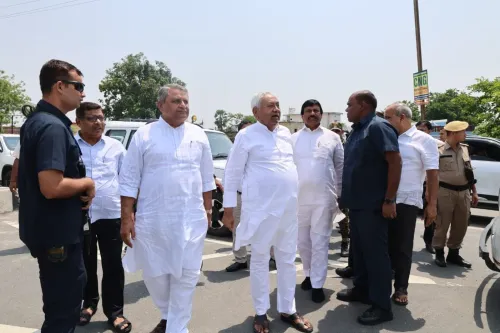
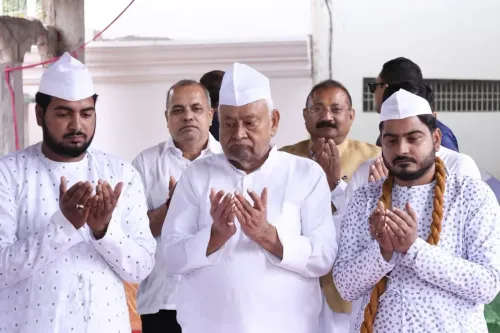
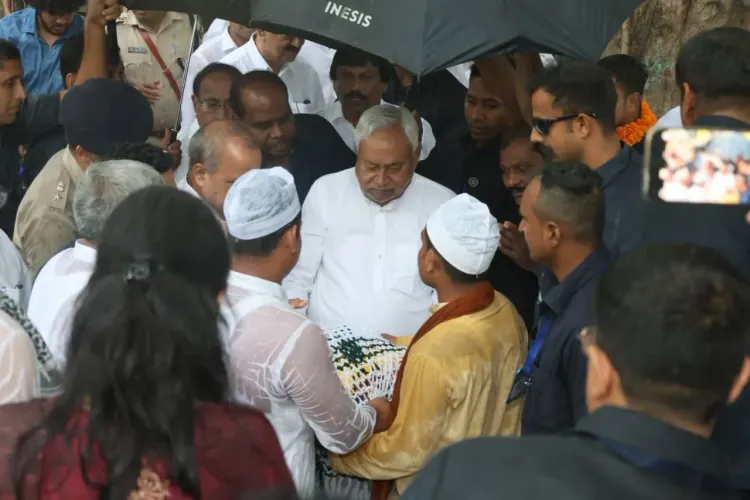
Former Bihar Chief Minister and Janata Dal (United) national president Nitish Kumar visited a prominent Sufi shrine in Biharsharif, Nalanda district, on Tuesday, 7 July 2026, offering prayers for the peace, well-being and prosperity of the people of Bihar.
Posting on X, Kumar wrote: 'Aaj Biharsharif sthit mazar pahunchkar rajyavasiyon ke aman, chain aur khushhaali ke liye dua maangi.' ('Today, upon reaching the shrine in Biharsharif, I prayed for the peace, tranquility and prosperity of the state's residents.') He also met with people present at the shrine during the visit.
Context
Biharsharif, headquartered in Nalanda district, is home to a historically significant Sufi dargah that draws devotees from across Bihar and beyond. The town holds deep religious and cultural importance for both Muslim communities and others who observe the tradition of seeking blessings at Sufi shrines.
Kumar's visit included personal interactions with those gathered at the site, reinforcing the public and community-facing character of the occasion rather than a purely ceremonial one.
Policy Backdrop
Bihar's political landscape has long required its leaders to maintain visible cross-community engagement. The state has a substantial Muslim population alongside its Hindu majority, and senior leaders across party lines have historically visited dargahs, temples, churches and gurudwaras as part of their public outreach.
Nitish Kumar, over his multiple terms as Chief Minister, cultivated a reputation for inclusive religious outreach alongside his emphasis on development and law-and-order. His visits to shrines and places of worship across faiths have been a consistent feature of his public calendar.
Stakeholders and Impact
The visit carries significance for Bihar's Muslim community as well as for residents of the Nalanda region who regard the Biharsharif shrine as a symbol of communal harmony. For the broader electorate, such gestures by a senior political figure signal continued commitment to social cohesion.
Shrine devotees and local residents who met Kumar during the visit represent the grassroots constituency that Bihar's political leaders routinely engage with through such occasions. The JD(U), as a party that has long positioned itself on a platform of 'sabka saath' (inclusive governance), benefits from visible displays of inter-community solidarity by its national president.
What's Next
Observers will watch Nitish Kumar's subsequent public schedule for any statements on minority welfare, communal harmony initiatives or social development programmes in the run-up to forthcoming political events in Bihar. Visits of this nature often precede or accompany broader outreach campaigns, and Kumar's continued engagement with diverse religious communities will remain a point of attention for those tracking Bihar's political dynamics.
The broader pattern of cross-community visibility by Bihar's political leadership is expected to continue as the state navigates its complex social fabric ahead of future electoral cycles.
Point of View
He reinforces a grassroots connect that distinguishes his style from more ceremonial gestures. For the JD(U), whose national president is now out of office, such visits maintain Kumar's public relevance and signal the party's continued commitment to Bihar's plural social fabric. The timing and frequency of such outreach will be closely read as indicators of the party's electoral positioning in the months ahead.
NationPress
6 Oct 2026
Frequently Asked Questions
Why did Nitish Kumar visit the Biharsharif dargah?
Nitish Kumar visited the Sufi shrine in Biharsharif on 7 July 2026 to pray for the peace, well-being and prosperity of Bihar's residents, and to meet with people gathered at the shrine.
Where is the Biharsharif dargah located?
The dargah (Sufi shrine) is located in Biharsharif town in Nalanda district, Bihar. It is a historically significant site that draws devotees from across the region.
Is Nitish Kumar still the Chief Minister of Bihar?
No. Nitish Kumar is a former Chief Minister of Bihar. He continues to serve as the national president of Janata Dal (United).
What is Nitish Kumar's record on communal harmony?
Nitish Kumar has maintained a consistent public record of visiting places of worship across faiths — including dargahs, temples and gurudwaras — as part of his inclusive political outreach throughout his long career in Bihar politics.
What is the significance of Biharsharif in Bihar?
Biharsharif is the headquarters of Nalanda district and is home to a prominent historic Sufi shrine. The town holds deep religious and cultural significance for communities across Bihar.