CM Nitish Orders Subsidised Helicopter Services for Bihar Tourism Sites
Synopsis
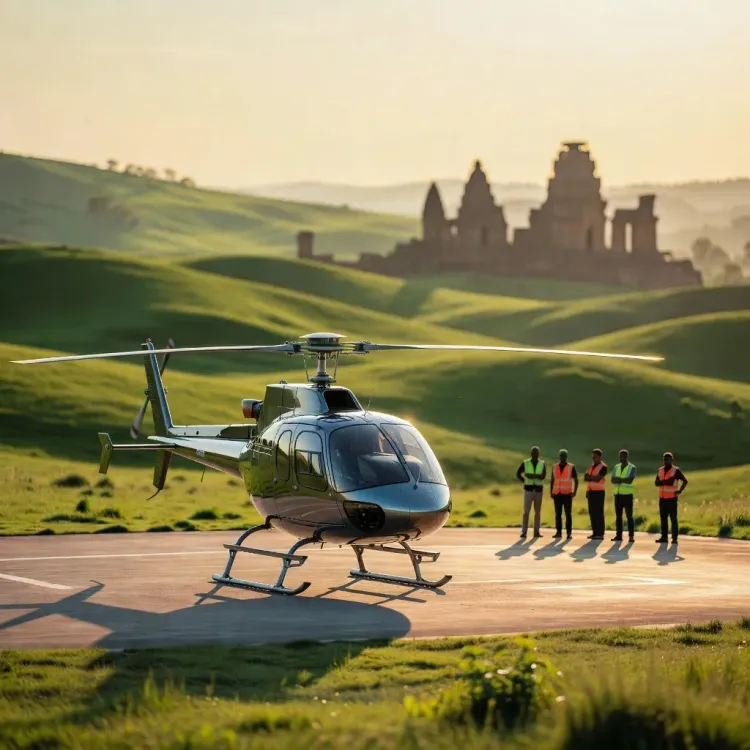
Chief Minister Nitish Kumar has directed launch of subsidised helicopter services to Maa Mundeshwari Temple, Karkatgarh Waterfall, and Rajgir, and concessional weekend air services to Valmikinagar, aiming to boost last-mile tourism connectivity across Bihar's interior districts.
Key Takeaways
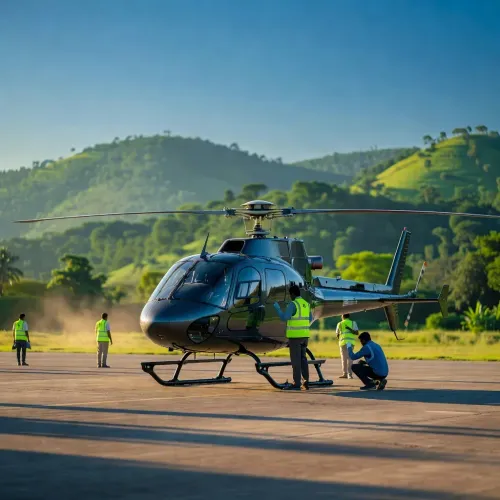
Chief Minister Nitish Kumar has directed subsidised helicopter services to Maa Mundeshwari Temple , Karkatgarh Waterfall , and Rajgir .
Concessional air services to Valmikinagar are to be launched 'shortly' specifically on Saturdays and Sundays for weekend tourists.
Valmikinagar is the gateway to Valmiki Tiger Reserve , Bihar's only tiger reserve, currently lacking reliable transport links.
The directive follows Bihar's earlier aerial connectivity push to Bodh Gaya and mirrors subsidy models in Uttarakhand and Himachal Pradesh .
Operator tenders, MoUs, and state budget allocations are the key next steps before services can begin.
The Chief Minister's Office of Bihar announced on Sunday, 14 June 2026 that Chief Minister Nitish Kumar has directed the launch of subsidised helicopter services to three major tourism destinations — Maa Mundeshwari Temple, Karkatgarh Waterfall, and Rajgir — along with concessional weekend air services to Valmikinagar.
Context
The directive, shared via the official CMO Bihar account, states that 'अनुदानित दर पर हेलिकॉप्टर सेवा प्रारंभ की जाए' ('helicopter services be started at subsidised rates') for Maa Mundeshwari Temple, Karkatgarh Waterfall, and Rajgir. For Valmikinagar, the Chief Minister has specifically ordered that concessional air services begin 'shortly' on Saturdays and Sundays to cater to weekend tourists.
The announcement covers four geographically dispersed destinations across Bihar, each drawing distinct visitor profiles — pilgrims, nature tourists, and heritage travellers.
Policy Backdrop
Maa Mundeshwari Temple in Kaimur district is one of the oldest functional Hindu temples in India, while Karkatgarh Waterfall, also in Kaimur, is a growing eco-tourism draw with limited road connectivity. Rajgir in Nalanda district is a multi-faith heritage hub significant to Buddhist, Jain, and Hindu traditions, and already attracts substantial domestic and international visitors.
Valmikinagar in West Champaran district is the gateway to the Valmiki Tiger Reserve, Bihar's only tiger reserve, which remains difficult to access by conventional transport. The Bihar government has previously promoted aerial connectivity to sites such as Bodh Gaya under state tourism development plans dating to the mid-2010s, making this directive a continuation of that incremental strategy.
Comparable subsidised aviation schemes for pilgrimage and hill destinations operate in Uttarakhand and Himachal Pradesh, where state governments co-fund helicopter operations to offset costs for travellers and operators alike.
Stakeholders and Impact
The primary beneficiaries would be domestic tourists and pilgrims who currently face long road journeys to reach interior Bihar destinations. Local tourism operators, guesthouse owners, and guides near all four sites stand to gain from increased footfall if air access is established.
Weekend-specific air services to Valmikinagar are particularly targeted at urban travellers from cities such as Patna seeking short-break wildlife and nature experiences. Subsidised pricing is the critical lever — unsubsidised helicopter fares have historically limited aerial tourism to high-income travellers in other Indian states.
What's Next
The immediate next steps will involve issuance of tenders or memoranda of understanding with helicopter and regional aircraft operators, followed by state budget allocation for the subsidy component. The Chief Minister's use of the word 'शीघ्र' ('shortly') for the Valmikinagar service signals a near-term implementation push, though operator selection and route certification timelines remain to be announced by the government.
If executed, the scheme could position Bihar alongside Uttarakhand and Himachal Pradesh as a state that actively subsidises aerial access to religious and eco-tourism sites — a model with demonstrated potential to raise visitor numbers and local revenue in underserved districts.
Point of View
Targeting urban middle-class travellers — a demographic that drives discretionary tourism spending. Bihar's approach mirrors aviation subsidy models already operational in hill states, suggesting the government is drawing on tested policy templates rather than experimenting. The real test will be execution speed and whether subsidy structures are sustainable enough to attract credible operators beyond an initial pilot phase.
NationPress
13 Sept 2026
Frequently Asked Questions
Which places will get subsidised helicopter service in Bihar?
Chief Minister Nitish Kumar has directed subsidised helicopter services for Maa Mundeshwari Temple (Kaimur district), Karkatgarh Waterfall (Kaimur district), and Rajgir (Nalanda district), along with concessional weekend air services to Valmikinagar (West Champaran district).
What is the Valmikinagar air service plan?
The Bihar government plans to launch concessional-rate air services to Valmikinagar on Saturdays and Sundays to cater to weekend tourists visiting the Valmiki Tiger Reserve area. The Chief Minister has asked for this to begin shortly.
Why is Bihar launching helicopter services for tourism?
Interior Bihar destinations such as Kaimur and West Champaran lack reliable road or rail connectivity, making last-mile access difficult for tourists. Subsidised aerial services aim to boost visitor numbers, support local tourism economies, and make pilgrimage and eco-tourism sites more accessible.
Has Bihar offered helicopter tourism services before?
Yes, Bihar has previously promoted aerial connectivity to destinations such as Bodh Gaya under state tourism development plans since the mid-2010s. The new directive expands that approach to additional sites.
Which other Indian states run subsidised helicopter tourism schemes?
Uttarakhand and Himachal Pradesh operate comparable state-subsidised helicopter services to pilgrimage and hill destinations. Bihar's planned scheme follows a similar model of co-funding operations to make fares affordable for ordinary travellers.