No ST status proposal for any Delhi community, says MoS Uikey in Lok Sabha
Synopsis
The Centre has drawn a firm constitutional line: no community in Delhi can be granted Scheduled Tribe status merely on the basis of how long it has lived there. MoS Durgadas Uikey's Lok Sabha statement lays out the full multi-layered process required — from Presidential notification to Lokur Committee criteria — making clear that any such change would require an Act of Parliament.
Key Takeaways
MoS Durgadas Uikey confirmed in Lok Sabha on 30 July that no proposal to grant ST status to any Delhi community based on residence is under consideration.
ST status can only be conferred via a Presidential notification under Article 342 of the Constitution, followed by an Act of Parliament.
Proposals must meet Lokur Committee (1965) criteria: primitive traits, distinctive culture, geographical isolation, shyness of contact, and socio-economic backwardness.
Delhi , Chandigarh , and Puducherry have no notified ST population and therefore carry no ST reservation in political or local bodies.
ST reservation in UT administrative services follows DoPT norms prescribing 7.5% at the all-India level; higher quotas apply in UTs with substantial ST populations such as Lakshadweep .
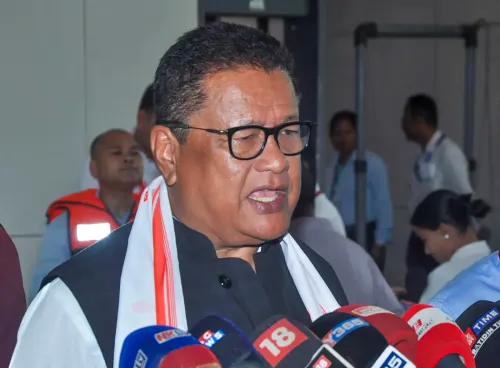
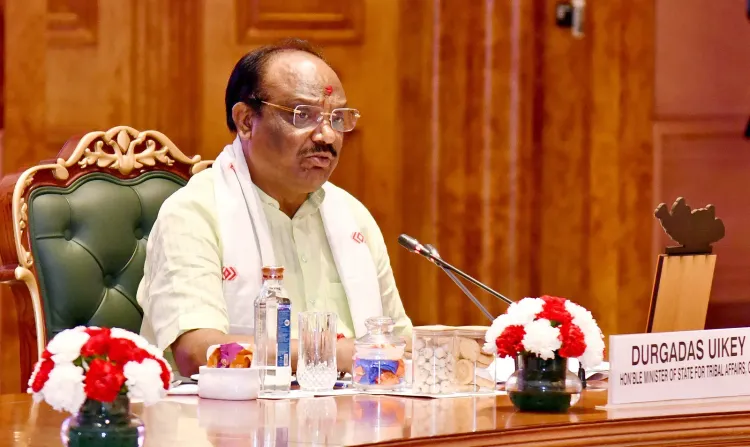
Minister of State for Tribal Affairs Durgadas Uikey on Thursday, 30 July told Lok Sabha that no proposal is under consideration to grant Scheduled Tribe (ST) status to any community in the Union Territory of Delhi on the basis of duration of residence. The clarification came in response to a parliamentary query on ST status and reservation in Union Territories.
Constitutional Framework for ST Status
Uikey explained that the grant of ST status is governed by Article 342 of the Constitution, under which a community can be designated a Scheduled Tribe only through a notification issued by the President of India after consultation with the Governor or Administrator concerned. 'Any subsequent inclusion or exclusion is affected only by an Act of Parliament amending the Constitution (Scheduled Tribes) Order, 1950,' he said.
The Minister further outlined that such proposals are evaluated against criteria recommended by the Lokur Committee (1965) — namely, indications of primitive traits, distinctive culture, geographical isolation, shyness of contact with the community at large, and social and economic backwardness. A specific recommendation from the state government or UT administration, followed by concurrence from the Registrar General of India and the National Commission for Scheduled Tribes, is also mandatory.
ST Reservation in Union Territories
On the question of ST reservation in Union Territories, Uikey noted that reservation is currently provided in both political institutions and administrative services. Seats for STs in UT Legislative Assemblies, Panchayats, and Municipalities are reserved in proportion to their population under the Government of Union Territories Act, 1963, the Delimitation Act, 2002, and other applicable local laws — but only in UTs where an ST population has been officially notified.
UTs that currently carry such notified ST populations include Lakshadweep, Andaman and Nicobar Islands, and Dadra and Nagar Haveli and Daman and Diu. Notably, Chandigarh, Delhi, and Puducherry have no notified ST population, and therefore no such reservation applies in these territories.
Administrative Service Quotas
On ST reservation in administrative services, Uikey said that direct recruitment to civil posts and services under UT administrations follows the reservation policy of the Department of Personnel and Training (DoPT), which prescribes 7.5% reservation for Scheduled Tribes at the all-India level. In UTs with a predominant or substantial ST population — such as Lakshadweep and Dadra and Nagar Haveli — a higher percentage of reservation is provided in local or UT cadre recruitment, commensurate with the local ST population as notified by the respective UT administration.
Why This Matters
The clarification is significant given periodic demands from various communities in Delhi seeking ST classification, often on the grounds of long-term residence. The Minister's statement draws a clear legal boundary: residence duration alone is not a valid criterion under the constitutional framework. This comes amid broader national debates on tribal recognition and the pace of ST list revisions, a process that has historically moved slowly through multiple layers of governmental and constitutional scrutiny. As of now, the ST list for Delhi remains unchanged, and no legislative amendment is on the horizon.
Point of View
Lokur criteria, state recommendation, RGI and NCST concurrence, and finally a parliamentary amendment) is deliberately stringent, designed to prevent politically motivated additions to the ST list. What the statement does not address is whether the Lokur Committee's 1965 criteria — conceived for forest-dwelling, geographically isolated communities — remain fit for purpose in an era of urban tribal migration. That is the harder question mainstream coverage consistently sidesteps.
NationPress
14 Sept 2026
Frequently Asked Questions
Is there any proposal to grant Scheduled Tribe status to communities in Delhi?
No. MoS for Tribal Affairs Durgadas Uikey confirmed in Lok Sabha on 30 July that no proposal to grant ST status to any community in Delhi on the basis of residence duration is currently under consideration.
How is Scheduled Tribe status granted in India?
ST status is governed by Article 342 of the Constitution and can only be conferred through a Presidential notification after consultation with the Governor or Administrator concerned. Any subsequent inclusion or exclusion requires an Act of Parliament amending the Constitution (Scheduled Tribes) Order, 1950.
What are the Lokur Committee criteria for ST classification?
The Lokur Committee (1965) prescribed five criteria for ST classification: indications of primitive traits, distinctive culture, geographical isolation, shyness of contact with the community at large, and social and economic backwardness. All proposals for ST status are evaluated against these benchmarks.
Which Union Territories have ST reservation in local bodies?
ST reservation in UT legislative assemblies, panchayats, and municipalities applies only in UTs with a notified ST population — currently Lakshadweep, Andaman and Nicobar Islands, and Dadra and Nagar Haveli and Daman and Diu. Delhi, Chandigarh, and Puducherry have no such reservation as no ST is notified therein.
What percentage of reservation do Scheduled Tribes get in Union Territory administrative services?
ST reservation in direct recruitment to civil posts under UT administrations follows the DoPT policy of 7.5% at the all-India level. UTs with a predominant or substantial ST population, such as Lakshadweep and Dadra and Nagar Haveli, provide a higher percentage in local cadre recruitment commensurate with their ST population.