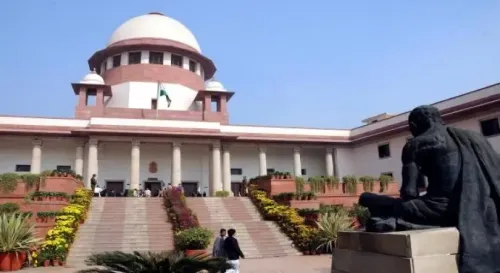
SC dismisses PIL against ST tax exemption in Northeast, cites legislative policy
Synopsis
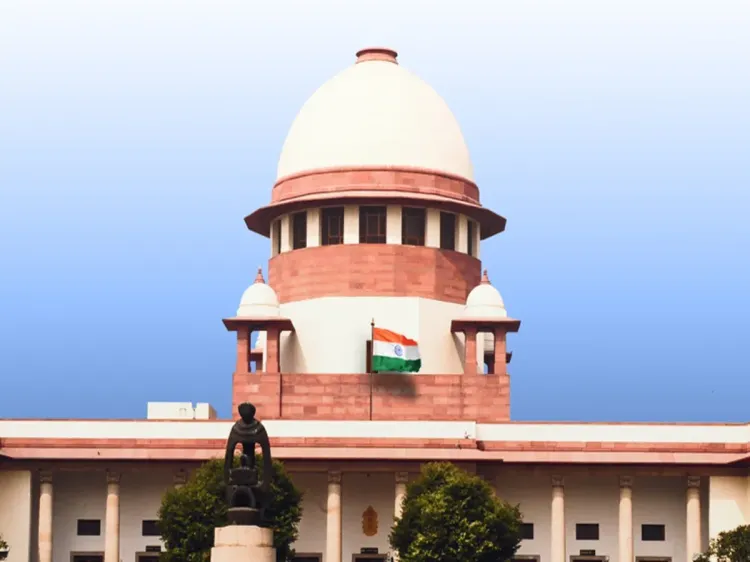
The Supreme Court shut the door on a PIL seeking to scrap or restrict the blanket income-tax exemption for Scheduled Tribes in the Northeast — but not on constitutional grounds. By calling it a 'legislative issue,' the bench has effectively handed the debate back to Parliament, where the creamy layer question for tribal communities remains politically charged and unresolved.
Key Takeaways
The Supreme Court on 16 June declined to entertain a PIL against the Scheduled Tribe income-tax exemption under the Income-Tax Act, 2025 .
The bench of CJI Surya Kant and Justice V.
Mohana ruled the matter a legislative policy issue, not a judicial one.
The PIL was filed by advocate Ashwini Kumar Upadhyay , challenging Section 11 read with Schedule III Serial No.
The petitioner sought either striking down the blanket exemption or introduction of a 'creamy layer' income threshold for eligibility.
The court directed the petitioner to approach Parliamentary committees and competent legislative authorities.
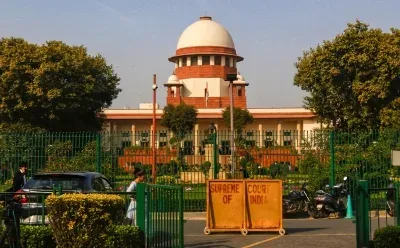
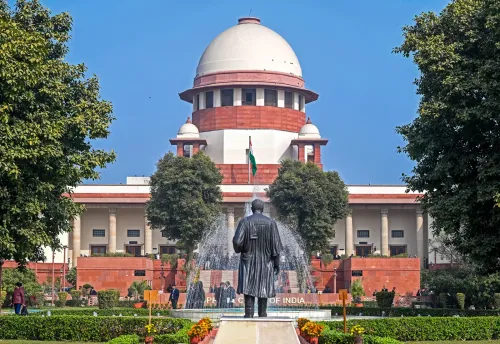
The Supreme Court on Tuesday, 16 June declined to entertain a Public Interest Litigation (PIL) challenging the constitutional validity of the income-tax exemption granted to Scheduled Tribes residing in the North Eastern Region under the Income-Tax Act, 2025. The bench held that the matter was essentially one of legislative policy and not judicial intervention.
What the Court Said
A bench comprising Chief Justice of India (CJI) Surya Kant and Justice V. Mohana observed that Parliament — not the judiciary — was the appropriate forum for addressing the petitioner's concerns. 'The grievance raised is essentially a legislative issue. Parliament has committees where every citizen can place suggestions for making or improving laws. We are sure the elected representatives are aware of these matters and will consider them,' the bench stated during the hearing.
The court left it open to the petitioner to approach competent authorities and Parliamentary committees entrusted with examining legislative reforms.
The PIL and Its Arguments
The writ petition was filed by advocate Ashwini Kumar Upadhyay, who challenged Section 11 read with Schedule III Serial No. 19 of the Income-Tax Act, 2025. The provision grants a blanket income-tax exemption to Scheduled Tribe individuals residing in notified areas of the North Eastern Region, with no income ceiling, asset-based exclusion, creamy layer principle, or periodic review mechanism.
Upadhyay argued that the exemption — originally conceived under Section 10(26) of the Income Tax Act, 1961 as a protective measure for tribal communities in geographically isolated and economically underdeveloped regions — had outlived its original justification. He contended that substantial infrastructural, educational, and commercial development in the region over the past two decades had materially altered the conditions that once warranted the classification.
The 'Creamy Layer' Demand
As an alternative to striking down the provision entirely, Upadhyay urged the court to direct the Centre to introduce a 'creamy layer' mechanism — proposing that Scheduled Tribe individuals earning above a prescribed annual income threshold should be ineligible for the exemption. The petition also sought the constitution of an expert committee to periodically review and recommend appropriate income thresholds for the benefit.
The plea further claimed that the blanket exemption created a structural disadvantage for non-exempt traders and professionals operating under similar economic conditions in the region.
Context and Significance
The income-tax exemption for Scheduled Tribes in the Northeast has been a longstanding feature of India's tax architecture, rooted in the constitutional framework for protecting tribal communities. Notably, the 'creamy layer' concept — already applied to Other Backward Classes (OBCs) for reservation benefits — has been a recurring demand in debates over Scheduled Tribe entitlements, though courts and successive governments have been cautious about extending it.
The Supreme Court's refusal to entertain the PIL on merits does not amount to an endorsement of the exemption's constitutionality; it simply redirects the debate to the legislative arena. Whether Parliament or its committees will take up the matter remains to be seen.
Point of View
Unchanged in substance since 1961, still passes constitutional muster under Article 14's reasonableness test. The creamy layer debate for Scheduled Tribes is politically explosive; successive governments have avoided it precisely because it risks alienating a constitutionally protected constituency. By punting to Parliament, the court has preserved its own institutional caution — but has not resolved the tension between protective discrimination and the principle that benefits must be proportionate to disadvantage.
NationPress
15 Sept 2026
Frequently Asked Questions
Why did the Supreme Court dismiss the PIL against the ST tax exemption?
The Supreme Court dismissed the PIL because it held the matter to be a legislative policy issue rather than a constitutional one fit for judicial review. The bench directed the petitioner to raise concerns before Parliamentary committees and competent legislative authorities instead.
What is the income-tax exemption for Scheduled Tribes in the Northeast?
Under Section 11 read with Schedule III Serial No. 19 of the Income-Tax Act, 2025 — originally rooted in Section 10(26) of the Income Tax Act, 1961 — Scheduled Tribe individuals residing in notified areas of the North Eastern Region are exempt from income tax, with no income ceiling or creamy layer restriction.
What is the 'creamy layer' mechanism the petitioner demanded?
The petitioner sought a rule excluding Scheduled Tribe individuals earning above a prescribed annual income threshold from the tax exemption — similar to the creamy layer principle already applied to OBCs in reservation matters. An expert committee for periodic review of thresholds was also sought.
Who filed the PIL and what were the main arguments?
Advocate Ashwini Kumar Upadhyay filed the PIL, arguing that two decades of infrastructure and commercial development in the Northeast had eroded the original justification for the blanket exemption. He contended the provision had become arbitrary and created a structural disadvantage for non-exempt professionals in the region.
Does the Supreme Court's dismissal mean the tax exemption is constitutionally valid?
No. The court's refusal to entertain the PIL on merits is not a ruling on the exemption's constitutionality. It simply means the court chose not to examine the issue at this stage, leaving the petitioner free to pursue the matter through legislative channels.