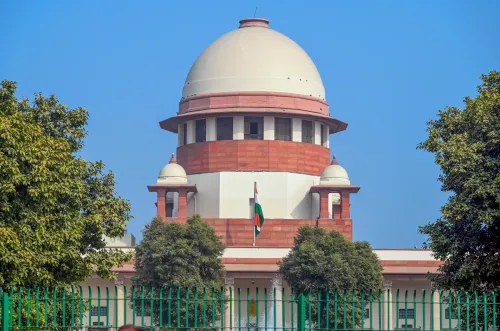
SC dismisses PIL for CBI probe into Tamil Nadu trust vote
Synopsis
The Supreme Court has shut down a PIL seeking a CBI investigation into the Tamil Nadu trust vote that brought Chief Minister C. Joseph Vijay's TVK government to power on 13 May 2026. CJI Surya Kant's bench found the petition built on 'casual allegations without any reliable material' — a firm judicial rebuke that closes this legal avenue while anti-defection proceedings elsewhere remain live.
Key Takeaways
The Supreme Court dismissed a PIL on 19 June seeking a CBI probe into the Tamil Nadu Legislative Assembly trust vote of 13 May 2026 .
The bench of CJI Surya Kant and Justice V.
Mohan found the petition based on 'casual allegations without any reliable material.' Petitioner K.K.
Ramesh had also sought imposition of President's Rule in Tamil Nadu pending investigation — that plea was also rejected.
The TVK government led by Chief Minister C.
Joseph Vijay secured its majority during the trust vote on 13 May 2026 .
The petition had cited the Supreme Court's 2024 Sita Soren judgment on legislator bribery immunity, but the court found no credible evidence to proceed.
The Supreme Court on Friday, 19 June dismissed a writ petition seeking a Central Bureau of Investigation (CBI) probe into alleged irregularities during the trust vote held in the Tamil Nadu Legislative Assembly on 13 May 2026, and a direction to impose President's Rule in the state pending such an inquiry. The bench found the petition built on vague, unsupported claims and declined to intervene.
What the Court Said
A bench comprising Chief Justice of India (CJI) Surya Kant and Justice V. Mohan dismissed the plea filed by petitioner K.K. Ramesh, recording in its order: 'We have heard for a considerable length. This writ petition is based on casual allegations without any reliable material to substantiate the same. No ground of interference is made out.'
The bench also remarked, pointedly, that the petitioner would not be disappointed by the dismissal of one Public Interest Litigation given the volume of PILs he had previously filed — a comment underscoring the court's scepticism about the petition's merit.
What the Petition Alleged
The plea, argued by advocate Jaya Sukin, had sought directions to the Union government, the CBI, and the Tamil Nadu government to investigate alleged corruption and horse-trading during the Assembly floor test. The trust vote, conducted on 13 May 2026, saw the Tamilaga Vettri Kazhagam (TVK) government led by Chief Minister C. Joseph Vijay secure a majority in the House.
The petitioner alleged that several legislators from rival parties were induced through monetary and other benefits to support the TVK government. He also claimed the floor test was not conducted in accordance with democratic principles, and sought dissolution of the Assembly pending a CBI investigation.
Legal Arguments Cited
The petition invoked the Supreme Court's 2024 Constitution Bench judgment in the Sita Soren case, contending that legislators accused of accepting bribes cannot claim immunity under Articles 105(2) and 194(2) of the Constitution. It also cited reported divisions within the All India Anna Dravida Munnetra Kazhagam (AIADMK) over support extended to the TVK government, and referenced pending anti-defection proceedings arising from the trust vote.
Why the Court Refused to Entertain the Plea
The apex court found that no concrete material had been placed on record to substantiate the allegations. In the absence of credible evidence, the bench held that no case for judicial intervention was made out. The dismissal effectively closes this particular legal challenge to the Tamil Nadu trust vote, though anti-defection proceedings in other forums remain pending.
The ruling reinforces the court's consistent position that PILs seeking extraordinary relief — such as a CBI probe or President's Rule — must be grounded in verifiable material, not bare assertions.
Point of View
But the court's order does not adjudicate on the substantive allegations of horse-trading; it simply found the petitioner brought no evidence to the table. Anti-defection proceedings and any future challenge backed by concrete material remain live possibilities. The invocation of the 2024 Sita Soren ruling was legally creative, but without documentary proof of inducement, it was always going to be insufficient for the threshold the court requires to order a CBI inquiry or recommend President's Rule — two of the most drastic interventions in India's constitutional framework.
NationPress
23 Sept 2026
Frequently Asked Questions
Why did the Supreme Court dismiss the PIL on the Tamil Nadu trust vote?
The Supreme Court dismissed the PIL because it found the allegations of irregularities in the Tamil Nadu trust vote to be vague and unsupported by any concrete evidence. CJI Surya Kant's bench held that no ground for judicial interference had been made out.
What did the PIL seek regarding the Tamil Nadu trust vote?
The petition sought a CBI probe into alleged corruption and horse-trading during the Tamil Nadu Legislative Assembly trust vote held on 13 May 2026, in which the TVK government led by Chief Minister C. Joseph Vijay secured a majority. It also sought imposition of President's Rule pending the investigation.
Who filed the PIL and who argued it?
The PIL was filed by petitioner K.K. Ramesh and argued before the Supreme Court by advocate Jaya Sukin. The bench noted that Ramesh had filed a significant number of PILs previously.
What is the Sita Soren case cited in the petition?
The Sita Soren case refers to a 2024 Supreme Court Constitution Bench judgment which held that legislators accused of accepting bribes cannot claim immunity under Articles 105(2) and 194(2) of the Constitution. The petitioner argued this precedent supported a probe into alleged inducements during the Tamil Nadu trust vote.
Does the dismissal end all legal challenges to the Tamil Nadu trust vote?
The Supreme Court's dismissal closes this particular PIL, but it does not resolve all related proceedings. Anti-defection cases arising from the trust vote remain pending in other forums, and a future challenge supported by credible material could still be filed.