Andhra Pradesh HC defers PIL seeking CBI probe into cases against CM Naidu to Nov 10

Synopsis
The Andhra Pradesh High Court has deferred to 10 November a PIL demanding CBI-led investigation into CID cases against CM N. Chandrababu Naidu — cases that were filed in 2024 and have since been closed by the ACB Court. With a complainant's pressure allegation now on the court's record, the bench faces a live constitutional question: does a closure report end the court's oversight, or does it begin it?
Key Takeaways
The Andhra Pradesh High Court adjourned to 10 November a PIL seeking CBI transfer of CID cases against CM N.
The PIL was filed in 2024 by petitioner Kotti Balagangadhar Tilak , anticipating that the change of government could compromise investigations.
Cases cover alleged irregularities in SC/ST assigned land transfers , an optical-fibre tender , skill development centres , Inner Ring Road land acquisition, excise policy , and free-sand policy .
The ACB Court has accepted closure reports, with the SIT citing insufficient evidence; the state argues the PIL is therefore infructuous.
A protest petition on record alleges that CID-SIT officials pressured a complainant to sign a no-objection certificate for case closure.
A bench led by Chief Justice Lisa Gill will next hear the matter on 10 November .
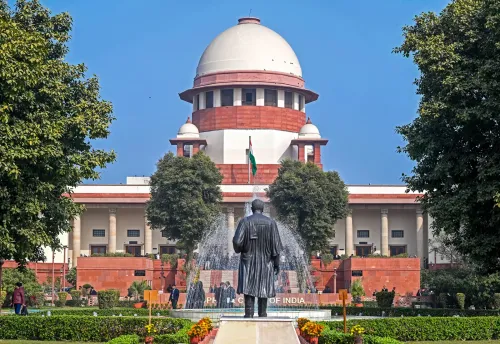
The Andhra Pradesh High Court on Thursday, 5 November 2026, adjourned to 10 November the hearing on a public interest litigation (PIL) seeking transfer of cases registered by the Crime Investigation Department (CID) against Chief Minister N. Chandrababu Naidu to the Central Bureau of Investigation (CBI) for an independent investigation. A bench headed by Chief Justice Lisa Gill granted the adjournment in the matter filed by petitioner Kotti Balagangadhar Tilak.
Background and What the PIL Challenges
The PIL was originally filed in 2024, shortly after the change of government in Andhra Pradesh, with the petitioner anticipating that the shift in political power could compromise ongoing CID investigations and result in their closure. Those fears, the petitioner argues, have since materialised — several cases were reportedly closed and treated as 'mistakes of fact' even as the PIL remained pending before the court.
The cases at the centre of the litigation span a wide range of alleged irregularities, including the transfer of assigned lands belonging to SC/ST community members, suspected irregularities in the award of an optical-fibre network tender, the establishment of skill development centres, land acquisition for the Inner Ring Road, excise-policy decisions, and the formulation and implementation of the free-sand policy.
Petitioner's Arguments for CBI Transfer
Senior Counsel Ranjith, appearing for the petitioner, contended that the complainants in these cases are government officials who have not come forward to challenge the closure reports — a situation he attributed to the current political climate with Chandrababu Naidu in power. He submitted that this effectively leaves the petitioner as the sole party seeking independent judicial scrutiny.
Counsel Ranjith further argued that the High Court, as a constitutional court, retains the authority to order an independent inquiry or transfer an investigation to the CBI even after closure reports have been filed and accepted — asserting that closure of a case does not extinguish the court's power to examine whether a fair probe was conducted.
An interlocutory petition has also been filed by the petitioner seeking directions to the Vijayawada Anti-Corruption Bureau (ACB) Court to prevent documents and electronic devices seized during investigations from being returned to the concerned individuals.
State Government's Counter: PIL Is Infructuous
Senior Advocate Mukul Rohatgi, appearing for the state government and the CID, urged the court during the previous hearing in October to dismiss the PIL as infructuous. He informed the bench that the Special Investigation Team (SIT) had filed final reports before the Vijayawada ACB Court concluding that sufficient evidence was not available to proceed in the cases against Naidu. The ACB Court subsequently ordered the closure of those cases.
Rohatgi also noted that some individuals had already filed revision petitions before the High Court challenging the closure orders, suggesting that the existing judicial mechanisms were adequate and that the PIL served no additional purpose.
Key Procedural Detail: Pressure Allegation on Record
According to the case-status chart placed before the court, closure reports have been filed and accepted across the cases, while related proceedings — including petitions seeking copies of reports and challenges to closures — remain pending. Notably, the chart also records a protest petition filed by a complainant in one assigned-land case, alleging that CID-SIT officials pressured the complainant to provide a no-objection certificate for the closure of that case. This allegation, on the court's record, adds a layer of complexity that the bench will be required to address when the matter is next taken up.
What Happens Next
The matter is now listed for hearing on 10 November before Chief Justice Gill's bench. The court will need to decide whether the PIL retains maintainability given the closure of the underlying cases, or whether the circumstances — particularly the pressure allegation and the petitioner's constitutional arguments — warrant a direction for CBI transfer or further inquiry. The outcome could have significant implications for how post-election investigations are scrutinised in Andhra Pradesh.
Point of View
Raising questions about whether the investigations were driven by evidence or political timing. The pressure-allegation entry in the case-status chart is the detail most likely to prevent the High Court from summarily dismissing this as infructuous — it places the court in a position where inaction would itself require justification. Senior Advocate Rohatgi's infructuousness argument is legally coherent, but it sidesteps the constitutional question of whether courts can pierce the closure to examine investigative propriety. How Chief Justice Gill's bench handles that tension on 10 November will signal how much judicial space exists for independent scrutiny of politically sensitive investigations in the state.
NationPress
5 Nov 2026
Frequently Asked Questions
What is the PIL against Chandrababu Naidu in the Andhra Pradesh High Court?
It is a public interest litigation filed in 2024 by Kotti Balagangadhar Tilak, seeking transfer of CID-registered cases against Chief Minister N. Chandrababu Naidu to the CBI for an independent and fair investigation. The cases relate to alleged irregularities in SC/ST land transfers, government tenders, skill development centres, and policy decisions.
Why was the PIL filed in 2024?
The petitioner filed the PIL after the 2024 change of government in Andhra Pradesh, anticipating that the new dispensation could influence CID investigations and lead to their closure. The petitioner contends that those fears have been borne out, with several cases since closed as 'mistakes of fact'.
What has the state government said in response to the PIL?
Senior Advocate Mukul Rohatgi, appearing for the state and CID, has urged the court to dismiss the PIL as infructuous, stating that the SIT filed final reports before the ACB Court citing insufficient evidence, and that the ACB Court ordered the closure of the cases. He also noted that revision petitions filed by some individuals against the closure orders are separately pending before the High Court.
What is the significance of the pressure allegation in the case-status chart?
A protest petition filed by a complainant in one assigned-land case, recorded in the court's case-status chart, alleges that CID-SIT officials pressured the complainant to provide a no-objection certificate for the case's closure. This allegation is on the court's record and could be a key factor in whether the bench orders further inquiry despite the closure reports.
When will the Andhra Pradesh High Court next hear the PIL?
The bench headed by Chief Justice Lisa Gill has adjourned the matter to 10 November 2026. The court is expected to rule on whether the PIL remains maintainable given the ACB Court's closure orders, and whether the circumstances warrant a CBI transfer or independent inquiry.