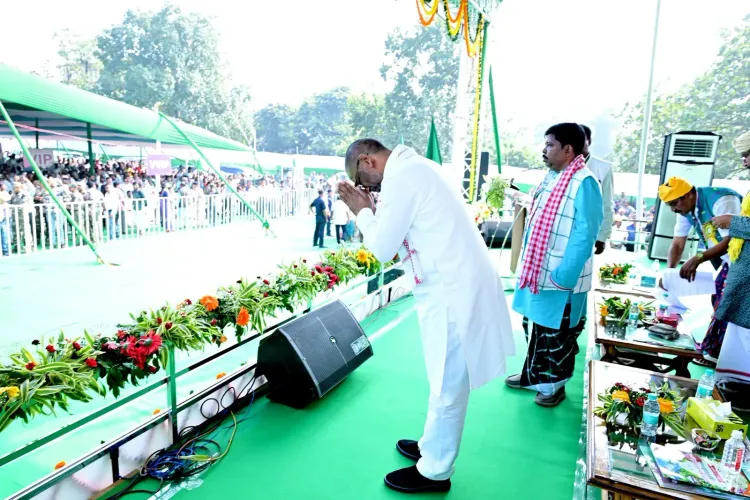
CM Hemant Soren at Marang Buru Mahasammelan in Giridih
Synopsis
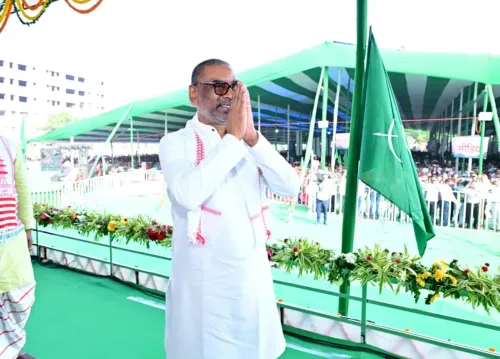
Chief Minister Hemant Soren and Gandey MLA Kalpana Soren attended the annual Marang Buru Dhoromgad Mahasammelan at Madhuban, Piratand in Giridih on 5 November 2026, joining Santhal communities at one of Jharkhand's most significant indigenous religious gatherings.
Key Takeaways
Chief Minister Hemant Soren attended the Marang Buru Dhoromgad Mahasammelan at Madhuban, Piratand, Giridih on 5 November 2026 .
Gandey MLA Kalpana Soren was present alongside the Chief Minister at the event.
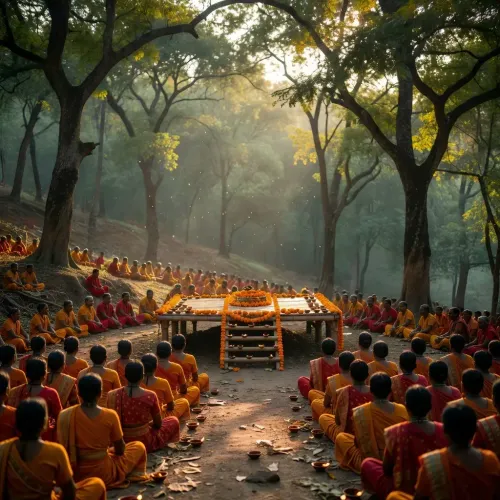
The Mahasammelan is an annual Santhal congregation centred on worship of Marang Buru , the community's supreme deity.
Giridih district holds a large Santhal and Adivasi population, giving the gathering significant cultural and political weight.
The Jharkhand Mukti Morcha has long maintained visible participation in Adivasi religious events as a cornerstone of its political identity.
In the forested heart of Piratand, Giridih, thousands of Santhal faithful gathered on Thursday, 5 November 2026 for the Marang Buru Dhoromgad Mahasammelan — and Chief Minister Hemant Soren was among them, seated not at a podium but at a pilgrimage. The Chief Minister's Office of Jharkhand confirmed his attendance alongside Gandey MLA Kalpana Soren at the annual congregation held at Madhuban, Piratand.
What the Marang Buru Mahasammelan is — and why it draws a Chief Minister
The Marang Buru Dhoromgad Mahasammelan is an annual gathering centred on the worship of Marang Buru, the supreme deity in Santhal cosmology — a mountain spirit regarded as the protector of the community's ancestral way of life. Held at Madhuban in Piratand block, the event brings together Santhal communities from across Giridih and neighbouring districts for collective prayer, cultural expression, and community dialogue. It is not a state function; it is a living indigenous religious tradition, and that distinction matters.
Giridih district carries one of Jharkhand's most significant Santhal and broader Adivasi populations, making Piratand a site of genuine cultural weight — not a ceremonial backdrop. For a Chief Minister from the Jharkhand Mukti Morcha, a party founded on the demand for tribal dignity and eventual statehood, showing up here is an act of political and cultural alignment that pre-dates electoral calendars.
The Sorens in Piratand: faith, politics, and the JMM base
Hemant Soren, who has led Jharkhand since 2019 and represents a tribal constituency, has consistently maintained visible participation in Adivasi religious and cultural events as a core feature of his governance style. His spouse and Gandey MLA Kalpana Soren attended alongside him — a pairing that the JMM has deployed effectively to signal grassroots continuity across the state's tribal heartlands.
The Jharkhand Mukti Morcha's political identity is inseparable from its stewardship of Adivasi faith and land rights. Attending a Mahasammelan of this scale is consistent with that identity — but it also carries a practical signal to Santhal communities that the state's highest office regards their spiritual gatherings as legitimate public occasions deserving the Chief Minister's presence.
What comes next from Giridih
Events like the Mahasammelan often precede district-level announcements on tribal cultural sites, heritage preservation, or minor infrastructure in areas like Piratand. With the winter assembly session approaching, any commitments made at or around such gatherings typically surface in budget discussions or departmental allocations for Scheduled Tribe welfare. Giridih and its Santhal communities will be watching.
When a Chief Minister travels to a forest-block pilgrimage rather than summoning communities to Ranchi, the signal is clear: the state comes to the people, not the other way around.
Point of View
Particularly in districts like Giridih where Santhal populations remain both electorally and culturally decisive. Including Kalpana Soren — a relatively newer but increasingly prominent face of the JMM — extends that outreach to a second generation of party identity. As Jharkhand approaches its winter assembly session, such events also serve as informal temperature checks on community priorities, making Piratand not just a pilgrimage site but a pulse point for the state government.
NationPress
5 Nov 2026
Frequently Asked Questions
What is the Marang Buru Dhoromgad Mahasammelan?
The Marang Buru Dhoromgad Mahasammelan is an annual gathering of the Santhal community centred on the worship of Marang Buru, the supreme deity in Santhal cosmology. It is held at Madhuban in Piratand block, Giridih district, Jharkhand, and brings together Santhal communities for collective prayer and cultural expression.
Why did CM Hemant Soren attend the Mahasammelan in Giridih?
Chief Minister Hemant Soren, who leads the Jharkhand Mukti Morcha — a party founded on tribal rights and Adivasi dignity — routinely attends Santhal and Adivasi religious gatherings to maintain direct ties with indigenous communities that form the core of the JMM's political base.
Who is Kalpana Soren and why was she at the event?
Kalpana Soren is the MLA from Gandey constituency and spouse of Chief Minister Hemant Soren. She attended the Marang Buru Dhoromgad Mahasammelan alongside the Chief Minister, reflecting her active role in JMM outreach to tribal communities across Jharkhand.
Where is Piratand and why is it significant for Santhal culture?
Piratand is a block in Giridih district, Jharkhand. Giridih has one of the state's largest Santhal and Adivasi populations, and the Madhuban site in Piratand has become an established venue for the annual Santhal congregation around Marang Buru worship.
What is Marang Buru in Santhal belief?
Marang Buru, meaning 'Great Mountain,' is the supreme deity in Santhal indigenous religion, regarded as the protector of the community's ancestral way of life and spiritual identity. Worship of Marang Buru is central to Santhal cosmology and community cohesion.