Amit Shah hits Congress: 'Blaming the referee when you lose'
Synopsis
Union Home Minister Amit Shah on November 5, 2026, accused Congress of reflexively blaming the Election Commission after losing elections, comparing the opposition to a team that blames the referee rather than accepting defeat.
Key Takeaways
Amit Shah posted a pointed attack on Congress on November 5, 2026 , accusing the party of blaming the Election Commission of India after electoral defeats.
Shah used a childhood sporting analogy: 'When a team cannot win, it puts the blame on the referee.' The charge continues a pattern since 2014 of BJP framing opposition critiques of electoral institutions as refusal to accept defeat.
Opposition concerns about the Election Commission's processes — including EVM reliability questions prominent after 2019 — form the backdrop to Shah's remark.
Congress had not issued a formal response to this specific post at the time of publication.
The exchange highlights persistent partisan contestation over the Election Commission's credibility and independence.
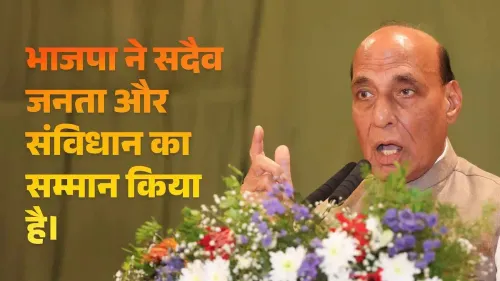
When a team can't win, it blames the referee — that is the sharp, unambiguous charge Union Home Minister Amit Shah levelled at the Indian National Congress on Thursday, November 5, 2026, in a pointed post on X that cut straight to the heart of a recurring fault line in Indian democracy.
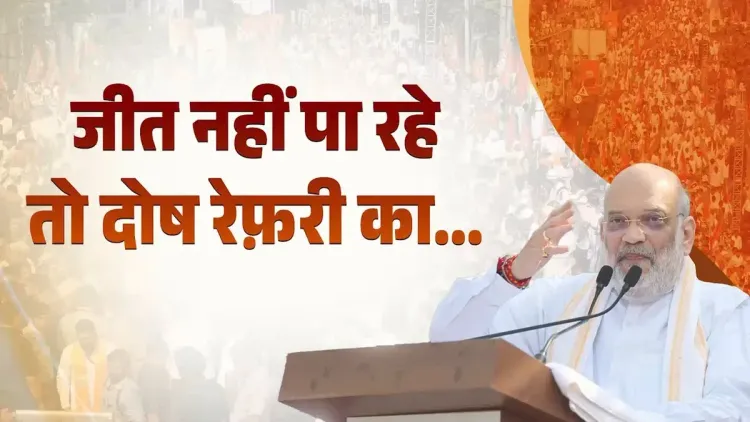
Shah wrote in Hindi: 'कांग्रेस आज वही कर रही है जो हम बचपन से देखते आए हैं, जब कोई टीम जीत नहीं पाती तो दोष रेफरी के सिर मढ़ देती थी.' Translated: 'Congress today is doing exactly what we have watched since childhood — when a team cannot win, it puts the blame on the referee.'
The sporting metaphor is disarmingly simple, but the political target is precise: Shah is accusing Congress of delegitimising the Election Commission of India rather than confronting its own electoral setbacks.
A pattern older than any single election
This is not a new skirmish. Since 2014, a recurring cycle has played out after national and state polls — Congress and allied parties raise concerns about the electoral process, and BJP responds by framing those concerns as sore-loser politics. The row over Electronic Voting Machine reliability that surfaced loudly after the 2019 Lok Sabha elections is perhaps the most prominent chapter in that cycle, but it is far from the only one.
Shah's choice of a childhood analogy is deliberate. It frames Congress's critique not as a principled constitutional argument but as an instinctive, undignified reflex — something recognisable, predictable, even childlike. That framing is itself a political act, designed to pre-empt the opposition's narrative before it gains traction.
What hangs over the Election Commission
The Election Commission of India is a constitutional body, and any sustained public campaign questioning its credibility carries real institutional stakes — regardless of which side is making the argument. When a major national party repeatedly signals distrust in the umpire, it erodes the confidence of voters in the outcome's legitimacy. Equally, when the ruling party dismisses every institutional critique as bad losership, it forecloses legitimate accountability conversations.
That tension — between protecting institutional authority and holding it to account — is the deeper contest Shah's post sits inside, even if the post itself only fires one volley in it.
Congress is yet to formally respond to this specific post. Watch for a counter-statement from the party's leadership that will almost certainly reframe the charge: not as blaming a referee, but as defending a constitutional safeguard. The rally of words is already in motion — and the real match is over who gets to define what this fight is actually about.
Point of View
BJP attempts to discredit any post-election institutional challenge before it crystallises into a credible public grievance. This tactic has worked electorally for the party since 2014, hardening its base while putting Congress on the defensive over its own institutional credibility. Yet the strategy carries a cost: habitually dismissing all electoral-process concerns as sour grapes also insulates the governing establishment from legitimate scrutiny of the Election Commission. The real contest is therefore not about one result — it is about which side gets to set the terms of democratic accountability in India.
NationPress
6 Nov 2026
Frequently Asked Questions
What did Amit Shah say about Congress and the Election Commission?
On November 5, 2026, Amit Shah posted on X accusing Congress of blaming the Election Commission after losing elections, comparing the party to a team that blames the referee when it cannot win.
Why does Congress question the Election Commission of India?
Congress and allied opposition parties have periodically raised concerns about electoral processes — including EVM reliability — especially after major defeats like the 2019 Lok Sabha elections, arguing these are legitimate constitutional issues rather than excuses.
What is the BJP's standard response to opposition criticism of the Election Commission?
BJP, led by leaders including Amit Shah, consistently frames such criticism as an inability to accept democratic outcomes, accusing the opposition of undermining institutional trust to deflect from their own electoral shortcomings.
Is the Election Commission of India independent?
Yes. The Election Commission of India is a constitutional body whose independence is guaranteed under Article 324 of the Constitution, though it has frequently been at the centre of political disputes over its functioning and impartiality.
What was the specific election that triggered Amit Shah's November 2026 post?
The specific election result or controversy that prompted Shah's November 5, 2026 post has not been confirmed in publicly available information at the time of this report.