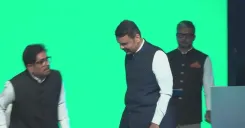
Raghav Chadha backs Amit Shah's tough questions to opposition

Synopsis
AAP Rajya Sabha MP Raghav Chadha publicly endorsed Home Minister Amit Shah's challenge to India's opposition, calling out the recurring cycle of blaming EVMs, voter lists, and procedural lapses for electoral defeats rather than confronting organisational failures.
Key Takeaways
Raghav Chadha , AAP Rajya Sabha MP, backed Amit Shah's pointed questions to the opposition on October 14, 2026 .
Chadha called post-defeat excuses — centred on EVMs, voter lists, and SIR — unproductive and deflecting from real failures.
Opposition concerns over EVM integrity date back prominently to the 2019 Lok Sabha elections ; voter-list disputes followed in state polls from 2021 to 2023 .
An AAP spokesperson endorsing a BJP leader's framing on electoral accountability is a notable cross-party moment.
The Election Commission of India has consistently defended EVM reliability through technical audits and demonstrations.
Parliamentary sessions and upcoming Election Commission statements on reform will be the next arena for this debate.
Losing an election is one thing. Blaming the machines, the voter rolls, and the system is another — and AAP Rajya Sabha MP Raghav Chadha has had enough of it. In a sharp post on X on Wednesday, October 14, 2026, Chadha threw his weight behind Union Home Minister Amit Shah, saying the opposition's post-defeat excuse-making solves nothing.
Writing in Hindi, Chadha laid it out plainly: 'कभी EVM, कभी वोटर लिस्ट, कभी SIR...' — 'First EVMs, then voter lists, now SIR... making excuses after a defeat is very easy. Blaming others for losing due to one's own failures achieves nothing.' He then urged followers to listen to what he called 'some hard questions' that Amit Shah has posed to India's opposition.
The EVM blame cycle India can't seem to quit
The pattern Chadha is pointing to is a well-worn groove in Indian politics. After the 2019 Lok Sabha elections, multiple opposition parties raised questions over Electronic Voting Machine (EVM) integrity — a debate the Election Commission of India has consistently rebutted with technical audits and cross-party demonstrations. Voter-list revision concerns followed in state polls between 2021 and 2023, with parties on the losing side flagging deletions and additions as suspicious.
The latest acronym in the frame — SIR — adds a fresh chapter to this recurring storyline. Each election cycle, the vocabulary of grievance expands; the underlying argument stays the same. Ruling parties respond, predictably, that organisational failures and leadership disconnect are the real culprits, not systemic rigging. Chadha, from within the AAP fold, is this time singing from that very hymn sheet.
Why an AAP voice backing Shah is the real story
What makes this post notable is not the argument itself — it is who is making it. Raghav Chadha is a national spokesperson for the Aam Aadmi Party, a party that has itself, at various points, raised concerns about electoral fairness. His explicit endorsement of Amit Shah's framing — urging people to 'definitely listen' — signals a deliberate political positioning, not an offhand comment.
It reflects a broader moment in Indian politics where the lines of electoral criticism are being redrawn, and where accountability for defeat is being demanded — loudly, and across party lines.
The next test will come in parliamentary exchanges and any forthcoming Election Commission statements on process reforms. When those arrive, the opposition's response to Shah's questions will tell us whether this debate has moved forward — or whether the cycle simply resets.
Point of View
While signalling pragmatic alignment with a dominant electoral accountability discourse. The EVM controversy has historically served as a pressure valve for losing parties, but its repeated invocation has diminishing returns — and Chadha is betting that voters notice. Broader pattern: parties that absorb defeat, conduct internal reviews, and rebuild organisationally tend to recover faster than those that anchor their identity to systemic grievance. Whether this post marks a genuine ideological shift for AAP or is tactical positioning ahead of future elections will only become clear when the next contest arrives.
NationPress
14 Oct 2026
Frequently Asked Questions
What did Raghav Chadha say about EVMs and the opposition?
Raghav Chadha said that blaming EVMs, voter lists, or procedural issues like SIR after losing elections is simply excuse-making, and that attributing defeat to others rather than one's own failures achieves nothing.
What questions did Amit Shah ask the opposition?
Chadha's post references 'hard questions' posed by Home Minister Amit Shah to the opposition, urging followers to listen to them, but the specific questions were part of a video and have not been independently detailed in this post.
Why do opposition parties in India blame EVMs after elections?
Opposing parties have raised EVM integrity concerns after several elections, particularly since 2019, arguing that technical glitches or manipulation could alter results — claims the Election Commission has consistently refuted.
What is SIR in the context of Indian elections?
SIR in this post appears to refer to a recent electoral process or review mechanism cited by opposition parties as a grievance; the specific details were flagged as unverified from available public record.
Why is it significant that an AAP MP is supporting Amit Shah's position?
AAP and BJP are political rivals, making Chadha's endorsement of Shah's framing on electoral accountability a notable departure that signals AAP may be distancing itself from opposition parties still relying on institutional-blame narratives.