CM Sai Highlights Ayushman Bharat's Role in Women's Health
Synopsis
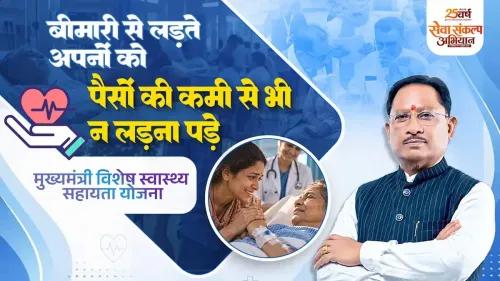
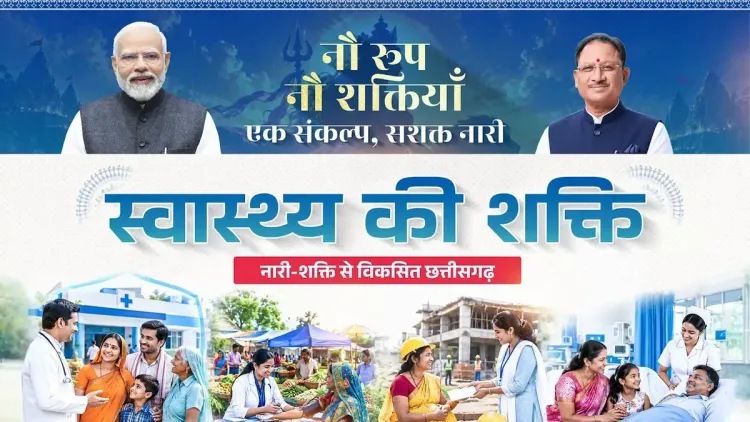
Chhattisgarh CM Vishnu Deo Sai, on the occasion of Navratri 2026, underscores the state government's push to extend Ayushman Bharat's annual ₹5 lakh cashless health cover to eligible women and families, vowing no woman will be denied care due to financial hardship.
Key Takeaways
Chhattisgarh CM Vishnu Deo Sai posted on 14 October 2026 during Navratri emphasising the state's implementation of Ayushman Bharat for women.
Eligible families receive up to ₹5 lakh per year in cashless hospitalisation coverage under the scheme.
Ayushman Bharat was launched nationally in 2018 to reduce out-of-pocket health expenditure for low-income households.
The post specifically highlights women — referred to as maatrishakti — as central beneficiaries of the scheme in Chhattisgarh .
The messaging coincides with the Navratri festival, leveraging its celebration of feminine energy to amplify the welfare outreach.
The government's stated resolve is that no woman in Chhattisgarh should be denied treatment due to financial hardship.
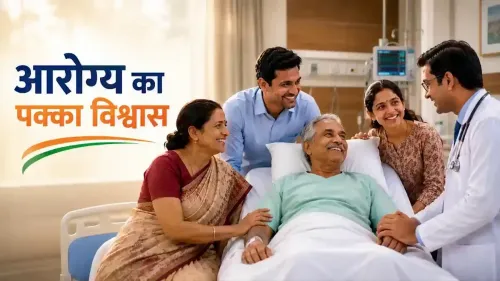
During Navratri 2026, Chhattisgarh Chief Minister Vishnu Deo Sai turned the spotlight on a commitment that cuts deeper than a seasonal message — ensuring that no woman in the state is denied medical treatment because she cannot afford it. The vehicle: the centrally-backed Ayushman Bharat Pradhan Mantri Jan Arogya Yojana, now being actively leveraged to shield families from catastrophic hospital bills.
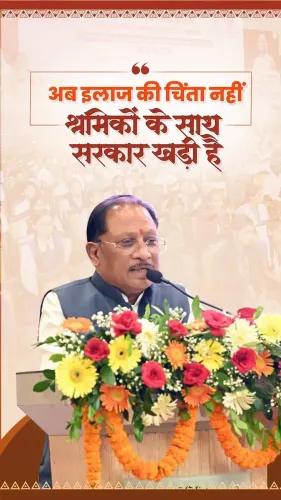
In his post, CM Sai wrote — 'Maata-bahnon ke behtar swasthya ki zimmedari nibha rahi hai sushasan sarkar' — 'The good-governance government is fulfilling its responsibility for the better health of mothers and sisters.' The message is direct: eligible families receive cashless treatment worth up to ₹5 lakh per year, so that hospitalisation costs never become a household crisis.
₹5 Lakh Cashless Cover: Who It Reaches in Chhattisgarh
Ayushman Bharat was launched nationally in 2018 specifically to reduce out-of-pocket health expenditure for low-income households — a population segment where a single hospitalisation can wipe out months of savings. The scheme covers secondary and tertiary care, and in Chhattisgarh, the state government has chosen the occasion of Navratri to sharpen its messaging around women beneficiaries, describing them as 'maatrishakti' — the strength of motherhood.
CM Sai framed the government's intent plainly: 'Maatrshakti swasth rahe, hamara bhavishya swasth rahe aur Chhattisgarh ki koi bhi mahila aarthik pareshani ke kaaran ilaaj se vanchit na rahe' — 'Let mothers remain healthy, let our future remain healthy, and let no woman in Chhattisgarh be deprived of treatment because of financial hardship.' That is described as the government's sankalp — resolve — and ongoing effort.
Navratri Timing and the Welfare Messaging Strategy
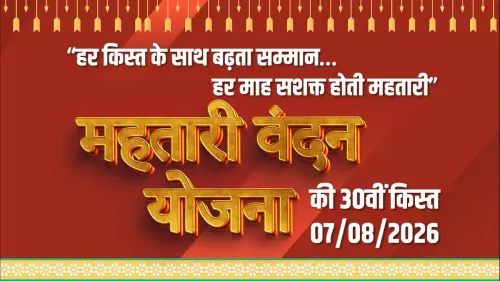
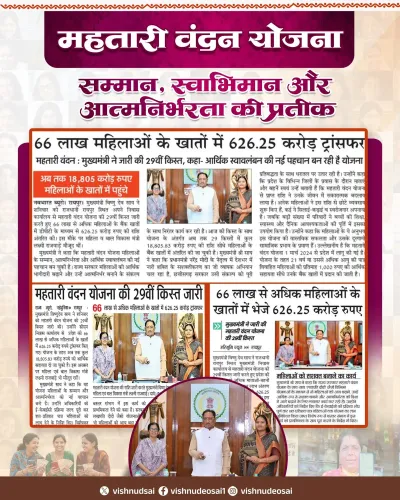
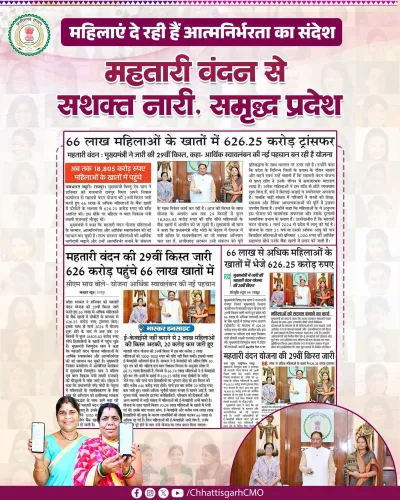
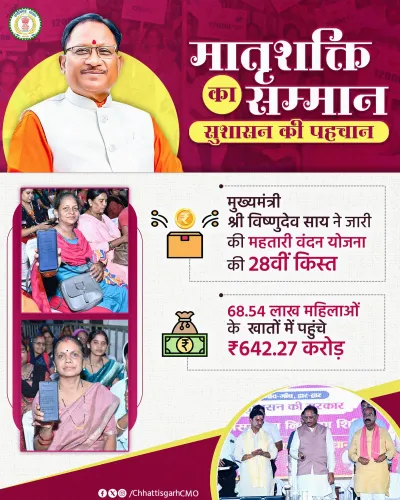
The BJP-led state government's choice to amplify this message during Navratri — a nine-night festival celebrating feminine divine energy — is deliberate. The hashtags #महतारी_का_सम्मान and #महतारी_के_मान invoke the Chhattisgarhi word mahtari (mother), signalling a culturally rooted welfare pitch aimed squarely at rural and semi-urban women voters who are also the primary beneficiaries of the scheme.
For a state where tribal and rural populations remain significant, cashless hospitalisation is not a bureaucratic talking point — it is the difference between seeking care and avoiding it. The scheme's design removes the upfront-payment barrier that historically kept the poorest families away from hospitals.
Whether enrolment numbers and actual claim utilisation in Chhattisgarh during 2026 match the ambition of the messaging will be the real measure — and that data is what analysts will watch next.
Point of View
Maatrishakti) to build electoral goodwill among women constituents. For a state with significant rural and tribal populations, the ₹5 lakh cashless cover addresses a genuine access barrier, giving the messaging both political utility and substantive policy backing. The BJP's broader national pattern of using women-centric welfare schemes as a pillar of governance narrative is clearly visible here. The real test, however, is administrative delivery: beneficiary enrolment depth and claim settlement rates in Chhattisgarh will ultimately determine whether the promise matches ground reality.
NationPress
14 Oct 2026
Frequently Asked Questions
What is Ayushman Bharat and how does it help women in Chhattisgarh?
Ayushman Bharat Pradhan Mantri Jan Arogya Yojana is a central government health insurance scheme launched in 2018 that provides eligible families up to ₹5 lakh per year in cashless coverage for secondary and tertiary hospitalisation. In Chhattisgarh, the state government under CM Vishnu Deo Sai is actively promoting it with a focus on women beneficiaries so that no woman is denied treatment due to financial hardship.
How much cashless treatment can a family get under Ayushman Bharat?
Eligible beneficiary families can avail cashless hospitalisation treatment worth up to ₹5 lakh per year under the Ayushman Bharat scheme, covering secondary and tertiary care without needing to pay upfront at empanelled hospitals.
Why did CM Vishnu Deo Sai post about Ayushman Bharat during Navratri 2026?
CM Sai used the Navratri 2026 festival — which celebrates feminine divine energy — to highlight the government's welfare commitment to women, using culturally resonant language and hashtags like #महतारी_का_सम्मान to connect the scheme's benefits to the occasion.
Who is eligible for Ayushman Bharat in Chhattisgarh?
Ayushman Bharat targets low-income households identified through government databases. Eligible families, including women members, can access cashless treatment at empanelled hospitals; the scheme is designed specifically to protect those who cannot afford large out-of-pocket medical expenses.
What does 'mahtari' mean in the context of Chhattisgarh welfare schemes?
'Mahtari' is the Chhattisgarhi word for 'mother.' The BJP-led state government uses it in welfare messaging and hashtags like #महतारी_का_सम्मान (honour of the mother) to frame women-centric programmes in a locally rooted cultural vocabulary.