CM Sai Marks 12 Years of Modi Govt Health Reforms
Synopsis
Chhattisgarh CM Vishnu Deo Sai marked 12 years of Modi government health reforms on 14 June 2026, crediting Ayushman Bharat and expanded medical infrastructure with delivering security to crores of poor and rural families across India.
Key Takeaways
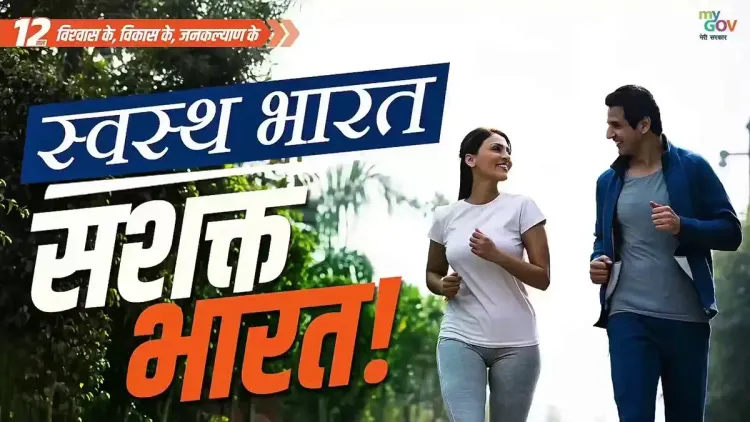
CM Vishnu Deo Sai posted on 14 June 2026 under #12YearsOfSwasthBharat , marking a BJP-framed milestone of Modi-era health governance.
Ayushman Bharat PMJAY , launched in September 2018 , provides up to Rs 5 lakh per family per year for hospitalisation costs.
The scheme targets economically weaker households and aims to eliminate catastrophic out-of-pocket health spending.
Chhattisgarh , with large tribal and rural populations, is an implementing state under the Ayushman Bharat framework with state top-up provisions.
The post aligns with a broader BJP pattern of using welfare scheme milestones as governance and electoral messaging.
Focus now shifts to utilisation data and potential coverage expansion in the next Union Budget or National Health Authority announcement.
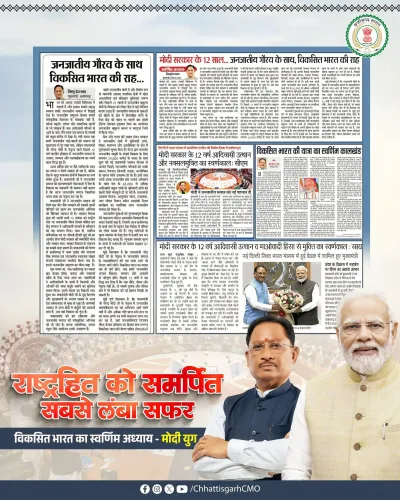
Chhattisgarh Chief Minister Vishnu Deo Sai on Sunday, 14 June 2026 credited Prime Minister Narendra Modi with transforming India's healthcare landscape over the past 12 years, saying flagship schemes such as Ayushman Bharat have brought security and confidence to crores of families.
Context
Posting under the hashtag #12YearsOfSwasthBharat, Chief Minister Sai wrote that the guiding principle behind the reforms was ensuring that 'no family's savings are wiped out by illness and no poor person's hope is broken by the absence of treatment.' The post marks what the Bharatiya Janata Party (BJP) is framing as a 12-year milestone of health-sector governance under Prime Minister Modi, who took office in May 2014.
Sai, a senior BJP leader who became Chief Minister of Chhattisgarh after the party's victory in the state's late-2023 assembly election, has consistently amplified central government welfare messaging through his official social-media channels.
Policy Backdrop
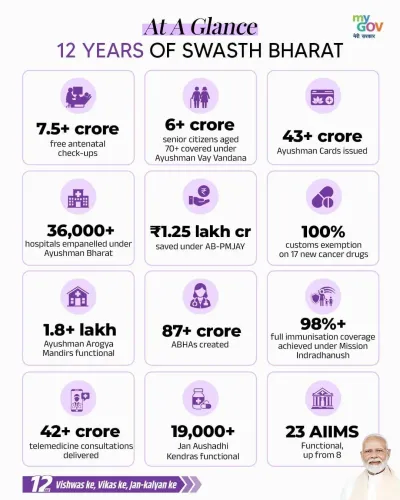
Ayushman Bharat, launched in September 2018, is the umbrella health programme at the centre of the '12 years' narrative. Its Pradhan Mantri Jan Arogya Yojana (PMJAY) arm provides up to Rs 5 lakh per family per year for secondary and tertiary hospitalisation, targeting economically weaker sections.
The scheme is complemented by Health and Wellness Centres aimed at expanding primary care access, and sits within a broader policy lineage that includes the National Health Policy of 2017 and the expanded Mission Indradhanush immunisation drive initiated in 2014–15. Chhattisgarh, a state with substantial tribal and rural populations, has been integrated into the Ayushman Bharat framework through co-branding and state top-up provisions.
Stakeholders and Impact
The primary beneficiaries of the schemes highlighted by CM Sai are economically weaker households and rural and tribal patients — groups historically dependent on out-of-pocket spending for hospital care. Chhattisgarh's geography, with large forested districts and dispersed populations, has made access to tertiary care a long-standing challenge.
By channelling central insurance coverage through empanelled hospitals, the PMJAY model aims to reduce the financial shock of serious illness. The Chief Minister's post frames this as a shift from vulnerability to 'security and belief' — suraksha aur vishwas — for millions of households.
What's Next
Attention will now turn to state-level utilisation data from Chhattisgarh and other implementing states, as well as any proposed expansion of Ayushman Bharat coverage that may be signalled in the next Union Budget or through the National Health Authority. The '12 years' framing suggests the BJP intends to position health-sector gains as a core electoral and governance narrative heading into future election cycles.
For a state like Chhattisgarh — where healthcare delivery in remote districts remains a work in progress — the degree to which insurance coverage translates into on-the-ground treatment access will be the real test of the policy's reach.
Point of View
The BJP is attempting to make health security a settled achievement rather than an ongoing aspiration, a narrative that carries particular weight in a state like Chhattisgarh where rural healthcare access remains uneven. The emphasis on 'savings' and 'hope' is deliberate emotional framing aimed at the scheme's core constituency: households for whom a single hospitalisation can mean financial ruin. Whether the on-ground utilisation numbers in Chhattisgarh can sustain this narrative is the question that will define its credibility.
NationPress
24 Sept 2026
Frequently Asked Questions
What is Ayushman Bharat and who benefits from it?
Ayushman Bharat is a central government health programme launched in 2018. Its PMJAY component provides up to Rs 5 lakh per year in cashless hospitalisation cover to economically weaker families for secondary and tertiary care.
Why did Chhattisgarh CM Vishnu Deo Sai post about Modi's health schemes?
CM Sai posted on 14 June 2026 to mark what the BJP is calling 12 years of health-sector transformation under PM Modi, using the hashtag #12YearsOfSwasthBharat to highlight schemes like Ayushman Bharat.
How has Chhattisgarh implemented Ayushman Bharat?
Chhattisgarh is an implementing state under the Ayushman Bharat framework, with co-branding and state-level top-up provisions extending coverage to its significant tribal and rural populations.
What does PMJAY cover and what is its insurance limit?
Pradhan Mantri Jan Arogya Yojana (PMJAY) covers secondary and tertiary hospitalisation expenses up to Rs 5 lakh per family per year, targeting households below the economic threshold defined by the scheme.
What is the significance of '12 years of Swasth Bharat'?
The phrase refers to the 12-year period since PM Modi's government took office in May 2014, during which the BJP says it expanded health infrastructure, launched Ayushman Bharat, and pursued universal health coverage goals under the National Health Policy 2017.