Amit Shah ties Congress MLA decline to Rahul Gandhi's rise
Synopsis
Union Home Minister Amit Shah posted on X on 5 November 2026 drawing a direct line between Rahul Gandhi's successive Congress promotions and a sharp fall in party MLAs — from roughly 1,200 in 2007 to around 600 after the Bharat Jodo Yatra.
Key Takeaways
Union Home Minister Amit Shah posted on 5 November 2026 arguing that Congress's MLA count fell at every stage of Rahul Gandhi's rise within the party.
Shah claims the tally dropped from approximately 1,200 MLAs in 2007 (when Rahul became General Secretary) to around 600 after the Bharat Jodo Yatra .
The specific MLA figures cited in the post are unverified, but Congress's broader electoral decline — including record-low 44 Lok Sabha seats in 2014 — is on the public record.
The Bharat Jodo Yatra (2022–23) , billed as a Congress revival exercise, is used by Shah as the final data point in the decline sequence.
The post is part of a recurring BJP strategy to frame Congress's organisational weakening as a consequence of Rahul Gandhi's personal leadership.
The timing, ahead of upcoming state assembly elections, suggests the attack is designed to set a pre-poll narrative around Congress's diminishing legislative footprint.
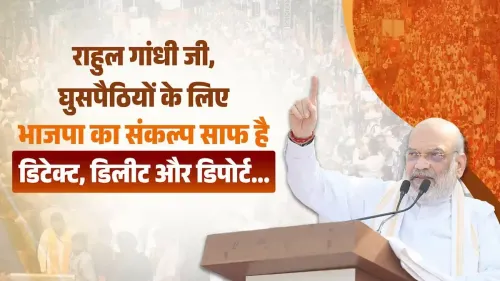
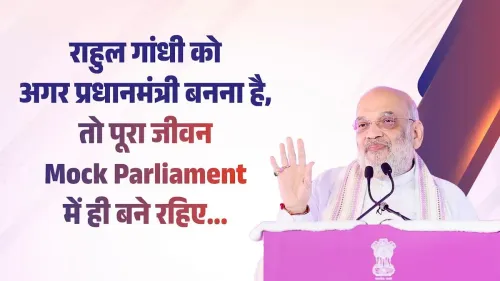
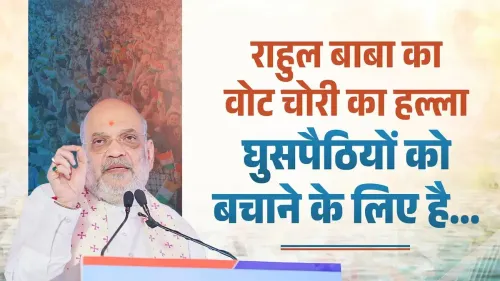
Every time Rahul Gandhi climbed a rung inside the Indian National Congress, the party's legislative footprint shrank — that is the pointed argument Union Home Minister Amit Shah put before the country on Thursday, 5 November 2026, in a sharply worded post on X that turned Congress's own internal milestones into a scorecard of decline.
Shah's arithmetic: four promotions, four slides
Shah's post lays out a step-by-step sequence in Hindi: when Rahul Gandhi became General Secretary in 2007, Congress had roughly 1,200 MLAs across the country. By the time he was elevated to Vice President, the number had fallen to around 900. His ascent to party President coincided with a further drop to approximately 700 MLAs. And after the flagship Bharat Jodo Yatra — the pan-India march of 2022–23 meant to signal a Congress revival — the tally, Shah argues, slid further to around 600.
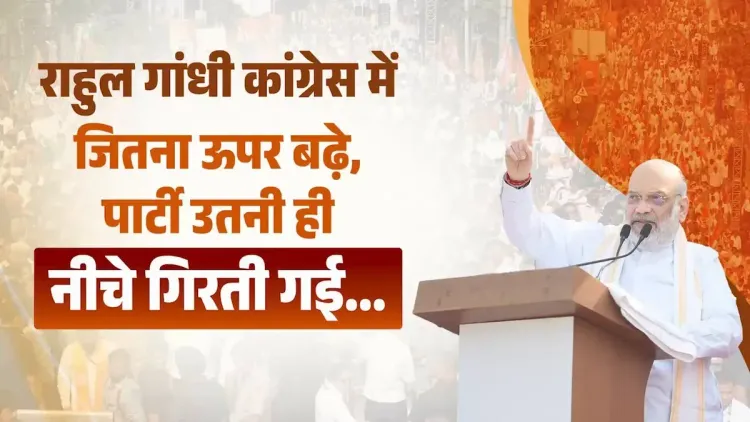
The post captures the argument in one crisp Hindi line: 'राहुल गांधी कांग्रेस में जितना आगे बढ़े, पार्टी उतनी ही पीछे खिसकती गई' — 'The further Rahul Gandhi advanced within Congress, the further the party slipped back.' It is a rhetorical construction built to sting.
The Lok Sabha backdrop that makes the claim land harder
Shah's MLA numbers cannot be independently verified from established records, but the broader arc of Congress's electoral trajectory is not in dispute. The party crashed to just 44 Lok Sabha seats in 2014 — its worst parliamentary performance ever — before recovering slightly to 52 seats in 2019. Neither figure suggests a party in rude health. That verified Lok Sabha slide gives Shah's state-level argument a credible tailwind, even where the precise MLA counts are contested.
Congress did win notable state elections during this period, but its aggregate legislative presence across all assemblies — the number Shah is invoking — has undeniably narrowed from the multi-state dominance it once commanded.
Why Shah is making this argument now
The post arrives as several state assembly elections loom on the calendar, making it a pointed pre-poll frame: vote Congress, and you accelerate an already-established pattern of retreat. The BJP has consistently used Congress's organisational data against it, but framing the decline as a direct function of one individual's leadership is a sharper, more personal cut. It personalises what might otherwise read as a structural story — and in Indian politics, personalisation travels faster.
For Congress, the counter-argument typically points to the Bharat Jodo Yatra's grassroots energy and Rahul Gandhi's growing connect with younger voters. But Shah's post ignores the optics and goes straight to the ledger. The implication is blunt: results, not rallies, tell the real story.
Point of View
The attack makes structural electoral decline feel like individual accountability. The Bharat Jodo Yatra, Congress's most high-profile rebranding effort in years, is recast as the final chapter in a story of retreat rather than recovery. With state elections approaching, the framing is strategically timed to suppress Congress's narrative of grassroots renewal before it can consolidate. Whether the precise numbers hold up to scrutiny matters less in the short term than whether the sequential logic sticks in the public mind.
NationPress
6 Nov 2026
Frequently Asked Questions
What did Amit Shah say about Rahul Gandhi and Congress MLAs?
Amit Shah posted on X claiming that Congress's MLA count fell progressively with each of Rahul Gandhi's promotions — from roughly 1,200 in 2007 to around 600 after the Bharat Jodo Yatra — arguing that the party declined in proportion to Rahul's rise.
How many MLAs does Congress have now according to Amit Shah?
Shah's post states that Congress is left with around 600 MLAs after the Bharat Jodo Yatra, though these exact figures have not been independently verified from established records.
When did Rahul Gandhi become Congress General Secretary?
Rahul Gandhi became General Secretary of the Indian National Congress in 2007, which is the starting point Shah uses in his sequential argument about the party's MLA decline.
What was Congress's lowest ever Lok Sabha tally?
Congress recorded its lowest-ever Lok Sabha tally of 44 seats in the 2014 general elections, improving only marginally to 52 seats in 2019.
What was the Bharat Jodo Yatra?
The Bharat Jodo Yatra was a pan-India march led by Rahul Gandhi between 2022 and 2023, designed as a grassroots outreach drive; Shah's post uses it as the final milestone in Congress's legislative decline rather than a turning point.