CM Siddaramaiah Gets Farmers' Plea for Two Lift Schemes
Synopsis
A delegation led by Minister S.S. Mallikarjun met CM D.K. Shivakumar on 5 November 2026, urging immediate sanction for two Tungabhadra lift irrigation schemes — a ₹75 crore tank-filling project and a ₹136 crore scheme to irrigate 1,632 hectares across Davanagere district.
Key Takeaways
Mallikarjun led a farmers' delegation that met CM D.K.
Shivakumar on 5 November 2026 in Bengaluru.
The Devarabeḷakere Lift Irrigation Scheme in Harihar taluk, Davanagere district , is estimated at ₹75 crore and will fill the lake from the Tungabhadra river .
The Bhairanapadā Lift Irrigation Scheme , estimated at ₹136 crore , targets 1,632 hectares of Bhadra ayacut-affected land and aims to fill 6 major tanks .
The combined estimated outlay for both schemes is approximately ₹211 crore .
The delegation requested immediate administrative approval, fund release, and assignment of construction to Karnataka Neeravari Nigam Limited (KNNL) .
A cabinet-level sanction order and budget allocation are the critical next steps before work can begin.
Thousands of farmers in central Karnataka's drought-prone pockets could get assured irrigation water if two stalled lift schemes win swift cabinet approval — and on Thursday, 5 November 2026, a high-level delegation made exactly that case to Chief Minister D.K. Shivakumar in Bengaluru.
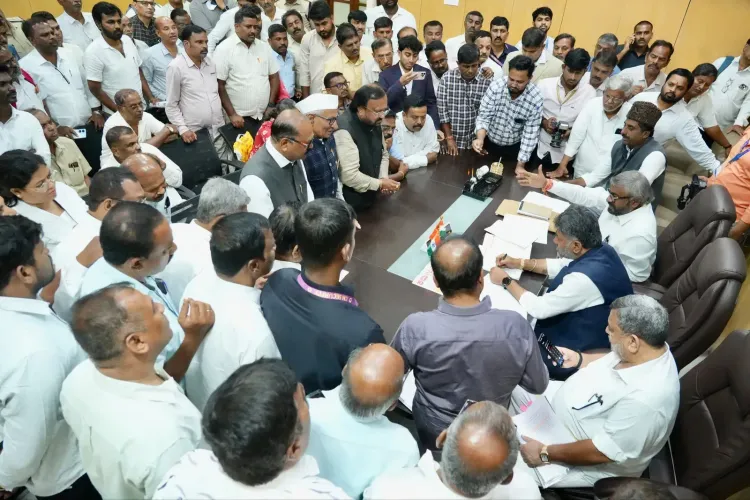
The delegation, led by Minister S.S. Mallikarjun, carried petitions on behalf of farmers from Harihar taluk in Davanagere district, pressing the Chief Minister for immediate administrative approval and fund release for two separate lift irrigation proposals tapping the Tungabhadra river.
The Devarabeḷakere Lift Scheme: ₹75 crore to revive a tank
The first proposal targets Devarabeḷakere in Harihar taluk — a tank that has historically gone dry during lean seasons. Under the scheme, water would be lifted directly from the Tungabhadra to refill the lake, extending irrigated area to thousands of farm plots in the surrounding belt. The estimated project cost stands at approximately ₹75 crore.
Farmers in this corridor depend heavily on tank-fed cultivation for their kharif and rabi cycles. Without a reliable source of top-up water, the tank's command area shrinks every year, pushing smallholders toward rain-fed uncertainty.
Bhairanapadā Scheme: 1,632 hectares and six lakes on the line
The second, more ambitious proposal is the Bhairanapadā Lift Irrigation Scheme, designed to serve the Bhadra ayacut-affected area — farmland that has fallen short of the irrigation coverage originally promised under the broader Bhadra reservoir network. At an estimated ₹136 crore, this scheme would pump Tungabhadra water to irrigate 1,632 hectares of agricultural land and simultaneously fill 6 major tanks in the region.
The scale of that tank-filling component matters: in central Karnataka's undulating terrain, cascading tank systems amplify water availability far beyond the primary command area, benefiting communities well downstream of each filled reservoir.
What the delegation asked for — and who would build it
The farmers' request was three-fold: immediate administrative sanction for both schemes, prompt release of allocated funds, and a formal government directive assigning construction to the Karnataka Neeravari Nigam Limited (KNNL) — the state's dedicated irrigation corporation. Routing the work through KNNL is standard practice for lift schemes of this scale in Karnataka and is seen as the fastest path from approval to ground-breaking.
Karnataka governments have consistently used Tungabhadra and Bhadra basin lifts to push irrigation into rainfed pockets of the central districts — a pattern that underscores why both schemes fit squarely within the state's established water-management playbook. The critical next step is a cabinet-level decision translating the CM's reception of the petition into an official sanction order and budget line.
With ₹211 crore in combined outlay and the livelihoods of thousands of Davanagere farmers hanging on a government go-ahead, the pressure on the cabinet to act — and act quickly — has never been louder.
Point of View
Swift cabinet clearance would reinforce the government's pro-farmer credentials in a central Karnataka region that remains electorally significant for the Congress. The delegation's explicit demand that work be routed through KNNL signals an awareness that administrative delays — not just fund shortages — have historically derailed similar schemes. How quickly the cabinet converts the CM's reception into a formal sanction order will be the real test of political will.
NationPress
5 Nov 2026
Frequently Asked Questions
What is the Devarabeḷakere Lift Irrigation Scheme in Karnataka?
It is a proposed project to lift water from the Tungabhadra river to fill Devarabeḷakere tank in Harihar taluk, Davanagere district, providing irrigation to thousands of farmers at an estimated cost of ₹75 crore.
What is the Bhairanapadā Lift Irrigation Scheme?
The Bhairanapadā scheme proposes to pump Tungabhadra water to irrigate 1,632 hectares of Bhadra ayacut-affected land and fill 6 major tanks in Davanagere district, at an estimated cost of ₹136 crore.
Who met CM D.K. Shivakumar regarding the Davanagere irrigation schemes?
A farmers' delegation led by Minister S.S. Mallikarjun met Chief Minister D.K. Shivakumar on 5 November 2026 to submit petitions for both lift irrigation projects.
Which agency will execute the Davanagere lift irrigation projects?
The delegation has requested that construction be assigned to Karnataka Neeravari Nigam Limited (KNNL), the state's dedicated irrigation corporation, after administrative approval and fund release.
What is the total estimated cost of the two Davanagere lift irrigation schemes?
The two schemes together carry a combined estimated outlay of approximately ₹211 crore — ₹75 crore for the Devarabeḷakere project and ₹136 crore for the Bhairanapadā project.