Amit Shah Finalises Delhi Slum Rehab Policy 2026
Synopsis
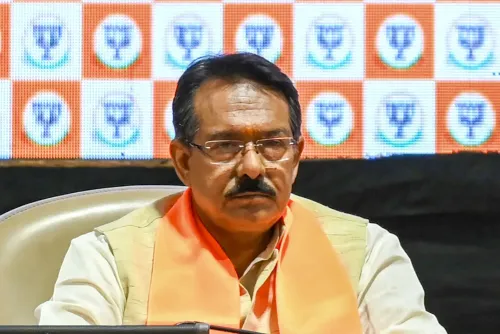
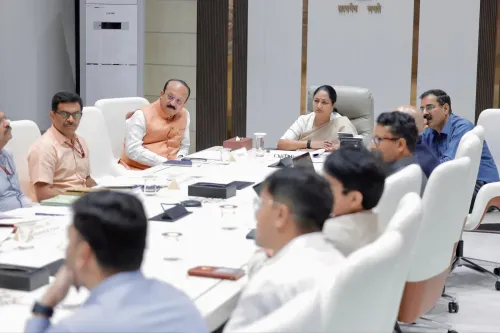
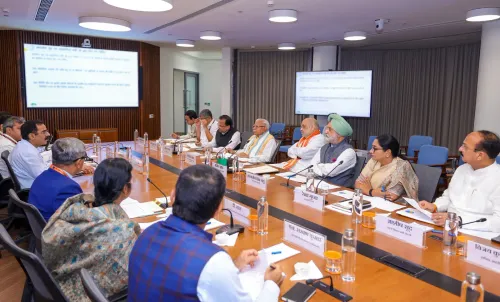
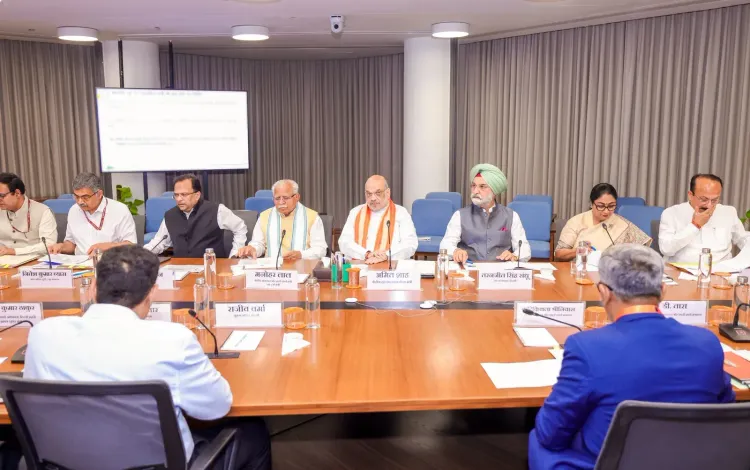
Union Home Minister Amit Shah on June 16 finalised the Delhi Slum and Jhuggi Jhopdi Rehabilitation and Resettlement Policy, 2026, directing DDA and DUSIB to tender 5 JJ clusters within 45 days and the Delhi government to float at least 5 PPP-based project tenders every month.
Key Takeaways
The Delhi Slum and Jhuggi Jhopdi Rehabilitation and Resettlement Policy, 2026 was finalised on June 16, 2026 by Union Home Minister Amit Shah .
DDA and DUSIB must issue tenders for 5 JJ clusters within 45 days under the PPP model in the first phase.
The Delhi government has been directed to float tenders for a minimum of 5 PPP-based projects per month .
Redeveloped colonies will include schools, health centres, playgrounds, and anganwadi centres for residents.
The policy follows the in-situ redevelopment approach aligned with Pradhan Mantri Awas Yojana (Urban) , avoiding distant relocation of slum families.
Centre-state coordination between DDA (central) and DUSIB (Delhi government) will be key to implementation.
Union Home Minister Amit Shah on Tuesday, June 16, 2026, announced that the Delhi Slum and Jhuggi Jhopdi Rehabilitation and Resettlement Policy, 2026 has been finalised, marking what he described as a significant day for the slum-dwelling residents of the national capital. The policy is designed to redevelop Jhuggi Jhopdi (JJ) clusters across Delhi through a public-private partnership model, with new colonies to include schools, health centres, playgrounds, and anganwadi centres.
Context
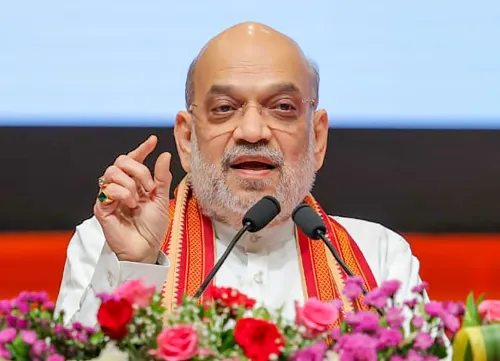
Posting on X, Shah wrote — 'आज का दिन दिल्ली के झुग्गी-झोपड़ी में रहने वाले बहनों-भाइयों के लिए महत्त्वपूर्ण दिन है' ('Today is an important day for the brothers and sisters living in the slums and jhuggi-jhopdi of Delhi') — as he confirmed that the 2026 policy had been given final shape. He framed the move as the fulfilment of a promise by the Modi government to bring every Delhi citizen into the mainstream of development.
Delhi is home to hundreds of JJ clusters housing an estimated several lakh families in informal settlements that lack secure tenure, adequate sanitation, and civic infrastructure. Earlier policy frameworks, including the Delhi Slum Rehabilitation and Relocation Policy of 2017, had sought to address resettlement but faced implementation hurdles amid complex centre-state jurisdictional dynamics in the capital.
Policy Backdrop
The new policy operationalises a PPP (Public-Private Partnership) model for in-situ redevelopment — a departure from the older approach of relocating slum residents to distant peripheral sites. This aligns with the broader thrust of the Pradhan Mantri Awas Yojana (Urban), launched in 2015, which includes an in-situ slum redevelopment component under its housing-for-all framework.
In the first phase, the Delhi Development Authority (DDA) and the Delhi Urban Shelter Improvement Board (DUSIB) have been directed to issue tenders for 5 JJ clusters within 45 days. Separately, the Delhi government has been instructed to float tenders for a minimum of 5 PPP-based projects every month. The DDA is a statutory body under the Ministry of Housing and Urban Affairs, while DUSIB operates under the Delhi government — a division that has historically complicated coordinated slum redevelopment in the city.
India's urban housing reform lineage stretches back to the Jawaharlal Nehru National Urban Renewal Mission (JNNURM) of 2005, which included 'Basic Services to the Urban Poor' as a dedicated sub-mission. The 2026 policy represents the latest iteration of that long-running federal effort to formalise informal settlements in major cities.
Stakeholders and Impact
The primary beneficiaries are families currently residing in JJ clusters across Delhi, who stand to receive pucca housing with legal tenure alongside civic amenities — schools, health centres, sports grounds, and anganwadi centres — within the redeveloped colonies. The inclusion of social infrastructure within the resettlement design is intended to ensure that rehabilitation translates into genuine quality-of-life improvement rather than mere physical relocation.
Private developers entering through the PPP route are expected to cross-subsidise affordable housing units for slum residents by developing commercial or market-rate components on the same land parcels, a model that has been used with varying degrees of success in cities such as Mumbai. The monthly tendering mandate on the Delhi government introduces a measurable accountability mechanism that will be closely watched by housing advocates and urban planners.
What's Next
The immediate test will be whether DDA and DUSIB issue the first batch of 5 cluster tenders within the stipulated 45-day window — a deadline that falls in late July 2026. Sustained momentum will depend on the Delhi government meeting its monthly target of at least 5 PPP project tenders, a pace that would represent a significant acceleration over past redevelopment activity in the city.
Progress on physical construction — particularly the delivery of schools, health centres, and anganwadi facilities inside completed colonies — will ultimately determine whether the Delhi Slum and Jhuggi Jhopdi Rehabilitation and Resettlement Policy, 2026 translates into durable change for residents of the capital's informal settlements. Centre-state coordination between agencies reporting to different governments will remain a critical variable in the policy's execution.
Point of View
A territory where the BJP controls key agencies such as the DDA while also having recently consolidated influence over the elected government. By anchoring the announcement to the Modi government's development mandate and setting hard timelines — 45 days for the first tenders, monthly PPP targets — the Home Minister is creating a public accountability framework that doubles as a political signal to Delhi's large informal-settlement electorate. The PPP-led in-situ model, if executed at scale, would mark a genuine shift from the historically disruptive relocation-based approach. However, the enduring coordination challenge between centrally controlled and state-level agencies in Delhi means that policy intent and on-ground delivery can diverge sharply, and the monthly tendering mandate will be the earliest stress test of that dynamic.
NationPress
18 Sept 2026
Frequently Asked Questions
What is the Delhi Slum and Jhuggi Jhopdi Rehabilitation and Resettlement Policy 2026?
It is a policy finalised on June 16, 2026 to redevelop JJ clusters across Delhi through a PPP model, providing residents with pucca housing and civic amenities such as schools, health centres, playgrounds, and anganwadi centres within the redeveloped colonies.
What is the role of DDA and DUSIB in the Delhi slum rehab policy?
The Delhi Development Authority (DDA) and the Delhi Urban Shelter Improvement Board (DUSIB) have been jointly directed to issue tenders for 5 JJ clusters within 45 days in the first phase of the policy's implementation.
What is the PPP model for JJ cluster redevelopment in Delhi?
Under the PPP (Public-Private Partnership) model, private developers redevelop JJ cluster land in-situ, providing affordable housing to existing slum residents while also developing commercial or market-rate units to make the project financially viable.
How many PPP projects must Delhi government tender every month under the new policy?
The Delhi government has been directed to float tenders for at least 5 PPP-based slum redevelopment projects every month under the 2026 rehabilitation policy.
How does the Delhi slum policy 2026 differ from earlier resettlement approaches?
Unlike older policies that relocated slum residents to distant peripheral sites, the 2026 policy prioritises in-situ redevelopment — rebuilding homes on the same land where residents currently live — which is less disruptive and aligns with the in-situ component of the Pradhan Mantri Awas Yojana (Urban).