Delhi CM Rekha Gupta meets L-G Sandhu amid slum rehab policy push
Synopsis
Delhi's CM and L-G met on 22 June as two significant governance moves converged: the finalisation of a slum rehab policy promising in-situ housing to lakhs of families by January 2027, and a proposal to reshuffle 74 doctors — some posted at the same location since 2014. Both decisions test whether Delhi's administration can translate policy announcements into ground-level change.
Key Takeaways
Delhi CM Rekha Gupta met Lieutenant Governor T.S.
Sandhu on 22 June to discuss governance, development, and public welfare.
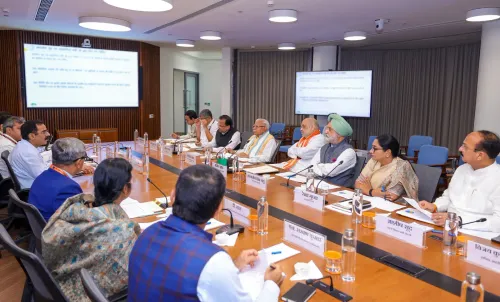
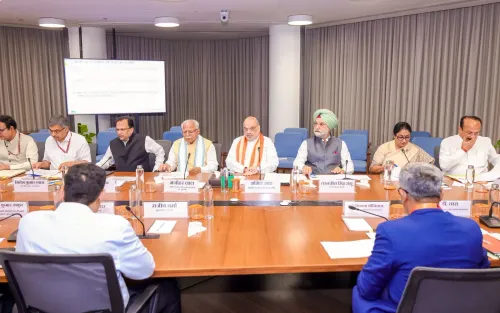
The Delhi Slum and JJ Cluster Rehabilitation and Resettlement Policy-2026 was finalised at a review meeting chaired by Union Home Minister Amit Shah .
The policy commits to providing in-situ housing to slum residents by 1 January 2027 .
CM Gupta recommended the reshuffle of 74 government doctors , including 39 at Tihar and Mandoli jails posted there for over five years .
Several of the flagged doctors have been at the same posting since 2014 , with tenures exceeding 11 years .
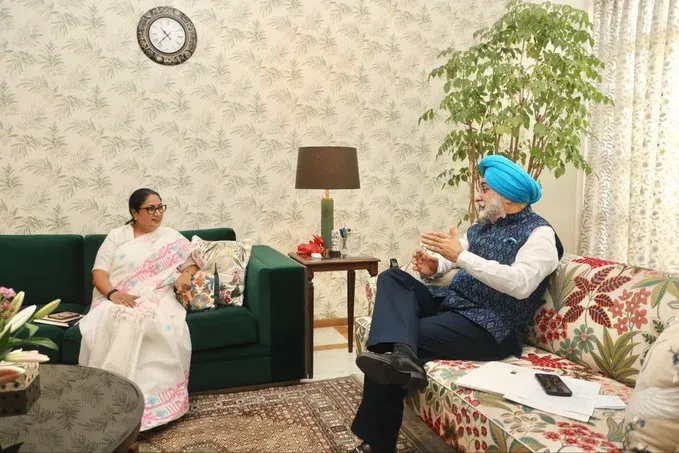
Delhi Chief Minister Rekha Gupta met Lieutenant Governor T.S. Sandhu on Monday, 22 June to discuss governance, development, and public welfare in the Capital, according to an official statement. The meeting carries added weight given its proximity to the finalisation of the landmark Delhi Slum and JJ Cluster Rehabilitation and Resettlement Policy-2026.
The Slum Rehab Policy Backdrop
The policy was finalised at a review meeting chaired by Union Home Minister Amit Shah, attended by Union Minister of Housing and Urban Affairs Manohar Lal and Chief Minister Gupta. Delhi Home and Urban Development Minister Ashish Sood described the decision as 'historic', calling it a step toward making Delhi 'the capital of a developed India.'
'A significant decision was taken today towards providing dignified housing to millions of families living in Delhi's slums and JJ clusters,' Sood said. The policy aims to construct permanent houses in the same areas where slum-dwellers currently reside, with the government committing to deliver homes to eligible residents by 1 January 2027.
What the Policy Entails
Under the framework finalised with Prime Minister Narendra Modi's backing, residents of slums and Jhuggi-Jhopdi (JJ) clusters across the national capital are to be rehabilitated in situ — meaning they will not be displaced to distant locations. This addresses a long-standing grievance with earlier resettlement drives, which often relocated communities far from their livelihoods. The 1 January 2027 deadline sets a firm political timeline ahead of the next civic election cycle.
Doctor Transfers Also on the Agenda
The Gupta–Sandhu meeting also took place against the backdrop of the Chief Minister recommending a reshuffle of 74 government doctors, including 39 posted at Tihar and Mandoli jails for more than five years. The transfers are intended to strengthen healthcare administration and improve human resource management across Delhi's public health infrastructure.
According to an official statement, several of the doctors flagged for transfer have remained at the same posting since 2014, with tenures exceeding 11 years. The list covers both specialist doctors and General Duty Medical Officers (GDMOs). The recommendation has been forwarded to the Lieutenant Governor, whose approval is required for such administrative decisions in the Union Territory.
Significance of the L-G–CM Dynamic
Meetings between the Lieutenant Governor and Chief Minister of Delhi carry institutional significance given the city's unique constitutional status as a Union Territory with a legislature. Administrative decisions — including transfers of certain categories of government employees — require the L-G's concurrence, making such consultations a routine but critical part of governance in the Capital. This meeting signals a degree of coordination between Raj Niwas and the elected government on both welfare policy and administrative reform.
What Comes Next
Implementation timelines for the slum rehabilitation policy and the modalities for in-situ construction are expected to be detailed in the coming weeks. The doctor transfers, pending the L-G's sign-off, could reshape healthcare delivery in Delhi's prisons and broader public health network. Both measures will be closely watched as tests of the Gupta government's administrative momentum.
Point of View
The fact that some officers have sat in the same post since 2014 points to systemic inertia in Delhi's health bureaucracy that a single reshuffle order alone is unlikely to fix.
NationPress
21 Sept 2026
Frequently Asked Questions
Why did Delhi CM Rekha Gupta meet Lieutenant Governor T.S. Sandhu on 22 June?
Chief Minister Rekha Gupta met Lieutenant Governor T.S. Sandhu on 22 June to discuss governance, development, and public welfare matters. The meeting coincided with the finalisation of the Delhi Slum and JJ Cluster Rehabilitation and Resettlement Policy-2026 and the CM's recommendation to reshuffle 74 government doctors.
What is the Delhi Slum and JJ Cluster Rehabilitation and Resettlement Policy-2026?
It is a housing policy finalised at a review meeting chaired by Union Home Minister Amit Shah, aimed at providing permanent, in-situ housing to families living in Delhi's slums and JJ clusters. The government has committed to delivering homes to eligible residents by 1 January 2027.
What does 'in-situ rehabilitation' mean under the new Delhi slum policy?
In-situ rehabilitation means slum residents will be housed in the same areas where they currently live, rather than being relocated to distant sites. This approach addresses a key criticism of earlier resettlement schemes, which displaced communities away from their workplaces and social networks.
Why are 74 Delhi government doctors being recommended for transfer?
Chief Minister Rekha Gupta has recommended reshuffling 74 doctors — including 39 at Tihar and Mandoli jails — to improve healthcare services and make human resource management more effective. Several of these doctors have been posted at the same location since 2014, with tenures exceeding 11 years.
Who needs to approve the doctor transfers in Delhi?
As Delhi is a Union Territory with a legislature, transfers of certain categories of government employees require the Lieutenant Governor's concurrence. The recommendation from Chief Minister Gupta has been forwarded to L-G T.S. Sandhu for approval.