Has the Northeast Monsoon Left Tamil Nadu with a Rainfall Deficit?

Synopsis
The northeast monsoon has ended in Tamil Nadu with a rainfall deficit, signaling a shift after five years of abundance. What does this mean for the state's water supply and agriculture? Discover the implications of this year's unusual weather patterns.
Key Takeaways
Northeast monsoon concludes with a 3 percent deficit .
Tamil Nadu received 42.8 cm of rainfall against a normal of 44.2 cm .
Absence of favorable weather systems affected rainfall.
Water storage levels remain adequate despite the deficit.
Impacts on agriculture and local ecosystems are to be monitored.
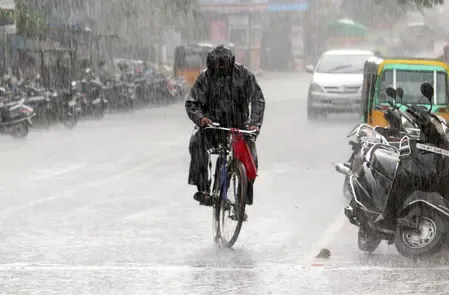
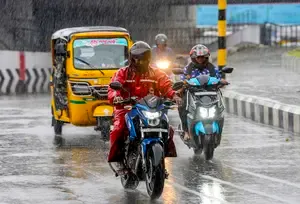
Chennai, Dec 31 (NationPress) This year's northeast monsoon, an essential rain-producing system for Tamil Nadu and Puducherry, has concluded on a rather disappointing note, as confirmed by the India Meteorological Department (IMD). The region has reported an overall rainfall deficiency.
Official reports indicate that Tamil Nadu and Puducherry collectively received 42.8 cm of rainfall during the October-December timeframe, which is below the normal average of 44.2 cm, resulting in a deficit of approximately 3 percent. This occurs despite initial forecasts suggesting above-normal rainfall for the season.
The IMD has yet to officially announce the conclusion of the northeast monsoon, suggesting it may persist until the second week of January; however, any precipitation beyond that point will not be factored into the seasonal total.
October had a robust beginning with 23 cm of rainfall, exceeding normal levels by 36 percent. However, rainfall activity significantly declined afterward. November saw a mere 15 cm against the expected 17 cm, while December has recorded only 4.5 cm thus far, compared to the usual 9 cm.
Weather experts have attributed this lackluster performance primarily to the absence of favorable synoptic systems, such as low-pressure areas and cyclonic circulations over the Bay of Bengal during November and December, which are crucial for driving northeast monsoon rains.
After five consecutive years of above-normal northeast monsoon rainfall, this year's scenario marks a significant change. Many districts, including Chennai, Ariyalur, Chengalpattu, Coimbatore, Dharmapuri, Dindigul, Kancheepuram, Karur, Krishnagiri, Perambalur, Salem, Theni, Tiruppur, and Tiruchirappalli, have experienced rainfall below normal levels.
Puducherry also faced a seasonal deficit; however, some districts reported surplus rainfall. Virudhunagar, Vellore, Thoothukudi, Tiruvarur, Tirunelveli, and Tenkasi received rainfall above the seasonal average.
Despite the shortfall, officials report that water storage levels remain satisfactory, owing to sufficient inflows during both the southwest monsoon and the early phase of the northeast monsoon. Reservoirs throughout the state currently have enough water to cater to immediate drinking and irrigation needs, providing relief as the monsoon season comes to a close.
Point of View
We recognize the importance of accurate and timely information regarding climate patterns and their impact on the populace. The recent northeast monsoon deficit is a vital topic that warrants our attention, especially considering its potential implications for agriculture and water resources in Tamil Nadu.
NationPress
15 Oct 2026
Frequently Asked Questions
What is the northeast monsoon?
The northeast monsoon is a seasonal wind pattern that brings significant rainfall to the eastern and southern regions of India, particularly Tamil Nadu and Puducherry.
Why is the rainfall deficit significant?
A rainfall deficit can impact agriculture, water supply, and local ecosystems, affecting livelihoods and resources in the region.
What are the usual rainfall patterns for Tamil Nadu during this season?
Typically, Tamil Nadu receives an average of 44.2 cm of rainfall during the northeast monsoon from October to December.
How does this year's rainfall compare to previous years?
This year marks a notable departure from the previous five years, which experienced above-normal rainfall during the northeast monsoon.
What can residents expect moving forward?
Despite the deficit, officials report that current water storage levels are adequate to meet immediate needs, but ongoing monitoring is crucial.