NSCN-IM accuses security forces of backing Kuki militants in Manipur
Synopsis
The NSCN-IM has thrown a political grenade into the Manipur crisis — alleging that Indian security forces are not neutral arbiters but active enablers of Kuki militants targeting Naga villages. Coming on the 75th Naga Plebiscite Day, Chairman Tuccu's speech signals that the Naga dimension of the Northeast conflict is far from dormant, and that the long-stalled Framework Agreement of 2015 remains a live flashpoint.
Key Takeaways
NSCN-IM Chairman Qhehezu Tuccu alleged on 26 May that Indian security forces in Manipur are providing logistical support to Kuki militants by land and air.
Tuccu cited a 13 May attack on three Tangkhul Naga individuals by Myanmar-based Kuki militants as evidence of facilitated cross-border terrorism.
The NSCN-IM accused the Centre of violating the Framework Agreement signed on 3 August 2015 , which it says remains unimplemented.
More than 90 rounds of talks between the Centre and Naga groups have failed to produce a final settlement.
The NSCN-IM continues to demand a separate Naga flag and constitution and integration of Naga-inhabited areas across four states and parts of Myanmar.
The Centre has not publicly responded to the specific allegations made at Hebron Camp .
The Isak-Muivah faction of the National Socialist Council of Nagalim (NSCN-IM) on Saturday, 26 May alleged that Indian security forces in Manipur were colluding with Kuki militants — providing them logistical support by land and air — while presenting themselves as neutral peacekeepers, to the detriment of Naga villages in the region.
Key Allegations Made at Hebron Camp
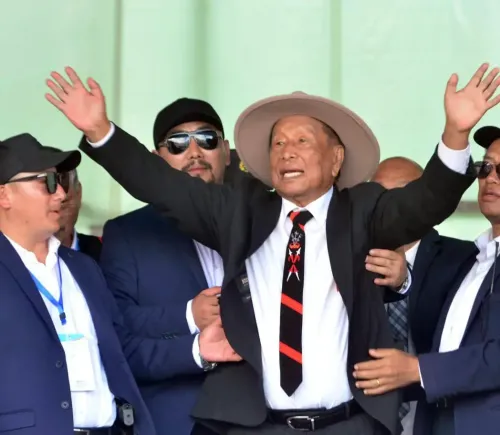
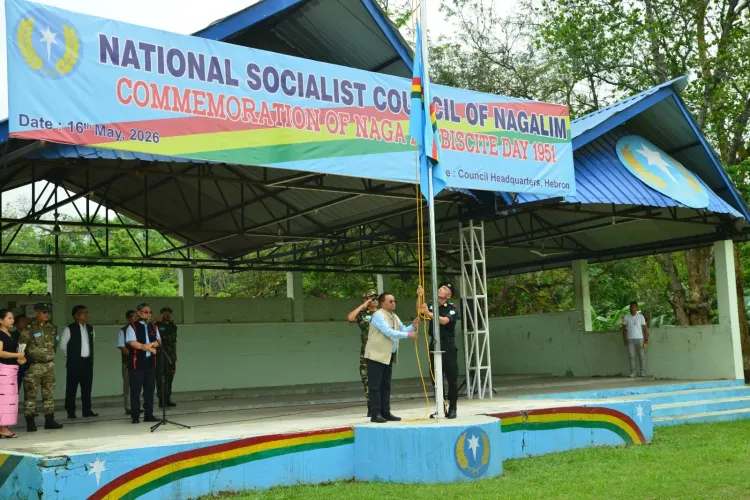
Speaking at Hebron Camp, the principal headquarters of the NSCN-IM in Nagaland, during the commemoration of the 75th Naga Plebiscite Day, NSCN-IM Chairman Qhehezu Tuccu levelled a series of serious charges against the security establishment. He alleged that forces on the ground were dismantling Naga defensive bunkers, killing Naga civilians, burning homes, and shielding armed groups that were targeting Naga villages.
Tuccu specifically cited an attack on 13 May on three Tangkhul Naga individuals, which he attributed to Myanmar-based Kuki militants, as evidence of what he described as cross-border terrorism being facilitated by Indian security forces. 'This blatant act of using Kuki narco-terrorists by the Government of India as proxies is a clear violation of the ceasefire ground rules and international indigenous rights laws,' Tuccu claimed.
Ceasefire Violations and the 2015 Framework Agreement
The NSCN-IM chairman accused the Centre of failing to honour commitments made under the Framework Agreement signed on 3 August 2015, which the organisation says envisioned a settlement recognising the unique political identity of the Nagas. 'We strongly denounce the Government of India for its duplicity, particularly for betraying the promises made in the historic Framework Agreement, which envisioned a settlement recognising Naga uniqueness but has remained unimplemented,' Tuccu alleged.
Notably, more than 90 rounds of talks have been held over the decades between the Centre and various Naga groups without a final resolution. The NSCN-IM has consistently maintained its demand for a separate Naga flag and constitution, along with the integration of Naga-inhabited areas across Arunachal Pradesh, Assam, Manipur, and Nagaland, as well as parts of Myanmar.
The Naga Sovereignty Argument
Tuccu invoked the historical significance of the Naga Plebiscite, recalling that the exercise — organised by the Naga National Council (NNC) under the leadership of A.Z. Phizo — followed the declaration of Naga independence on 14 August 1947. According to him, the plebiscite saw 99.9 per cent of the Naga population affix their thumb impressions in support of a sovereign Naga nation separate from the Indian Union.
'Falling into India's well-crafted political trap can lead to the loss of the God-given freedom and land of the Naga people,' Tuccu warned, cautioning against accepting any proposal that he said would compromise Naga rights or substitute sovereignty for economic incentives. 'The solution does not lie in lucrative economic packages at the expense of sovereignty,' he said.
Broader Context and What Comes Next
The allegations come against the backdrop of an ongoing ethnic conflict in Manipur that has already claimed lives and displaced thousands since violence first erupted in May 2023. The NSCN-IM's intervention adds a Naga dimension to a crisis that has largely been framed around the Meitei-Kuki divide, complicating the already fraught peace process in the Northeast. The Centre has not yet responded publicly to the specific allegations made by Tuccu. How New Delhi addresses these charges — and whether it accelerates the long-stalled Naga peace talks — will be closely watched in the weeks ahead.
Point of View
But because they arrive at a moment when the Centre's handling of the Manipur crisis is already under sustained criticism. By inserting the Naga sovereignty argument into the Meitei-Kuki conflict, the NSCN-IM is also signalling that any political settlement in Manipur that ignores Naga territorial claims will be contested. The unimplemented Framework Agreement of 2015 is a slow-burning liability: nine years of silence on a signed accord hands any aggrieved party a legitimate grievance. New Delhi's failure to respond publicly to these specific charges only deepens the credibility deficit in the Northeast.
NationPress
1 Oct 2026
Frequently Asked Questions
What did the NSCN-IM allege about security forces in Manipur?
The NSCN-IM alleged that Indian security forces in Manipur, while claiming neutrality, were providing logistical support — by land and air — to Kuki militants to target Naga villages, dismantling Naga bunkers, and shielding armed groups. The allegations were made by NSCN-IM Chairman Qhehezu Tuccu at Hebron Camp on 26 May during the 75th Naga Plebiscite Day commemoration.
What is the NSCN-IM and what does it want?
The NSCN-IM (Isak-Muivah faction of the National Socialist Council of Nagalim) is the principal Naga insurgent organisation engaged in peace talks with the Indian government. It seeks a separate Naga flag and constitution, and the integration of Naga-inhabited areas across Arunachal Pradesh, Assam, Manipur, Nagaland, and parts of Myanmar into a unified Naga political entity.
What is the Framework Agreement of 2015 that the NSCN-IM referenced?
The Framework Agreement was signed on 3 August 2015 between the NSCN-IM and the Government of India, and was described at the time as a historic step toward resolving the decades-old Naga political issue. The NSCN-IM alleges the Centre has not honoured commitments made under the accord, which it says envisioned recognition of Naga uniqueness — a claim the government has not publicly addressed.
What was the 13 May attack that Tuccu cited?
According to NSCN-IM Chairman Qhehezu Tuccu, three Tangkhul Naga individuals were attacked on 13 May by Myanmar-based Kuki militants. He alleged the incident raised serious questions about the role of Indian security forces, accusing them of permitting cross-border terrorism that has inflicted harm on Naga villagers.
How long have Naga peace talks been ongoing?
More than 90 rounds of talks have been held over several decades between the Centre and various Naga groups, without a final political settlement. The NSCN-IM has been the primary interlocutor, and the 2015 Framework Agreement was the most significant milestone — though it remains unimplemented according to the organisation.