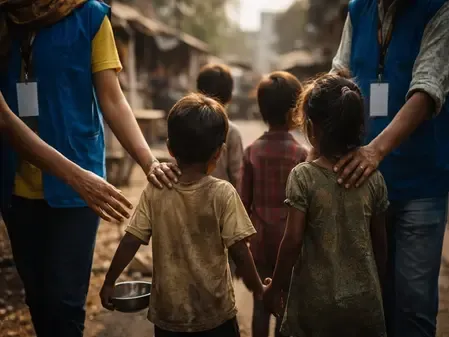
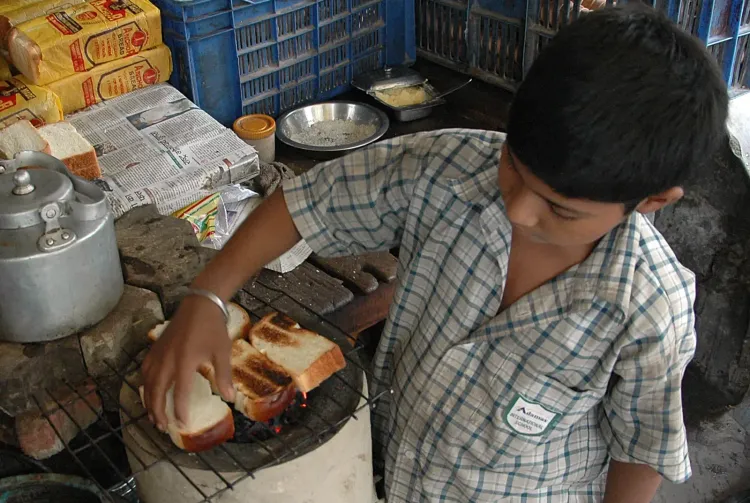
Odisha orders urgent rescue drives against child labour, begging
Synopsis
Odisha has put every city on a 'Most Urgent' footing against child labour and begging. Municipal heads must personally run rescue drives at junctions, stations and construction sites, act against organised begging rackets, and report progress regularly. Accountability now rests with the urban bodies themselves.
Key Takeaways
The Odisha H&UD department on 26 November 2026 directed all Municipal Corporations, Municipalities and NACs to launch rescue, rehabilitation and awareness drives.
The directive follows an advisory from the Odisha State Commission for Protection of Child Rights (OSCPCR) .
Joint operations with the Police , labour department and DCPUs will target traffic junctions, markets, bus stands, railway stations and construction sites.
Rescued children will go before Child Welfare Committees and receive education, healthcare, nutrition and counselling under the Juvenile Justice Act .
The order is marked “Most Urgent” , and progress reports must be filed with the Directorate of Municipal Administration .
The Odisha Housing & Urban Development (H&UD) department has directed all Municipal Corporations, Municipalities and Notified Area Councils (NACs) across the state to launch immediate rescue, rehabilitation and awareness drives against child labour and child begging. The order, announced in Bhubaneswar on Thursday, 26 November 2026, aims to make Odisha's urban areas free from child labour, child begging and other forms of exploitation.
The department has marked the directive “Most Urgent”. It has asked municipal heads to personally monitor how it is carried out.
Key Developments
According to the department's statement, the directives follow an advisory from the Odisha State Commission for Protection of Child Rights (OSCPCR). All Municipal Commissioners and Executive Officers must start immediate, coordinated action with their respective district administrations.
“As part of the initiative, Municipal Commissioners and Executive Officers have been directed to approach their respective District Collectors to convene District Task Force meetings and formulate comprehensive, city-specific action plans for the identification, prevention and elimination of child labour and child begging,” the department said.
This approach means each city must draw up its own plan through the District Task Force mechanism, rather than follow a single statewide template.
Where Rescue Operations Will Focus
Officials have been told to carry out regular joint inspections and rescue operations at vulnerable and high-risk locations. These include traffic junctions, streets, markets, bus stands, railway stations, commercial establishments and construction sites.
The drives will be run jointly with the Police, the labour department and the District Child Protection Units (DCPUs) of each district.
Notably, the directive goes beyond rescue. Municipal heads must also bring in enforcement agencies such as Anti-Human Trafficking Units and Investigative Units for Crime Against Women. The department wants stringent legal action against organised begging rackets and against individuals who exploit children.
Rehabilitation Under the Juvenile Justice Act
Children rescued during the operations will be treated as Children in Need of Care and Protection. They will be produced before the respective Child Welfare Committees for appropriate intervention, the department stated.
Where required, authorities will place them in suitable Child Care Institutions. The children are to receive formal education, healthcare, nutrition and counselling, in line with the provisions of the Juvenile Justice Act.
Public Awareness and Accountability
Urban bodies have been directed to run public awareness campaigns that discourage child labour and alms-giving. The campaigns will also encourage citizens to report such cases and any exploitation to the authorities so they can act quickly.
Progress reports must be submitted regularly to the Directorate of Municipal Administration. These reports will cover action plans, inspection and rescue operations, and rehabilitation measures.
What Happens Next
The next steps are District Task Force meetings in each district and the city-specific action plans that come out of them. The progress reports filed with the Directorate will show whether the “Most Urgent” label leads to sustained action on the ground.
Point of View
Who must personally monitor the drives and report on them. Rescue drives in India have often been one-off, and the weak point is usually what happens after rescue, including institutional placement, schooling and preventing children from returning to the street. Including Anti-Human Trafficking Units and targeting organised begging rackets is the right instinct, because these rackets survive on supply networks that a single raid does not break. The real measure will be whether the progress reports track rehabilitation outcomes over time, not just the number of children rescued.
NationPress
26 Nov 2026
Frequently Asked Questions
What has the Odisha government ordered on child labour and begging?
The Odisha Housing & Urban Development department has directed all Municipal Corporations, Municipalities and Notified Area Councils to launch immediate rescue, rehabilitation and awareness drives against child labour and child begging. The goal is to make urban areas across the state free from such exploitation.
Why did the Odisha H&UD department issue this directive?
The directive was issued in compliance with an advisory from the Odisha State Commission for Protection of Child Rights (OSCPCR). The department has classified it as 'Most Urgent'.
Where will rescue operations be conducted in Odisha cities?
Joint inspections and rescue operations will target high-risk locations such as traffic junctions, streets, markets, bus stands, railway stations, commercial establishments and construction sites. They will be carried out with the Police, the labour department and District Child Protection Units.
What will happen to children rescued in the drives?
Rescued children will be treated as Children in Need of Care and Protection and produced before Child Welfare Committees. Where needed, they will be placed in Child Care Institutions with access to education, healthcare, nutrition and counselling under the Juvenile Justice Act.
Who will monitor the implementation of the directive?
Municipal Commissioners and Executive Officers must personally monitor implementation. They will submit regular progress reports on action plans, rescue operations and rehabilitation measures to the Directorate of Municipal Administration.