Odisha CMO: Cyclone prep at full scale, 24-hr monitoring on

Synopsis
The Chief Minister's Office of Odisha announced full-scale cyclone preparedness on 19 November 2026, confirming shelter readiness, coastal evacuations, rescue team deployment and 24-hour monitoring as a potential Bay of Bengal cyclone approaches.
Key Takeaways
Public safety is the declared top priority of the Odisha government ahead of a potential cyclone, per the CMO's 19 November 2026 statement.
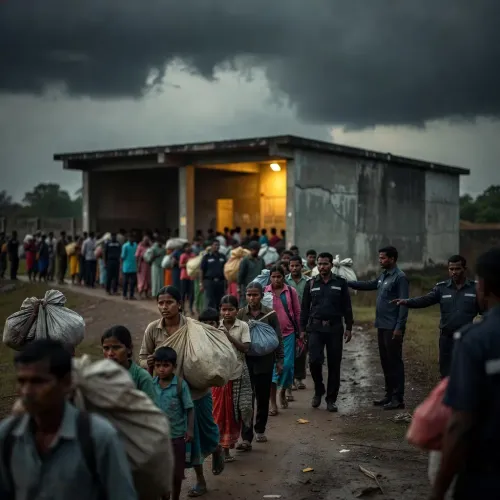
Cyclone shelters are being prepared and coastal communities are being evacuated to safer locations.
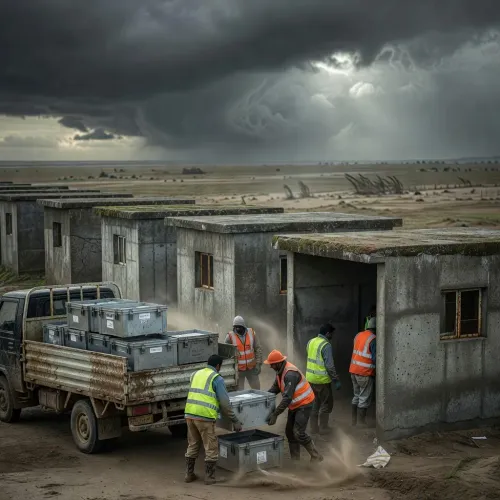
Rescue and relief teams have been deployed and are on standby , with emergency services reinforced.
24-hour monitoring is in operation across all relevant departments and agencies.
Odisha's preparedness model dates to reforms triggered by the 1999 Super Cyclone , and was proven at scale during Cyclone Fani in 2019 , when over a million people were evacuated.
The India Meteorological Department remains the authoritative source for the storm's projected track and intensity updates.
With a potential cyclone bearing down on the Bay of Bengal coastline, the Chief Minister's Office of Odisha declared on Thursday, 19 November 2026 that public safety is the government's highest priority — and that every arm of the state's disaster machine is already moving.
The CMO's post, issued in both Odia and English, confirmed that cyclone shelters are being readied, coastal communities are being evacuated, rescue teams have been deployed, and a 24-hour monitoring system is fully operational. 'ଲୋକଙ୍କ ସରକାରରେ ଜନସାଧାରଣଙ୍କ ସୁରକ୍ଷାକୁ ସର୍ବାଧିକ ଗୁରୁତ୍ୱ ଦିଆଯାଉଛି' — 'In the people's government, the safety of the public is given the highest importance' — was how the office opened, a phrase that doubles as both a policy statement and a political signal to coastal residents that this administration is watching.
Shelters, evacuations and rescue teams: what's already been activated
The CMO confirmed a comprehensive, layered response. Cyclone shelters — a backbone infrastructure Odisha has built out systematically since the catastrophic 1999 Super Cyclone — are being prepped for occupancy. Residents from vulnerable coastal zones are being moved to safer ground. Rescue and relief teams are deployed and on standby, while emergency response services have been specifically reinforced ahead of landfall.
The post stops short of naming the cyclone or specifying its projected track — the India Meteorological Department remains the authoritative source for storm-path bulletins. But the operational language leaves little ambiguity: this is not drill posture. This is active pre-landfall mobilisation.
How Odisha built the template India now borrows
The scale of what Odisha can spin up — quickly, repeatedly, and with relatively low casualty counts — is not accidental. The 1999 Super Cyclone killed an estimated 10,000 people and left the state in ruins. What followed was a decade-long overhaul: hundreds of multipurpose cyclone shelters constructed along the coastline, early-warning networks strengthened, and evacuation protocols drilled into local administration down to the panchayat level.
The model's clearest proof of concept came during Cyclone Fani in May 2019, when the state evacuated over a million people in roughly 48 hours before one of the strongest storms to strike the Indian subcontinent in decades. Loss of life was kept to a fraction of what 1999 had inflicted. That operation is now studied as a benchmark in disaster management circles far beyond Odisha's borders.
Crucially, successive governments — across party lines — have maintained and expanded this apparatus. The CMO's latest communication is a continuation of that institutional commitment, not a departure from it.
Fisherfolk and coastal villages: the most exposed communities
The people most immediately in the path of risk are Odisha's coastal fisherfolk and residents of low-lying villages along the Bay of Bengal shoreline. These communities are typically the first to be warned, the first to be evacuated, and — when systems fail — the first to bear the heaviest losses. The CMO's emphasis on 'safe relocation' in its statement signals that evacuation of these groups is already underway.
With IMD bulletins expected to sharpen over the coming hours, the state's preparedness posture will be tested in real time. Odisha has earned its reputation the hard way. Now it has to hold it.
Point of View
Particularly relevant for a coastal state that votes with one eye on how well the administration handles annual storm seasons. The real test, as always, will be the casualty count after the storm passes.
NationPress
19 Nov 2026
Frequently Asked Questions
Is Odisha on cyclone alert today?
Yes. As of 19 November 2026 , the Chief Minister's Office of Odisha confirmed that the state is on full cyclone alert, with shelters activated, evacuations underway, rescue teams deployed and 24-hour monitoring in place ahead of a potential Bay of Bengal cyclone.
What preparations has the Odisha government made for the cyclone?
The Odisha government has prepared cyclone shelters for occupancy, begun evacuating coastal residents to safer locations, deployed rescue and relief teams, reinforced emergency response services, and activated round-the-clock monitoring, according to the CMO's statement.
How many people were evacuated during Cyclone Fani in Odisha?
During Cyclone Fani in May 2019 , Odisha evacuated over a million people in approximately 48 hours, in what is widely regarded as one of the most effective pre-cyclone evacuations in Indian history.
How did the 1999 Odisha Super Cyclone change disaster management?
The 1999 Super Cyclone killed an estimated 10,000 people and devastated coastal Odisha. It prompted a comprehensive overhaul that included building hundreds of multipurpose cyclone shelters, strengthening early-warning systems, and institutionalising mass evacuation protocols that have significantly reduced casualties in subsequent storms.
Where can I find the latest cyclone track and landfall forecast for Odisha?
The India Meteorological Department (IMD) is the authoritative national agency issuing cyclone track, intensity and landfall forecasts for the Bay of Bengal region, including Odisha's coastline.