OSCPCR Urges Districts to Combat Child Begging in Odisha
Synopsis
The OSCPCR has mandated swift actions from district administrations throughout Odisha to eliminate child begging and provide necessary support for the affected children. This initiative is a crucial step in safeguarding children's rights in the state.
Key Takeaways
Immediate action required to combat child begging in Odisha.
Coordination between multiple government agencies is essential.
Children found begging are to be treated as Children in Need of Care and Protection .
Regular rescue drives will be conducted in public areas.
A comprehensive compliance report is expected monthly.
Bhubaneswar, March 15 (NationPress) The Odisha State Commission for Protection of Child Rights (OSCPCR) has issued a directive to district administrations throughout the state, urging them to implement prompt and coordinated measures aimed at eliminating child begging while ensuring the safeguarding and rehabilitation of affected minors.
As per official announcements, the Commission, in a letter dated March 11, has instructed the Inspector General of Police, IUCAW (Investigative Units for Crime against Women) of the Odisha Police, along with all Municipal Commissioners, Collectors, District Magistrates, Superintendents of Police (SPs), Executive Officers of Municipalities and Urban Local Bodies (ULBs), District Labour Officers (DLOs), and District Child Protection Officers (DCPOs) to act swiftly and collaboratively for the total eradication of child labour within the state.
The letter highlighted the concerning trend of children frequently seen begging on streets, at traffic intersections, and in public areas across various districts.
“Such situations expose children to exploitation, trafficking, abuse, accidents, and a violation of their fundamental rights to protection, education, nutrition, and a dignified childhood,” stated OSCPCR.
The Commission emphasized that child begging constitutes a severe violation of child rights, explicitly prohibited under several provisions of the Juvenile Justice (Care and Protection of Children) Act, 2015, and the Child and Adolescent Labour (Prohibition and Regulation) Act, 1986, among other child protection legislations.
It urged officials to classify children found begging as Children in Need of Care and Protection (CNCP) and to take necessary actions to rescue and rehabilitate them through appropriate legal avenues.
The Commission has called upon authorities to establish task forces at the district level that will plan, coordinate, and oversee efforts aimed at the eradication, rescue, rehabilitation, and prevention of child begging. These District Task Forces, led by the District Collector, will comprise the District SP, Municipal Commissioner/Executive Officer of ULBs, DCPOs, DLOs, representatives from Special Juvenile Police Units, the Women and Child Development Department, and NGOs engaged in child protection.
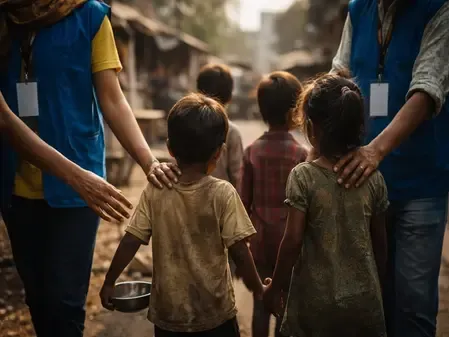
Furthermore, the OSCPCR has instructed district administrations to carry out regular joint rescue operations at traffic intersections, streets, markets, bus terminals, railway stations, and other public venues to identify and rescue children involved in begging.
Rescued children requiring care must be presented immediately before the Child Welfare Committee (CWC) for suitable orders under the provisions of the Juvenile Justice Act. These children should also be placed in appropriate Child Care Institutions where they can receive education, counseling, healthcare, nutrition, and rehabilitation support as per the Juvenile Justice Act’s stipulations.
Officials have been mandated to enforce strict legal action against individuals or groups exploiting children for begging, including filing appropriate cases under relevant laws.
Municipal authorities and district administrations are instructed to launch awareness campaigns to discourage the public from supporting child begging and to encourage the reporting of such incidents to authorities or the child helpline.
“A brief compliance report on actions taken must be submitted to OSCPCR monthly, including a detailed database,” the OSCPCR concluded.
Point of View
The collaborative approach proposed by the Commission could pave the way for meaningful change in the lives of these children.
NationPress
3 Oct 2026
Frequently Asked Questions
What is the OSCPCR's directive regarding child begging?
The OSCPCR has directed district administrations to take immediate action to eradicate child begging and ensure the protection and rehabilitation of affected children.
What laws protect children from begging in Odisha?
Child begging is prohibited under the Juvenile Justice Act, 2015, and the Child and Adolescent Labour Act, 1986, among other child protection laws.
How will the OSCPCR monitor the situation?
The OSCPCR has instructed the formation of district-level task forces to plan, coordinate, and monitor actions for the eradication of child begging.
What happens to children found begging?
Children found begging will be treated as Children in Need of Care and Protection (CNCP) and will be rescued and rehabilitated through appropriate legal mechanisms.
What role do local authorities play in this initiative?
Local authorities are responsible for conducting rescue operations, raising public awareness, and taking legal action against those exploiting children for begging.