Odisha CM Majhi launches 26 e-buses, sets $500bn economy goal
Synopsis
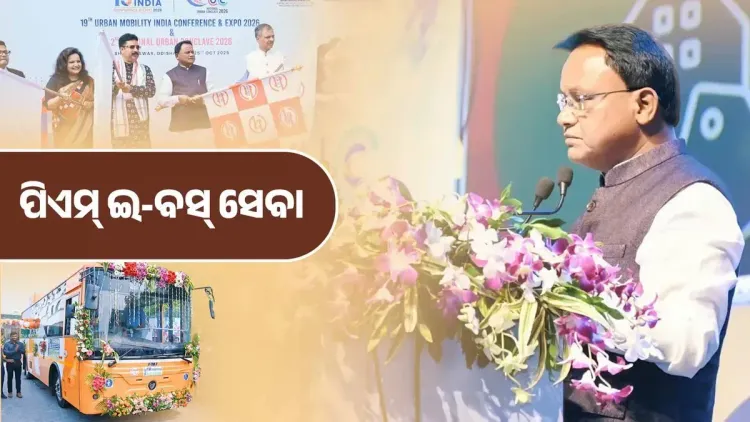
Chief Minister Mohan Charan Majhi opened the National Urban Conclave 2026 in Bhubaneswar, flagging off 26 new electric buses under PM e-Bus Sewa Yojana and announcing expansion to nine cities, while targeting a $500 billion economy and 40 percent urbanisation by 2036.
Key Takeaways
National Urban Conclave 2026 was inaugurated by CM Mohan Charan Majhi in Bhubaneswar on 24 October 2026 .
Odisha has set a target of a $500 billion economy and 40 percent urbanisation by 2036 .
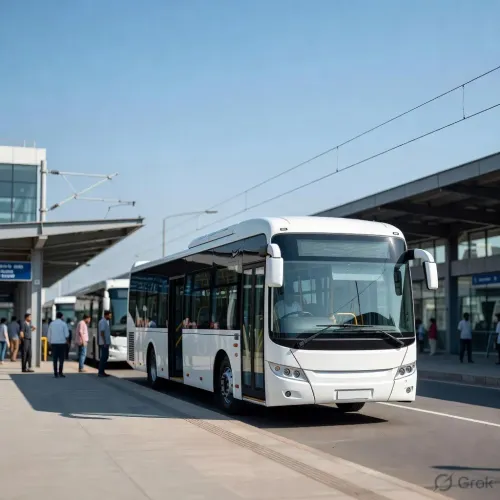
26 new electric buses were launched under the PM e-Bus Sewa Yojana at the event.
E-bus services will be expanded to nine additional cities , including Baripada, Balasore, Angul and Jharsuguda .
The initiative aligns with Central schemes AMRUT 2.0 and the Smart Cities Mission for inclusive urban infrastructure.
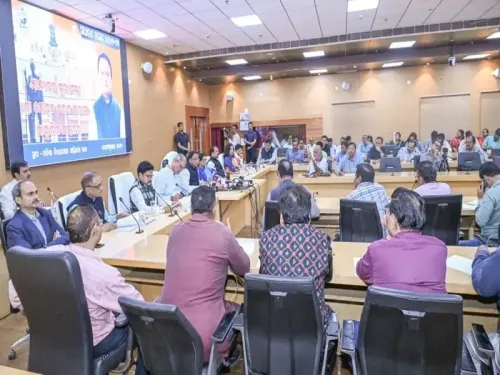
Odisha just put a number on its ambition — and it's a big one. Chief Minister Mohan Charan Majhi inaugurated the National Urban Conclave 2026 in Bhubaneswar on Saturday, 24 October 2026, declaring twin targets of a $500 billion economy and 40 percent urbanisation by 2036, with cutting-edge, inclusive infrastructure as the vehicle to get there.
26 e-buses roll out, nine more cities in the queue
The conclave was no mere talk-shop. On the sidelines, 26 new electric buses were formally flagged off under the PM e-Bus Sewa Yojana, the Central government's flagship scheme to seed sustainable urban mobility across Indian cities. More significantly, the CM announced that the service will be extended to nine additional cities — including Baripada, Balasore, Angul and Jharsuguda — in the coming months. That is Odisha taking a scheme conceived in New Delhi and pushing it deep into its secondary urban centres.
The PM e-Bus Sewa Yojana was unveiled in the 2023 Union Budget to deploy electric buses in cities that lack robust public-transport infrastructure. Odisha's move to spread coverage beyond the capital signals an intent to make clean mobility a state-wide reality, not just a Bhubaneswar showcase.
The $500 billion target and what inclusive infrastructure means for it
CM Majhi stressed that reaching the $500 billion economy mark and lifting urbanisation to 40 percent within a decade requires infrastructure that is both advanced and inclusive — roads, transit, and services that absorb migrants and new urban residents without leaving pockets behind. Odisha's urbanisation rate currently sits well below the national average, making the 40 percent goal a structural leap, not an incremental nudge.
The push sits within a broader national architecture: AMRUT 2.0, launched in 2021, already channels Central funds into urban infrastructure upgrades in Odisha's cities, complementing the Smart Cities Mission. By aligning state targets explicitly with Central schemes at a national conclave, Majhi's government is positioning Odisha as a model of cooperative federalism in urban planning — and quietly lobbying for a larger share of Central urban-development allocations.
What the conclave signals for Odisha's urban policy direction
The choice of Bhubaneswar as host — Odisha's fastest-growing urban centre and a Smart City Mission beneficiary — is itself a message. It frames the capital as proof-of-concept for what the state wants to replicate across its tier-two towns. The expansion of e-bus services to cities like Jharsuguda, an industrial hub in western Odisha, and Baripada in the north-east, suggests the government is thinking about urban corridors, not just capital-city optics.
The road to 2036 will be measured in concrete deliverables: fleet sizes, ridership numbers, urbanisation census data. The National Urban Conclave 2026 has set the direction — now the nine cities waiting for their first electric bus will be the first real test.
Point of View
The Majhi government is doing something strategically smart: converting Central scheme disbursements into a state-level growth narrative ahead of possible assembly cycles. The e-bus expansion to industrial and tribal-belt cities like Jharsuguda and Baripada is notable — it suggests urban policy is being designed with electoral geography in mind, not just administrative convenience. Odisha's below-average urbanisation rate also means the 40 percent target, if met, would represent one of the larger structural shifts in any Indian state this decade. The conclave format gives the state leverage to extract greater Central allocations by demonstrating alignment with national urban missions.
NationPress
24 Oct 2026
Frequently Asked Questions
What is the National Urban Conclave 2026 in Odisha?
The National Urban Conclave 2026 is a national-level event on urban development and infrastructure hosted in Bhubaneswar, inaugurated by Odisha Chief Minister Mohan Charan Majhi on 24 October 2026.
What is PM e-Bus Sewa Yojana?
PM e-Bus Sewa Yojana is a Central government scheme announced in the 2023 Union Budget to deploy electric buses in cities across India to promote sustainable urban mobility.
Which cities in Odisha will get new e-bus services?
E-bus services will be expanded to nine new cities in Odisha, including Baripada, Balasore, Angul, and Jharsuguda, beyond the initial launch in Bhubaneswar.
What is Odisha's 2036 economic target?
Odisha aims to become a $500 billion economy with 40 percent urbanisation by 2036, as announced by CM Mohan Charan Majhi at the National Urban Conclave 2026.
How many electric buses were launched at the Odisha Urban Conclave 2026?
26 new electric buses were formally launched under the PM e-Bus Sewa Yojana at the National Urban Conclave 2026 in Bhubaneswar.