How Will Odisha's Budget Accelerate Development and Ensure Inclusive Growth?
Synopsis
Odisha's Chief Minister Mohan Charan Majhi unveils a transformative Budget aimed at propelling development and fulfilling societal aspirations. This strategic plan prioritizes infrastructure, social welfare, and empowerment initiatives, ensuring that every citizen benefits from the state’s growth.
Key Takeaways
Focus on infrastructure development.
Commitment to social welfare programs.
Introduction of new empowerment schemes.
Plans for educational institutions expansion.
Alignment with national development goals.
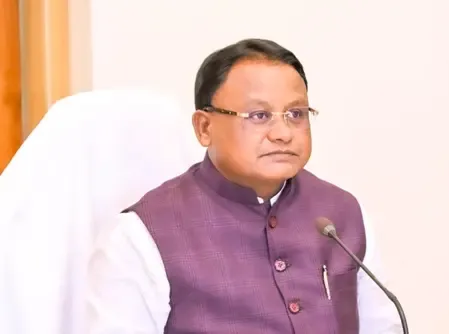
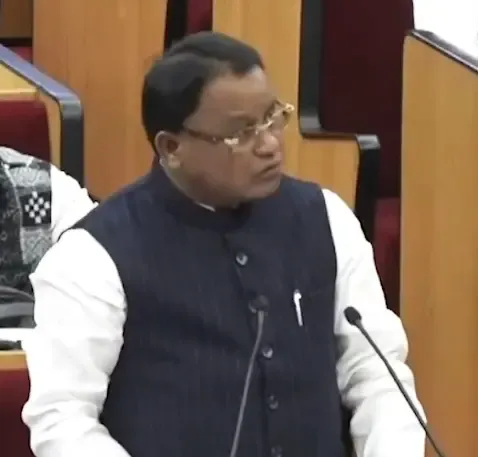
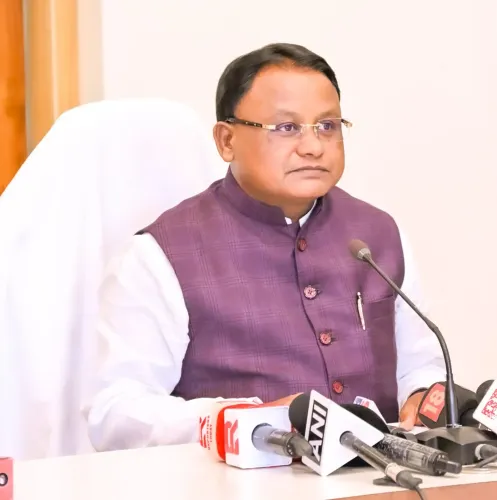
Bhubaneswar, Feb 20 (NationPress) The Chief Minister of Odisha, Mohan Charan Majhi, announced on Friday that the state Budget for the fiscal year 2026–27 is designed to expedite development and meet the dreams, hopes, and aspirations of every segment of society.
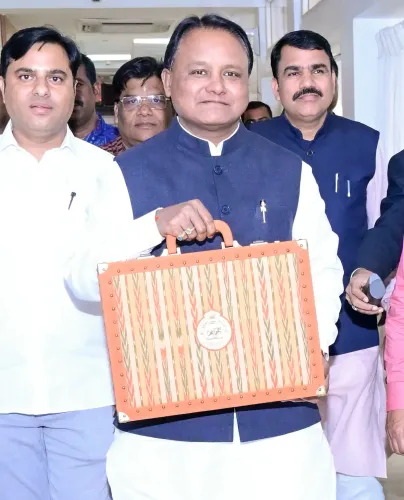
In his capacity as Finance Minister, Majhi unveiled the annual Budget in the Odisha Assembly earlier in the day, referring to it as a strategic plan for fostering a prosperous, inclusive, and future-oriented state.
During a press interaction post-Budget presentation, the Chief Minister stated, “This Budget is not just a ledger of revenue and expenses for the upcoming year; it is a decisive move towards constructing a thriving, robust, and inclusive Odisha.”
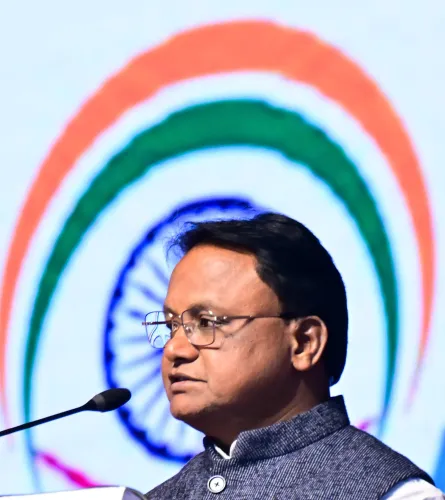
He remarked that the state government’s policy direction is in sync with the larger national development vision, emphasizing long-term objectives linked to the years 2036 and 2047.
“To achieve this vision, the Budget prioritizes infrastructure development, capital investment, urban development, port-led growth, industrialization, agriculture, and irrigation. In addition to these domains, the government is wholly devoted to the comprehensive development of individuals through education, healthcare, social security, the empowerment of Scheduled Castes and Scheduled Tribes, and welfare initiatives for women and children, along with effective citizen-centric services,” Majhi explained.
Emphasizing significant social welfare initiatives, the Chief Minister pointed out that around six lakh eligible beneficiaries currently do not receive pension benefits under the Madhubabu Pension Yojana (MBPY) and the National Social Assistance Programme (NSAP), which collectively serve approximately 57 lakh beneficiaries in Odisha.
He announced the state government's commitment to ensure full coverage under the Madhubabu Pension Yojana, pledging to include all eligible individuals in the scheme.
“It is an injustice to our elderly and vulnerable citizens. Our administration has resolved to incorporate all eligible beneficiaries into the pension scheme and guarantee that those previously excluded receive the benefits to which they are entitled,” Majhi stated.
The Chief Minister also introduced a new initiative named ‘DALKHAI’ (Dignified Access to Livelihood, Knowledge, Health and Allied Infrastructure), which aims to abolish the bonded labor system, known locally as ‘dadan’, by creating sustainable livelihood opportunities through collaborative efforts among various government departments.
Additionally, he unveiled a new women empowerment scheme, the ‘Mukhyamantri Kanya Sumangal Yojana’, which will establish a financial savings instrument worth Rs 20,000 for every girl child born into an economically disadvantaged family. The scheme promises financial assistance of up to Rs 1.01 lakh upon her graduation, subject to eligibility criteria.
Moreover, Majhi underscored several other significant proposals encompassed in the Budget, including the creation of a Tourism Land Bank, the initiation of a State Artificial Intelligence Mission, and plans to establish four new universities, three Ayurvedic medical colleges, and one Homoeopathic medical college in Odisha.
The Chief Minister articulated that the Budget signifies the state government’s dedication to equitable regional development, social inclusion, and sustainable economic growth.
Point of View
This Budget presentation by Odisha's Chief Minister reflects a significant commitment to inclusive growth and development. The emphasis on social welfare and infrastructure aligns with broader national goals, making it a crucial step in ensuring that the benefits of progress reach every citizen.
NationPress
1 Oct 2026
Frequently Asked Questions
What is the main focus of Odisha's 2026-27 Budget?
The primary focus is on accelerating development and ensuring inclusive growth across all societal segments, emphasizing infrastructure and social welfare.
How does the Budget address pension schemes?
The Budget aims to achieve saturation coverage under the Madhubabu Pension Yojana, including all eligible beneficiaries who were previously left out.
What new initiatives were introduced?
New initiatives include the ‘DALKHAI’ program for eliminating bonded labor and the ‘Mukhyamantri Kanya Sumangal Yojana’ for empowering girl children.