Odisha CM tells new recruits: serve the last person in line
Synopsis
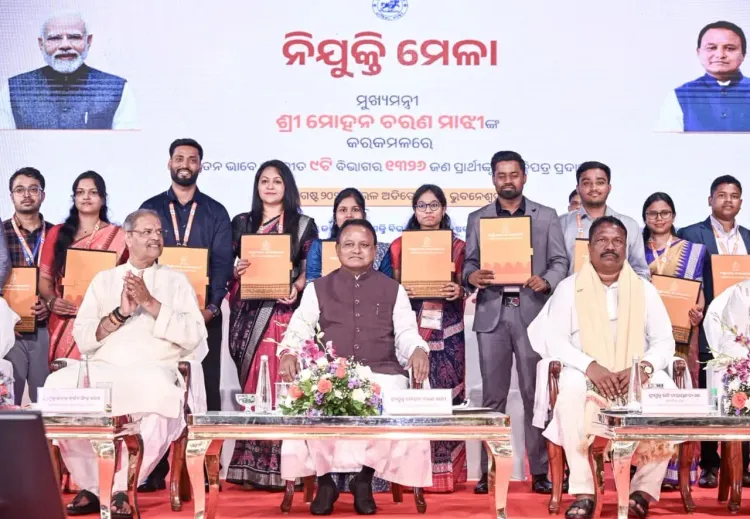
Odisha's Chief Minister told newly appointed state officials on 10 August 2026 that time-bound grievance redressal and last-mile delivery of government benefits are moral duties, not optional courtesies — setting the tone for a new cohort of public servants from their first day in service.
Key Takeaways
The Chief Minister of Odisha addressed newly appointed government officials on 10 August 2026 .
He defined the core purpose of government service as public service , specifically time-bound resolution of citizen grievances.
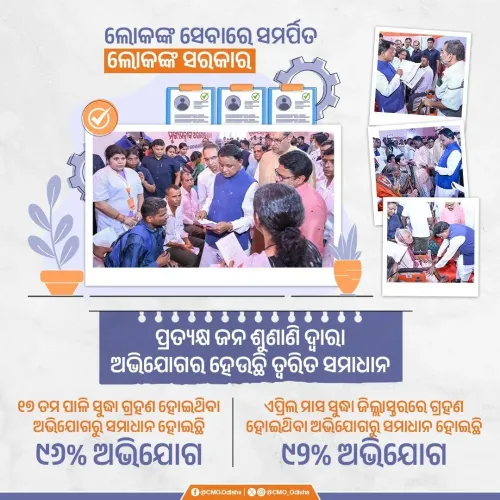
Officials were told to receive every citizen with respect and take immediate action on their problems.
The stated goal is ensuring all government benefits reach the last person in the social queue .
Odisha has a standing framework of citizen charters and time-bound service norms across departments that this address reinforces.
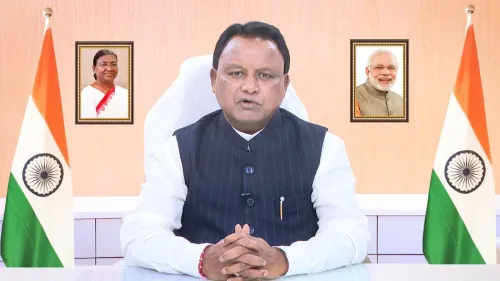
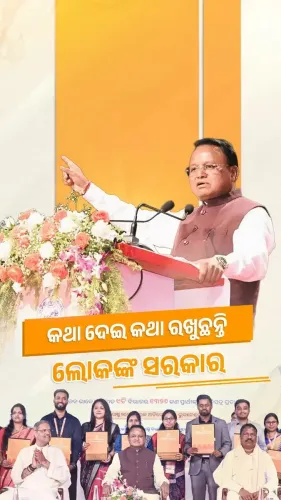
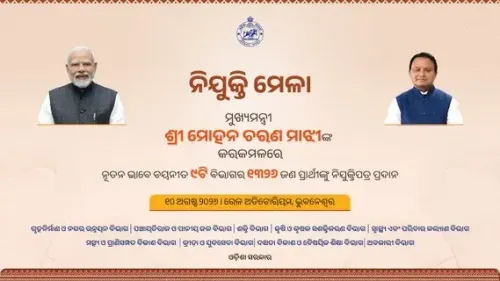
Public service is not a privilege of rank — it is a moral duty. That was the message Odisha Chief Minister's Office relayed on Monday, 10 August 2026, as the Chief Minister addressed newly appointed state government officials, urging them to treat grievance redressal not as paperwork but as the very purpose of their careers.
Speaking at the orientation, the Chief Minister was direct: 'ସରକାରୀ ଚାକିରିର ମୂଳ ଲକ୍ଷ୍ୟ ହେଉଛି ଜନସେବା' — 'the core objective of government service is public service.' When a citizen walks in with a problem, he told the recruits, the administration's first instinct must be respect, attentiveness, and immediate action. Not delay. Not redirection.
The last person in line as the benchmark
The Chief Minister framed the state's governing ambition in a single, clear standard: every government benefit must reach the person standing at the very end of the social queue. It is a benchmark that cuts through bureaucratic abstraction and lands on something concrete — the widow in a remote block, the daily-wage earner who cannot afford a second trip to the collector's office, the farmer waiting months for a scheme disbursement.
Odisha has long institutionalised this aspiration through citizen charters and time-bound service delivery norms across departments. The Chief Minister's address to fresh recruits signals that the state intends to embed that culture from day one of an official's career, not after years of habituation to the system's slower rhythms.
Why orientation moments matter in bureaucratic culture
New entrants to any civil service carry the widest latitude for habit formation. Instructions given at induction — before the first file is pushed, before the first petitioner is turned away — carry disproportionate weight. By personally delivering this message, the Chief Minister is staking executive authority on the principle that responsiveness is non-negotiable, not aspirational.
Odisha's General Administration department has periodically issued circulars on grievance timelines; the follow-through on those circulars at the district level will be the real test of whether Monday's counsel translates into changed behaviour on the ground.
A bureaucracy that hears its newest members told, on their first day, that dignity and speed are duties — not courtesies — is one that has at least set the right compass bearing. Whether the needle holds is the question every citizen in the last row is already waiting to answer.
Point of View
And this intervention fits that continuity. The sharper political signal is the framing of responsiveness as a 'moral duty' rather than a procedural requirement, which raises the accountability bar beyond circulars and audits. Whether that framing translates into measurable change will depend on follow-through from the General Administration department on enforceable timelines.
NationPress
25 Sept 2026
Frequently Asked Questions
What did the Odisha Chief Minister say to newly appointed officials?
The Chief Minister told new recruits that the core purpose of government service is public service, and that listening to citizens with respect and resolving their grievances promptly is a moral duty, not optional conduct.
What is Odisha's goal for government scheme delivery?
The Chief Minister stated that the goal is to ensure all government benefits reach the last person in society — those at the very bottom of the social and economic ladder.
Why does Odisha address new government officials at orientation?
Induction is the point at which habits are most easily formed. By delivering this message personally, the Chief Minister aims to embed a culture of responsiveness before officials settle into slower bureaucratic patterns.
What are Odisha's existing rules on grievance redressal timelines?
Odisha has citizen charters and time-bound service delivery norms across departments. The General Administration department has periodically issued circulars reinforcing these standards, though district-level implementation varies.
When did the Odisha CM address new government recruits in 2026?
The address was delivered on Monday, 10 August 2026 , and was shared by the official Chief Minister's Office account on X.