Odisha CMO Pushes Worker Welfare, EV Buses for Industrial Zones
Synopsis
The Chief Minister's Office of Odisha on 24 May 2026 directed that worker amenities in industrial zones be upgraded, local youth hiring be prioritised, and EV buses plus modern hostels be provided for working women — extending the state's industrial welfare policy into gender-specific safety infrastructure.
Key Takeaways
The Chief Minister's Office of Odisha issued three welfare directives for industrial zones on 24 May 2026 .
Improving amenities and opportunities for workers and employees in industrial areas is a stated priority.
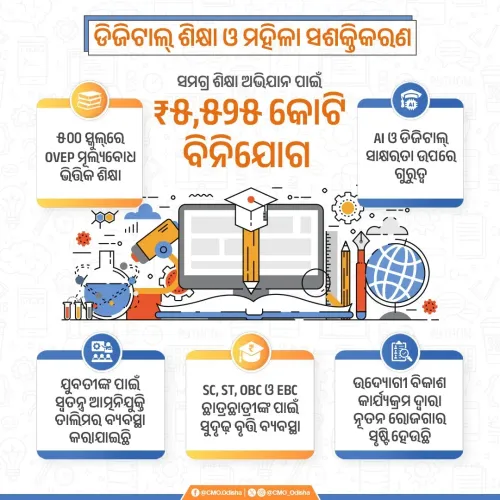
Local employment and youth skill development are to be given the highest priority in industrial clusters.
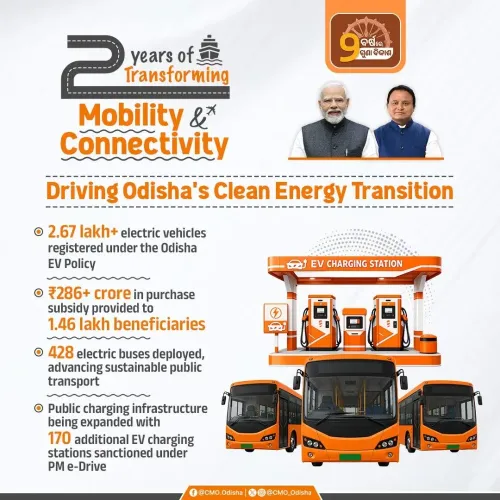
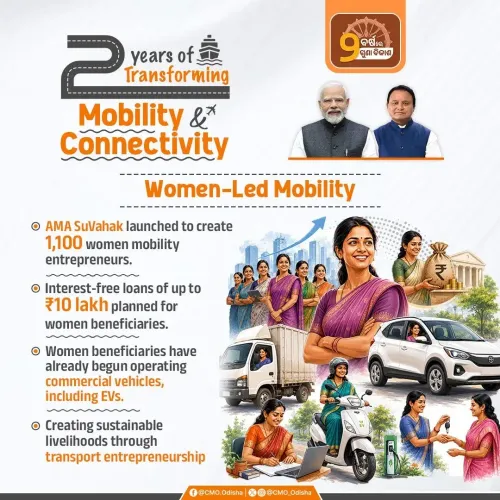
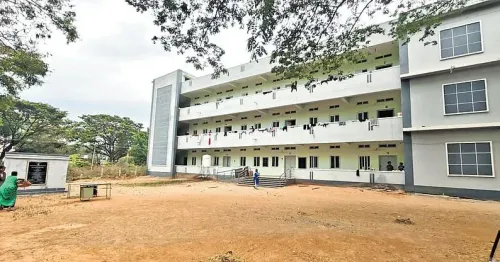
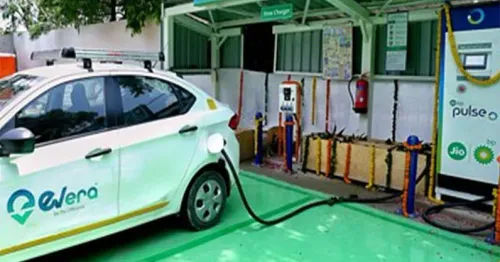
EV buses and modern hostels have been announced specifically to enhance safety for working women .
The announcements build on the Odisha Industrial Policy Resolution 2015 and the Odisha Skill Development Authority established in 2016 .
Budget allocations and rollout timelines for the new infrastructure remain to be detailed in follow-up government orders.
The Chief Minister's Office of Odisha on Sunday, 24 May 2026 outlined a multi-point welfare agenda for industrial workers in the state, announcing EV buses and modern hostels for working women while calling for maximum priority to local youth employment and skill development in industrial corridors.
Context
The post, shared from the official CMO Odisha account, listed three key directives in Odia: emphasis on developing amenities and opportunities for workers and employees in industrial zones; a recommendation to prioritise local employment alongside youth skill development; and an announcement of EV buses and state-of-the-art hostels to ensure maximum safety for working women.
The directives reflect the outcome of a high-level review of welfare conditions in Odisha's designated industrial clusters, which include major zones such as Kalinganagar and Paradip — among the state's largest concentrations of manufacturing activity and industrial employment.
Policy Backdrop
Odisha's approach to industrial welfare has evolved through successive policy resolutions. The Odisha Industrial Policy Resolution 2015 formally prioritised local employment generation and infrastructure support within designated industrial parks, establishing a framework that subsequent administrations have built upon.
The Odisha Skill Development Authority, established in 2016, institutionalised state-level coordination of vocational training programmes tied directly to industrial corridors, creating a pipeline between youth skilling and factory-floor demand. The latest directives extend this lineage by adding gender-specific safety infrastructure — a dimension that has gained prominence as the female workforce in industrial zones has grown.
The announcement of EV buses for working women also signals a convergence of the state's green-mobility ambitions with its social-welfare commitments, embedding clean transport within the industrial welfare architecture rather than treating the two as separate policy tracks.
Stakeholders and Impact
The primary beneficiaries are industrial workers and employees across Odisha's manufacturing belts, with particular focus on working women who face safety and commuting challenges in large industrial estates. Local youth stand to gain from the reinforced push on skill development and hiring preferences for residents of areas surrounding industrial projects.
Employers and industrial units operating in state-designated zones are likely to face renewed expectations around local hiring quotas and worker amenity standards. Community groups in areas adjacent to industrial clusters — who have historically raised concerns about employment displacement — may view the local-hiring directive as a direct response to longstanding demands.
The broader pattern mirrors similar state-level efforts across eastern India to manage social friction around large-scale industrial projects by pairing capital investment with visible welfare commitments for the host communities.
What's Next
Attention will now turn to rollout timelines and budget allocations for the announced EV buses and modern hostels in major industrial clusters. Follow-up government orders specifying local employment quotas for new or expanding industrial units will be closely watched by industry bodies and labour groups alike.
If translated into binding guidelines, the directives could set a new baseline for worker welfare standards in Odisha's industrial zones — and potentially influence how the state positions itself ahead of future investor summits where social-compliance credentials are increasingly scrutinised.
Frequently Asked Questions
What did the Odisha CMO announce for working women in industrial areas?
The Chief Minister's Office of Odisha announced EV buses and modern hostels specifically to ensure the safety of working women in industrial zones, as stated in its post on 24 May 2026.
What is Odisha's policy on local employment in industrial zones?
Odisha's directives call for giving maximum priority to local youth employment alongside skill development in industrial corridors, a commitment that builds on the Odisha Industrial Policy Resolution 2015.
What is the Odisha Skill Development Authority?
The Odisha Skill Development Authority is a state body established in 2016 to coordinate vocational training programmes and align youth skills with the requirements of industrial corridors across the state.
Which industrial zones in Odisha are likely to benefit from these welfare measures?
Major designated manufacturing zones such as Kalinganagar and Paradip, which are among Odisha's largest industrial clusters, are expected to be primary beneficiaries of the announced worker welfare measures.
When were these Odisha industrial worker welfare directives issued?
The directives were shared by the official Chief Minister's Office of Odisha account on Sunday, 24 May 2026.