Odisha flood situation eases; Subarnarekha still above danger mark
Synopsis
Odisha's flood crisis is receding but not over. With the Subarnarekha still above danger level and over 54,000 people in relief camps across three districts, the state has 47 response teams deployed and the IMD has issued a Yellow Warning for eight districts — signalling the relief phase is underway, but the all-clear is not yet sounded.
Key Takeaways
The Subarnarekha River remained the only river above danger level in Odisha as of 3 September , though its level was declining.
Jajpur , Mayurbhanj , and Baleshwar were the three districts still affected by fresh floods.
A combined 54,000+ people were sheltered across 123 relief camps in the three districts.
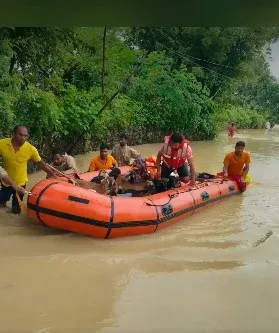
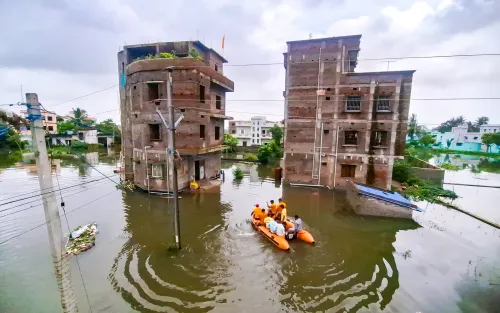
47 response teams — including 21 ODRAF , 4 NDRF , and 22 Fire and Emergency Services — remained deployed.
The Hirakud reservoir stood at 627.29 feet with four gates open; inflow at 1,41,962 cusecs .
The IMD issued a Yellow Warning for thunderstorms and gusty winds in eight Odisha districts.
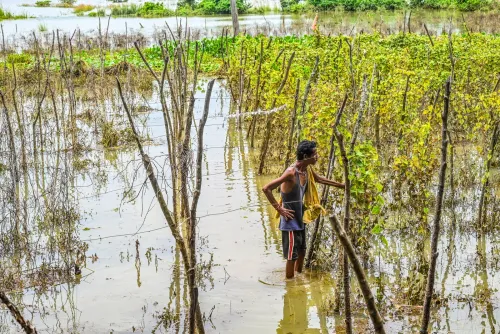
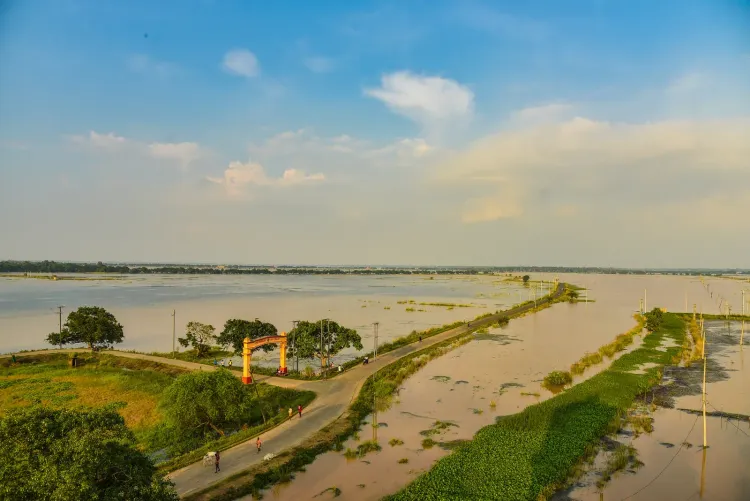
The flood situation in Odisha continued to improve on Thursday, 3 September, with water levels across major rivers recording a falling trend and rainfall activity declining significantly across the state, the state government said. The Subarnarekha River remained the only waterway still flowing above the danger level, though officials confirmed its level too was receding.
Districts Still Affected
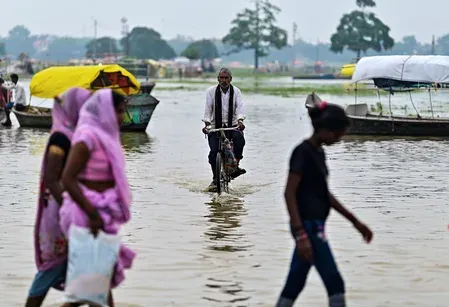
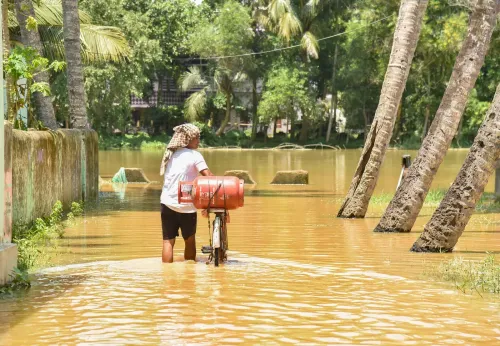
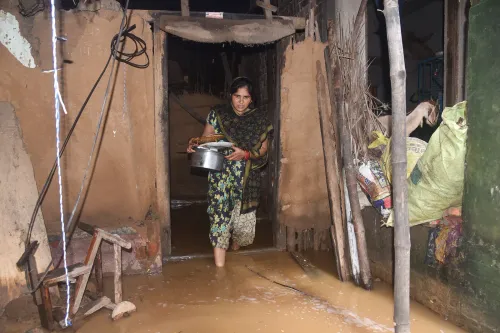
Three districts — Jajpur, Mayurbhanj, and Baleshwar — remained in the grip of fresh flooding as of Thursday. In Jajpur, the Dasrathpur block bore the brunt, with 62 villages across 19 gram panchayats affected and 22 relief camps sheltering 7,745 people.
In Mayurbhanj, 97 villages across 21 blocks and two wards of Baripada Municipality were affected. A total of 29 relief camps were operational, covering 10,501 beneficiaries. Reportedly, 104 houses were damaged, and nine polythene rolls were distributed for emergency shelter. Baleshwar saw the heaviest relief footprint, with 214 villages across five blocks — Bhogarai, Baliapala, Basta, Remuna, and Jaleshwar — affected. 72 relief camps were operational, providing shelter to 35,740 beneficiaries.
Response Teams on the Ground
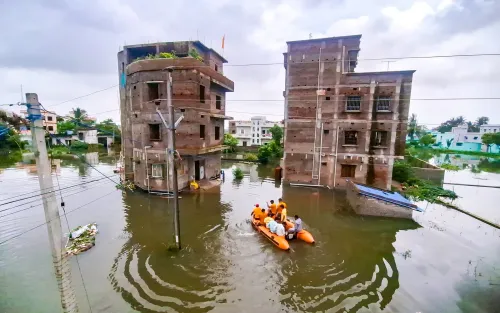
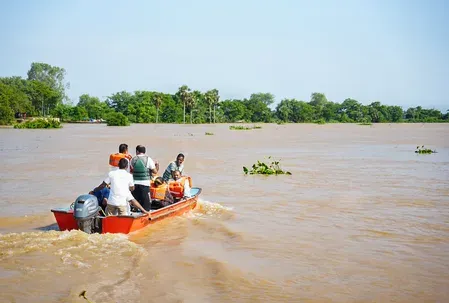
The state government had deployed 47 response teams across affected districts, comprising 21 ODRAF teams, four NDRF teams, and 22 Fire and Emergency Services teams. Round-the-clock monitoring and restoration operations were continuing, officials said. Cattle feed was also being supplied to all flood-affected districts based on indents from local administrations.
River Levels and Hirakud Reservoir
Several major rivers — including the Mahanadi at Naraj, Ib at Sundaragada, Brahmani at Panposh, Baitarani at Anandpur and Akhuapada, Burhabalanga at NH-5, Vansadhara at Gunupur, and Jalaka at Mathani — were all on a falling trend as of Thursday morning. The Hirakud reservoir stood at 627.29 feet, with an inflow of 1,41,962 cusecs and an outflow of 78,429 cusecs, with four gates remaining open.
IMD Yellow Warning Issued
The India Meteorological Department (IMD) issued a Yellow Warning for thunderstorms accompanied by lightning and gusty winds of 30–40 kmph at one or two places in Baleshwar, Bhadrak, Jajpur, Kendrapada, Jagatsinghapur, Kataka, Kendujhar, and Mayurbhanj. Authorities cautioned residents in these areas to remain alert. The situation is expected to normalise further as weather systems weaken, though relief operations will continue until full restoration is achieved.
Point of View
But the concentration of over 54,000 relief-camp residents across just three districts underscores how localised the damage remains. The Subarnarekha's persistence above danger level — even as every other major river recedes — points to the river's historically erratic drainage pattern in the Baleshwar corridor. The IMD Yellow Warning for eight districts is a reminder that the window between 'improving' and 'resolved' can close quickly during the September monsoon tail. The real test will be the speed of restoration once waters fully recede — a phase where Odisha's administration has historically been more effective at emergency response than at long-term structural repair.
NationPress
19 Oct 2026
Frequently Asked Questions
What is the current flood situation in Odisha?
As of 3 September, the flood situation in Odisha is improving, with most major rivers showing falling water levels. The Subarnarekha remains the only river still above the danger level, though it too is declining. Three districts — Jajpur, Mayurbhanj, and Baleshwar — continue to be affected.
Which districts in Odisha are still affected by floods?
Jajpur, Mayurbhanj, and Baleshwar districts remain affected. Collectively, over 54,000 people are sheltered in 123 relief camps across the three districts, with response teams deployed round the clock.
What is the Hirakud reservoir water level today?
The Hirakud reservoir stood at 627.29 feet on Thursday, with an inflow of 1,41,962 cusecs and an outflow of 78,429 cusecs. Four gates of the reservoir remained open as of the latest report.
What warning has the IMD issued for Odisha?
The India Meteorological Department issued a Yellow Warning for thunderstorms, lightning, and gusty surface winds of 30–40 kmph at one or two places in Baleshwar, Bhadrak, Jajpur, Kendrapada, Jagatsinghapur, Kataka, Kendujhar, and Mayurbhanj districts.
How many relief teams are deployed in flood-affected Odisha districts?
A total of 47 response teams are deployed, comprising 21 ODRAF teams, four NDRF teams, and 22 Fire and Emergency Services teams. The state government said relief, response, and restoration measures are continuing until normalcy is fully restored.