Odisha floods: Works Minister orders war-footing repair of roads, buildings
Synopsis
Odisha's Works Department has gone into war-footing mode — with letters dispatched to NHAI, OBCC, and all Chief Engineers — as floods from a low-pressure system kill three, displace 30,000, and leave 748 villages cut off. The speed of road restoration will now determine how fast relief reaches the 2-lakh-plus people affected.
Key Takeaways
Works Minister Prithiviraj Harichandan ordered immediate, war-footing repair of flood-damaged roads, bridges, and government buildings on 29 July .
Severe floods have claimed at least 3 lives and affected over 2 lakh people across Odisha.
748 villages in several districts have been affected, according to the Revenue and Disaster Department .
Around 30,000 persons have been evacuated to relief centres across 6 flood-affected districts .
Agencies including NHAI , OBCC , and all Chief Engineers have been formally directed to begin restoration immediately.
The Works Department has classified the matter as 'most urgent' , with continuous field-level monitoring mandated.
Works Minister Prithiviraj Harichandan on Wednesday, 29 July directed Odisha Works Department officials to immediately repair and restore flood-damaged roads, highways, bridges, and government buildings across the state, as incessant rainfall and swelling rivers continue to batter several districts. The directive comes as severe floods have claimed at least three lives and affected over 2 lakh people across Odisha.
Key Directives Issued
Harichandan reviewed the situation arising from low-pressure-induced rainfall and flooding alongside Works Department Principal Secretary Sanjay Kumar Singh and other senior officials. He stressed the need for speedy restoration of damaged roads, bridges, and government buildings in affected areas.
Following the review, the department issued instructions to multiple agencies — including the Odisha Bridge and Construction Corporation Limited (OBCC), the Engineer-in-Chief (Civil-cum-Roads), the National Highways Authority of India (NHAI), the regional office of the Ministry of Road Transport and Highways (MoRTH), and all Chief Engineers of road, bridge, and National Highway organisations — directing them to undertake repair and restoration on a war footing.
Scale of the Flood Damage
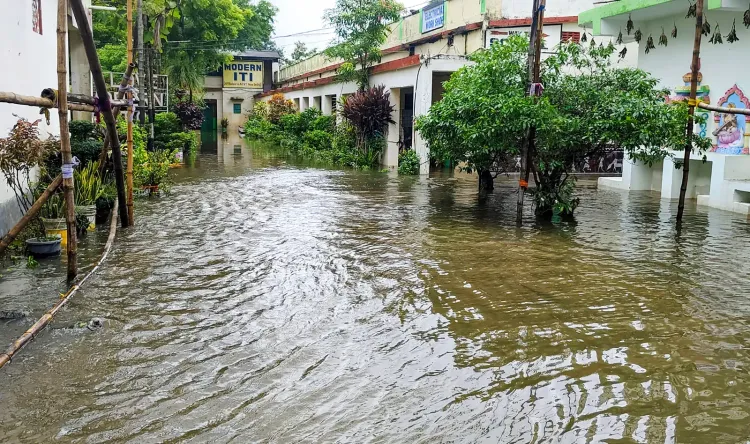
According to the Revenue and Disaster Department, as of Wednesday afternoon, 748 villages across several districts of Odisha have been affected by the floods. Around 30,000 persons have been evacuated from low-lying areas to safer locations and relief centres in the six flood-affected districts.
The floods, triggered by incessant rainfall and overflowing rivers, have caused widespread disruption to road connectivity, compounding relief and rescue operations across the state.
Government's Urgency Signal
The Works Department has officially classified the matter as 'most urgent', instructing all field-level officers and engineers to continuously monitor conditions, take immediate remedial action, and ensure safe public movement by restoring damaged infrastructure without delay. The state government has separately emphasised the need to normalise traffic movement in flood-hit areas at the earliest opportunity.
What Happens Next
With the low-pressure system still influencing weather patterns over Odisha, authorities are expected to maintain heightened vigilance. The focus now shifts to execution — whether agencies like OBCC and NHAI can mobilise resources quickly enough to restore critical road links before further rainfall compounds the damage. Relief operations in the six affected districts are ongoing, with evacuation efforts continuing for vulnerable populations.
Point of View
But the real question is whether Odisha's executing agencies — OBCC, NHAI, and state Chief Engineers — have the pre-positioned resources to act on it while rainfall continues. Issuing letters to multiple bodies simultaneously risks coordination gaps rather than speed. Odisha has built a credible disaster-response reputation over the years, but that reputation rests on evacuation, not infrastructure restoration. With 748 villages affected and 2 lakh people displaced, the bottleneck is no longer political will — it is machinery, materials, and whether roads can be repaired faster than the next spell of rain undoes the work.
NationPress
13 Sept 2026
Frequently Asked Questions
What action has the Odisha government taken on flood-damaged roads?
Works Minister Prithiviraj Harichandan on 29 July directed the Works Department and agencies including NHAI and OBCC to repair and restore flood-damaged roads, bridges, and government buildings on a war footing. The department has classified the matter as 'most urgent' and instructed field engineers to monitor the situation continuously.
How many people have been affected by the Odisha floods?
Over 2 lakh people across several districts of Odisha have been affected by the floods triggered by low-pressure-induced rainfall. Additionally, 748 villages have been impacted, according to the Revenue and Disaster Department.
How many people have been evacuated due to Odisha floods?
Around 30,000 persons have been evacuated from low-lying areas to safer locations and relief centres across the six flood-affected districts of Odisha as of Wednesday, 29 July.
What caused the flooding in Odisha?
The floods were triggered by incessant rainfall associated with a low-pressure system, which caused rivers to swell and inundate several districts across the state. The Works Minister reviewed the situation arising specifically from this low-pressure-induced rainfall.
Which agencies have been directed to restore Odisha's flood-hit roads?
The Works Department sent formal directions to the Odisha Bridge and Construction Corporation Limited (OBCC), the Engineer-in-Chief (Civil-cum-Roads), the National Highways Authority of India (NHAI), the regional office of MoRTH, and all Chief Engineers of road, bridge, and National Highway organisations.