CM Bhagwant Mann Pitches Canal Water as Punjab's Soil Saviour

Synopsis
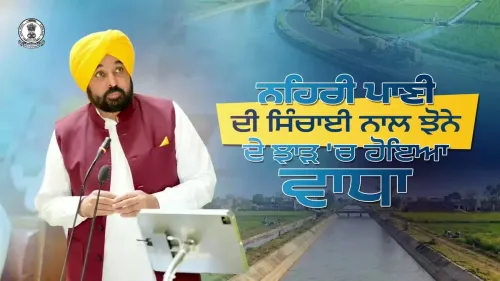
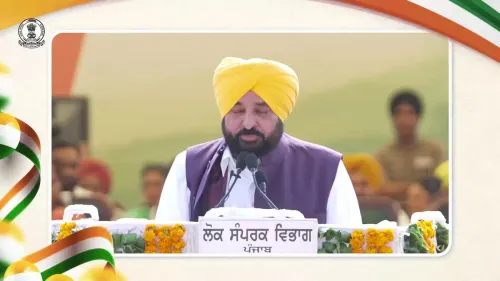
Chief Minister Bhagwant Mann told the 16th Punjab Vidhan Sabha's 13th session on 28 October 2026 that the state's push to deliver canal water to farms is yielding results, highlighting the silt and natural minerals in mountain-fed canals as a dual benefit for irrigation and soil fertility.
Key Takeaways
CM Bhagwant Mann addressed the 13th Session of the 16th Punjab Vidhan Sabha on 28 October 2026 on canal irrigation.
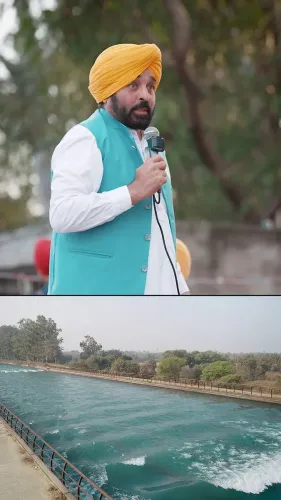
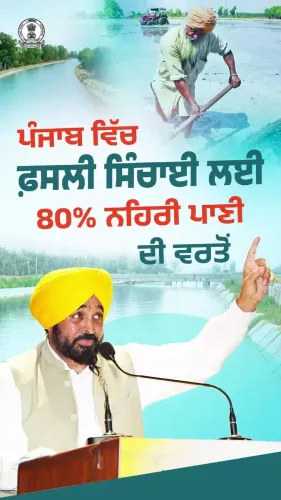
He stated that Punjab Government efforts to extend canal water to farms are producing 'meaningful results.' Mountain-fed canal water carries silt and natural minerals that Mann described as beneficial for agricultural soil.
The push addresses Punjab's falling groundwater table , a consequence of decades of intensive paddy cultivation dependent on tubewells.
Canal networks linked to the Bhakra Nangal project (commissioned 1963 ) underpin the state's surface irrigation infrastructure.
Actual delivery depends on ongoing canal maintenance, desilting, and last-mile distribution investment.
Mountain-fed canals carry more than water — they carry silt and natural minerals that could quietly reverse decades of soil degradation across Punjab's farmlands. During the 13th Session of the 16th Punjab Vidhan Sabha on 28 October 2026, Chief Minister Bhagwant Mann made the case for a deceptively simple intervention: get canal water to the fields, and let nature do the rest.
What Mann told the House about canal water and soil health
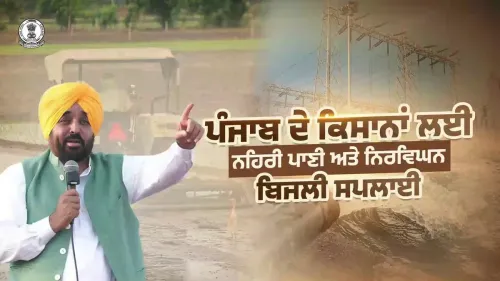
Speaking on the floor of the assembly, CM Mann said the Punjab Government's efforts to extend canal water delivery to farms are beginning to show 'meaningful results' (ਸਾਰਥਕ ਨਤੀਜੇ). He pointed to a quality that distinguishes surface canal water from tubewell water: mountain-origin flows carry 'soil and several natural mineral elements' that are 'beneficial for agriculture' — a natural nutrient package that groundwater simply cannot replicate.
The argument is grounded in agronomy. Himalayan-fed canals deposit alluvial silt and micro-nutrients as water moves through fields, passively enriching topsoil that decades of groundwater-dependent, chemical-intensive paddy cultivation have stripped thin. Every litre of canal water delivered, in this framing, is doing double duty — irrigating the crop and feeding the soil.
The deeper crisis these canals are meant to address
Punjab's groundwater emergency is well-documented. Intensive paddy cultivation has caused water tables to fall sharply across large parts of the state, threatening the long-term viability of the very farming economy the state is built on. Canal networks — including those fed by the Bhakra Nangal system, commissioned in 1963 — were designed precisely to reduce this pressure, but years of inadequate maintenance and inequitable distribution left many tail-end villages reliant on diesel-powered tubewells.
State governments have periodically highlighted canal water's advantages, but the gap between policy intent and last-mile delivery has historically been wide. Mann's remarks signal a continued push to close that gap — and to reframe canal irrigation not just as a water-access issue but as a soil-health strategy.
What farmers and the assembly will be watching next
For Punjab farmers, the promise is tangible: lower pumping costs, reduced dependence on chemical fertilisers, and potentially healthier soil over successive seasons. The critical test, however, is whether canal maintenance budgets, desilting schedules, and last-mile distribution infrastructure keep pace with the political messaging coming out of the Vidhan Sabha.
Assembly sessions are where commitments are made public — the fields are where they are kept or broken.
Point of View
Not merely a water-supply fix — a politically astute move that ties infrastructure delivery to the agrarian anxieties at the heart of Punjab's electorate. By invoking natural minerals and silt, the AAP government is attempting to build a farmer-facing narrative around canal revival that goes beyond groundwater depletion statistics. The challenge is credibility: successive governments have promised last-mile canal delivery, and farmers at tail-end villages have long borne the gap between the legislature and the field. Whether this session translates into verifiable desilting budgets and distribution timelines will determine how the messaging lands beyond the Vidhan Sabha chamber.
NationPress
28 Oct 2026
Frequently Asked Questions
What did CM Bhagwant Mann say about canal water in the Punjab Vidhan Sabha?
Mann said the Punjab Government's efforts to deliver canal water to farms are producing meaningful results, and that mountain-fed canal water contains silt and natural minerals that benefit agricultural soil.
Why is canal water considered better than groundwater for Punjab's farms?
Canal water originating from the Himalayas carries alluvial silt and natural micro-nutrients that enrich topsoil, whereas groundwater lacks these minerals and its over-extraction has caused Punjab's water table to fall significantly.
What is the Bhakra Nangal project and its role in Punjab irrigation?
The Bhakra Nangal dam system, commissioned in 1963, is a cornerstone of Punjab's surface canal irrigation network, supplying river water across large parts of the state's agricultural land.
Which session of the Punjab Vidhan Sabha discussed canal irrigation in 2026?
The 13th Session of the 16th Punjab Vidhan Sabha, held in October 2026, was the session in which CM Bhagwant Mann spoke about the benefits of canal water for farming.
How does canal irrigation help solve Punjab's groundwater crisis?
By delivering surface canal water to farms, Punjab reduces reliance on diesel-powered tubewells, easing pressure on the falling water table caused by decades of intensive paddy cultivation.