CM Bhagwant Mann: Canal water boosting Punjab paddy yields

Synopsis
Chief Minister Bhagwant Mann told the Punjab Vidhan Sabha on 23 October 2026 that Himalayan canal water, rich in silt and natural minerals, has boosted paddy yields to nearly 90 maunds per acre this season, making a productivity case for expanding canal irrigation.
Key Takeaways
CM Bhagwant Mann spoke during the 13th session of the 16th Punjab Vidhan Sabha on 23 October 2026 .
He stated that canal water from the mountains carries silt and natural minerals beneficial for farming.
Paddy yields this season have risen, reaching approximately 90 maunds per acre at several locations, according to Mann.
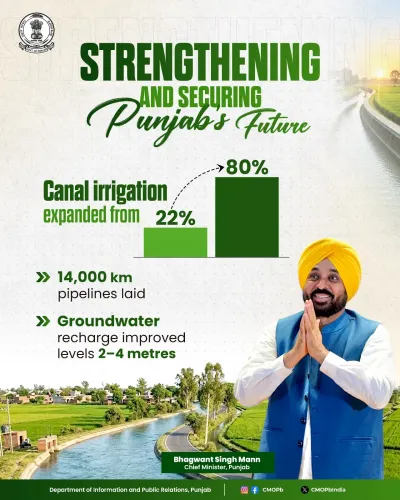
The remarks reinforce the state's push to expand canal irrigation and reduce over-reliance on groundwater tubewells.
Punjab's canal network, anchored by the Bhakra system built in the 1950s-60s, is one of Asia's most extensive irrigation infrastructures.
Official kharif paddy production data from the state agriculture department will be the key metric to watch in coming weeks.
A yield of nearly 90 maunds per acre — that is the number Chief Minister Bhagwant Mann put on the floor of the Punjab Vidhan Sabha on Friday, 23 October 2026, making the case that canal water from the mountains is quietly transforming the state's paddy harvest.
Speaking during the 13th session of the 16th Punjab Legislative Assembly, Mann argued that canal water flowing down from the Himalayas carries silt and multiple natural minerals — nutrients, he said, that groundwater simply cannot replicate. 'ਪਹਾੜਾਂ ਤੋਂ ਆਉਣ ਵਾਲੇ ਨਹਿਰੀ ਪਾਣੀ ਵਿੱਚ ਮਿੱਟੀ ਅਤੇ ਕਈ ਕੁਦਰਤੀ ਖਣਿਜ ਤੱਤ ਹੁੰਦੇ ਹਨ' ['Canal water from the mountains contains soil and many natural minerals'], he told the House, describing these elements as 'beneficial for agriculture.'
The 90-maund claim and what it signals
Mann told the assembly that this season's paddy crop has recorded a visible increase in yield, with output at several locations reaching approximately 90 maunds per acre. For context, average paddy yields in Punjab have historically hovered in a lower range, making the figure — if borne out by official production data — a meaningful jump for the state's farming community.
The Chief Minister's remarks arrive at a critical moment in the kharif harvest season, when paddy procurement is underway across Punjab's grain mandis. Connecting yield gains directly to canal irrigation gives the government a ready policy argument: expand canal water access, reduce dependence on tubewells, and let Himalayan silt do its quiet work on the soil.
Canal irrigation's long roots in Punjab
Punjab's canal network is one of the most extensive in Asia, anchored by the Bhakra system built in the 1950s and 1960s. Successive state governments have promoted canal irrigation as a check on the alarming depletion of groundwater — a crisis that threatens Punjab's long-term agricultural viability. The fertility argument Mann raised on Friday is not new: agronomists and farmers have long noted that silt-laden canal water replenishes soil nutrients that chemical fertilisers cannot fully substitute.
What is new is a sitting Chief Minister anchoring the argument in live yield numbers during an assembly session — framing canal water not merely as an ecological choice but as a productivity driver paddy farmers can measure in their own fields.
What officials and farmers will watch next
The government's credibility on this claim now rests on the official paddy production figures for the 2026 kharif season, expected from the state agriculture department in the weeks ahead. If the data holds, it hands Mann a concrete win to carry into any follow-up irrigation policy debate in the next assembly session. If the numbers diverge, opposition benches will have their own argument ready.
For Punjab's paddy farmers, the stakes are straightforward: more canal water means lower electricity bills for running tubewells and, potentially, richer soil. That arithmetic — not just the politics — is what will determine whether Friday's assembly speech becomes a turning point or a talking point.
Point of View
Which is a politically smarter posture for a farming state. By anchoring the claim in a concrete yield figure of 90 maunds per acre, the AAP government is setting a measurable benchmark it will have to defend once official harvest data arrives. The speech fits a broader AAP pattern of using legislative floors to build a pro-farmer narrative ahead of future electoral cycles. Whether the yield data validates the claim will determine if this becomes a durable policy talking point or an exposed overreach.
NationPress
23 Oct 2026
Frequently Asked Questions
What did CM Bhagwant Mann say about canal water in the Punjab assembly?
During the 13th session of the 16th Punjab Vidhan Sabha on 23 October 2026, CM Bhagwant Mann said that canal water flowing from the mountains contains silt and natural minerals that are beneficial for agriculture, and that paddy yields this season have risen to nearly 90 maunds per acre at several locations.
Why is canal water considered better than tubewell water for farming in Punjab?
Canal water sourced from Himalayan rivers carries silt and natural minerals that replenish soil nutrients, while tubewell groundwater lacks these fertility-boosting properties. Punjab governments have long promoted canal irrigation to reduce groundwater depletion and improve soil health.
What is 90 maunds per acre in paddy yield terms?
One maund equals approximately 37.3 kg, so 90 maunds per acre is roughly 3,357 kg per acre. CM Mann cited this figure as evidence of an increase in paddy yield this season at several locations in Punjab.
What is the significance of Punjab's canal irrigation network?
Punjab's canal network, built primarily around the Bhakra system in the 1950s and 1960s, is one of the most extensive in Asia. It sources water from Himalayan rivers and has been central to the state's agricultural output while helping manage the long-running groundwater depletion crisis.
When will official Punjab paddy production data for 2026 be available?
Official kharif paddy production figures for the 2026 season are expected from the Punjab state agriculture department in the weeks following the harvest period, and will be the key data point to validate or question the yield claims made in the assembly.