Rajnath Singh meets Pete Hegseth at ADMM-Plus, reviews India-US Defence Framework
Synopsis
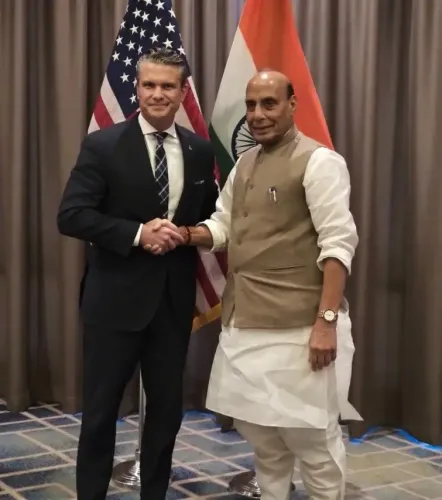
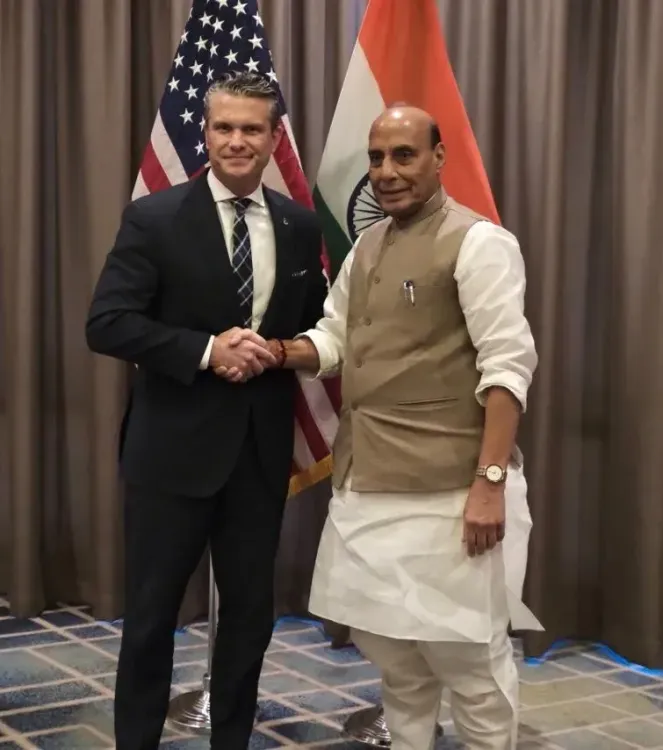
Union Defence Minister Rajnath Singh met US Secretary of War Pete Hegseth on the sidelines of the 13th ADMM-Plus, reviewing the 10-year India-US Defence Framework on military technology, information sharing, and co-production — reaffirming the partnership as a cornerstone of Indo-Pacific security.
Key Takeaways
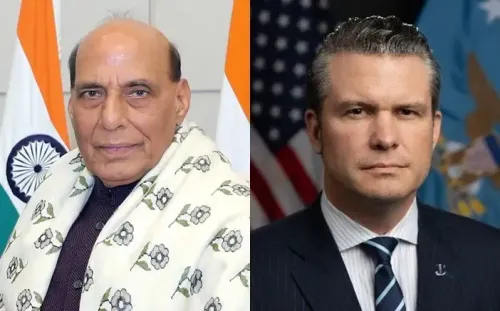
Rajnath Singh and US Secretary of War Pete Hegseth met on the sidelines of the 13th ADMM-Plus on October 28, 2026 .
The two sides reviewed progress on the 10-year India-US Defence Framework , covering military technology, information sharing, and co-production.
The India-US Defence Framework was first signed in 2005 and renewed in 2015 , evolving from a broad intent document into an operational defence-industrial partnership.
Co-production of defence platforms on Indian soil marks the framework's sharpest ambition, aligned with India's Aatmanirbhar Bharat push.
Singh framed the partnership as 'a cornerstone for a free, open, and secure Indo-Pacific' — language that directly echoes the Quad's strategic formulation.
The next India-US 2+2 Ministerial Dialogue will be the key forum to watch for concrete follow-through on co-production commitments.
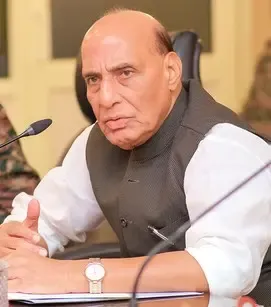
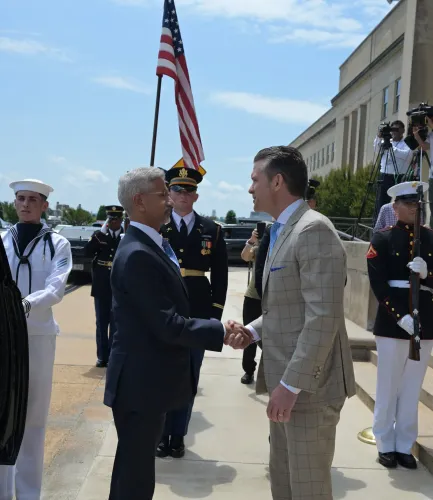
On the sidelines of one of the Indo-Pacific's most consequential multilateral defence forums, Union Defence Minister Rajnath Singh held a bilateral meeting with US Secretary of War Pete Hegseth on Wednesday, October 28, 2026 — a conversation that put the decade-long India-US Defence Framework squarely back in the spotlight.
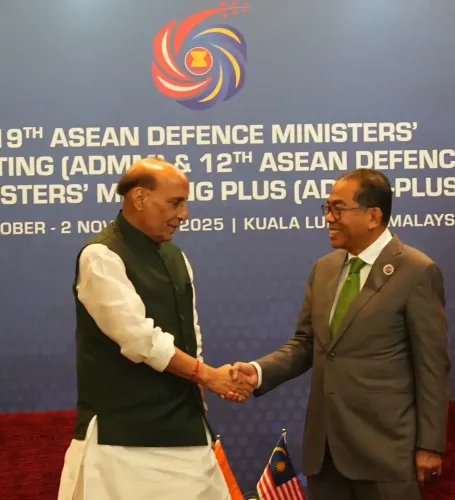
Singh described the meeting as 'excellent', saying the two sides 'reviewed the progress of our 10-year India-US Defence Framework, driving strategic convergence across military technology, information sharing, and co-production.' The forum was the 13th ADMM-Plus — the ASEAN Defence Ministers' Meeting-Plus — a platform that brings together the defence chiefs of ASEAN's ten member states and eight dialogue partners, including India and the United States.
A framework with roots in 2005 — and growing teeth
The India-US Defence Framework is not a new document. First signed in 2005 and renewed in 2015, the agreement has steadily expanded from a broad statement of intent into an operational architecture covering logistics, technology transfer, and now co-production. What changes with each review cycle is ambition — and the current 10-year iteration carries a sharper industrial edge, reflecting India's push for defence self-reliance under the Aatmanirbhar Bharat (self-reliant India) programme alongside tighter interoperability with US forces.
Co-production is the operative word. Both sides have signalled interest in manufacturing platforms and systems jointly on Indian soil — a shift that moves the relationship from buyer-seller to genuine defence-industrial partners. Information-sharing mechanisms, meanwhile, underpin real-time military coordination, particularly in the maritime domain where both nations share a strategic interest in keeping sea lanes open.
Why the ADMM-Plus venue matters
Choosing the ADMM-Plus sidelines for this bilateral is itself a signal. The platform is explicitly designed to foster practical defence cooperation across the Indo-Pacific, and a US-India meeting on its margins reinforces the message that their partnership is not just bilateral — it anchors a wider regional security architecture. Singh's readout framed it in precisely those terms: 'Our robust partnership continues to be a cornerstone for a free, open, and secure Indo-Pacific.'
That phrase — 'free, open, and secure Indo-Pacific' — is the defining formulation of the Quad grouping and US Indo-Pacific strategy alike. Its appearance in Singh's post is deliberate shorthand, signalling alignment not just with Washington but with the broader coalition of like-minded states that share an interest in rules-based maritime order.
What comes next: co-production projects and the 2+2 dialogue
The real test of Wednesday's conversation will come in the specifics. Defence watchers will track whether the framework review translates into green-lights on pending co-production projects — and whether momentum carries into the next India-US 2+2 Ministerial Dialogue, the senior-most forum where defence and foreign ministers of both countries meet together. Each 2+2 round has historically produced a ratcheting of commitments; the question is which technology or platform domains get unlocked next.
For now, the handshake at the ADMM-Plus has set the clock ticking on those follow-throughs. The framework exists. The political signal has been sent. Delivery is the only remaining variable.
Point of View
Open, and secure Indo-Pacific' language ties the bilateral framework to the broader Quad architecture, reinforcing India's position as a load-bearing partner in regional security rather than a swing state. The emphasis on co-production over procurement reflects a maturing relationship: India is no longer content to import American hardware; it wants to build it, partly to serve its own self-reliance doctrine and partly to gain leverage as a manufacturing node in the US defence supply chain. Watch whether the next 2+2 dialogue converts this political warmth into specific programme approvals — that is where frameworks either gain substance or stall.
NationPress
28 Oct 2026
Frequently Asked Questions
What is the India-US Defence Framework?
The India-US Defence Framework is a bilateral agreement first signed in 2005 and renewed in 2015 that governs cooperation on military technology, information sharing, logistics, and co-production of defence equipment between the two countries.
What is ADMM-Plus and why is it significant?
ADMM-Plus stands for the ASEAN Defence Ministers' Meeting-Plus, a multilateral forum that brings together the defence ministers of ASEAN's ten members and eight dialogue partners — including India and the United States — to promote practical defence cooperation across the Indo-Pacific region.
Who is Pete Hegseth?
Pete Hegseth is the US Secretary of War, who met Indian Defence Minister Rajnath Singh at the 13th ADMM-Plus to discuss India-US defence cooperation, including military technology and co-production under the bilateral framework.
What does 'co-production' mean in the context of India-US defence ties?
Co-production refers to the joint manufacturing of defence platforms and systems on Indian soil — moving the relationship beyond a buyer-seller dynamic into a genuine defence-industrial partnership, aligned with India's Aatmanirbhar Bharat (self-reliance) initiative.
What is the India-US 2+2 Ministerial Dialogue?
The India-US 2+2 Ministerial Dialogue is the senior-most bilateral forum where the defence and foreign ministers of both countries meet together; it is the key venue where political-level commitments on defence cooperation are typically converted into concrete agreements and programme approvals.