Odisha signs 6 MoUs for digital farming, climate resilience
Synopsis
Odisha is routing its agricultural modernisation push through an unlikely channel — the postal network. By deploying Gramin Dak Sevaks for AgriStack enrolment alongside ICRISAT's speed-breeding programme and MSSRF's nutrition project for 3,000 Nayagada farmers, the state is betting that last-mile infrastructure, not just research, is the missing link in farm reform.
Key Takeaways
Odisha's DAFE signed six MoUs on 28 August with the Department of Posts , ICRISAT , and MSSRF .
Gramin Dak Sevaks will handle Farmer Registry enrolment, Farmer ID generation, CM KISAN registration, and PM-KISAN e-KYC in rural areas.
Four RKVY-DPR projects with ICRISAT target pulse and oilseed seed systems, chickpea production, and speed breeding for climate-resilient varieties.
A three-year Farming System for Nutrition project under MSSRF will cover 3,000 small and marginal farmers in Nayagada .
The project integrates biofortified crops, backyard poultry, aquaculture, seed banks, and community processing units to improve incomes and dietary diversity.
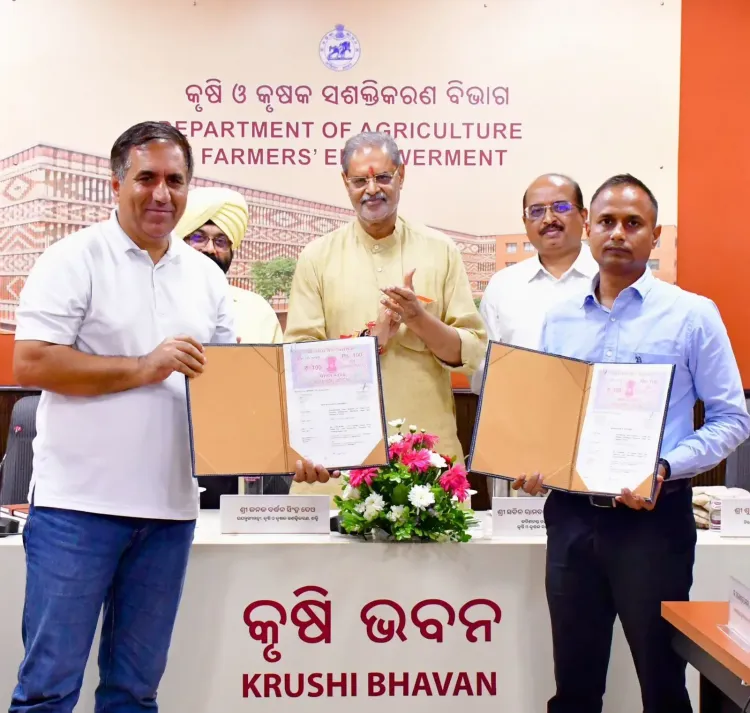
The Odisha government's Department of Agriculture and Farmers' Empowerment (DAFE) on 28 August signed six Memorandums of Understanding (MoUs) with three partner organisations — the Department of Posts, Odisha Circle, the International Crops Research Institute for the Semi-Arid Tropics (ICRISAT), and the M.S. Swaminathan Research Foundation (MSSRF) — to advance digital agriculture, seed systems, climate resilience, nutrition security, and farmer livelihoods across the state.
Key Developments
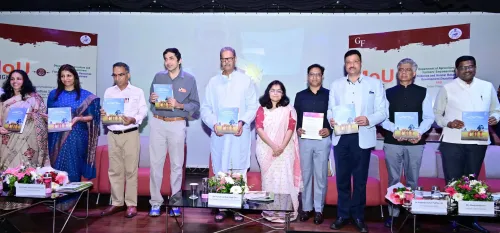
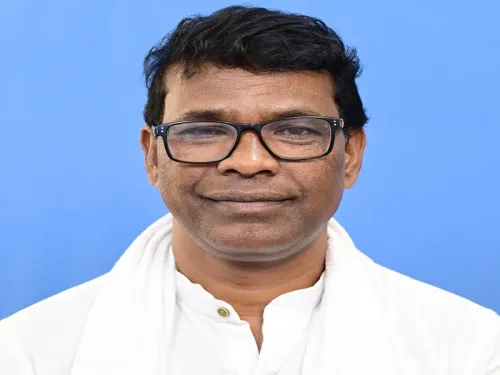
The MoUs were executed in Bhubaneswar in the presence of Deputy Chief Minister and Agriculture & Farmers' Empowerment Minister Kanak Vardhan Singh Deo, alongside senior officials from the partnering agencies and the state government. The agreements collectively address last-mile digital delivery, crop diversification, seed system reform, and grassroots nutrition.
Digital Agriculture and Last-Mile Delivery
The agreement with the Department of Posts, Odisha Circle is designed to extend digital agriculture services to rural and remote communities. Under this arrangement, Gramin Dak Sevaks — the postal network's village-level workers — will facilitate Farmer Registry enrolment, Farmer ID generation, CM KISAN registration, PM-KISAN e-KYC, and NPCI/Aadhaar seeding. The move effectively repurposes India's vast postal infrastructure as an agricultural services channel, a model that has shown promise in other states.
Seed Systems and Climate-Resilient Crops
The partnership with ICRISAT covers four RKVY-DPR projects centred on strengthening seed systems for pulses and oilseeds, promoting Atmanirbhar Odisha in pulse production, scaling chickpea seed production, and accelerating speed breeding for climate-resilient varieties. According to officials, the collaboration aims to improve quality seed availability, encourage crop diversification, raise productivity, and bolster farmers' ability to withstand climate variability — a pressing concern given Odisha's recurring exposure to cyclones and erratic monsoons.
Nutrition and Farmer Livelihoods
Under the MSSRF partnership, a three-year Farming System for Nutrition project will be implemented in Nayagada, targeting 3,000 small and marginal farmers. The project integrates biofortified crops, pulses, vegetables, backyard poultry, and aquaculture, supported by seed banks, nutrition gardens, and community processing units. It is designed to simultaneously improve crop yields, farmer incomes, dietary diversity, and household nutrition — addressing both economic and public health dimensions of agrarian distress.
What the Government Said
Deputy CM Singh Deo described the six MoUs as marking 'a paradigm shift in Odisha's agricultural landscape.' He said leveraging Gramin Dak Sevaks for AgriStack enrolment and partnering with premier research institutions would 'decentralise seed systems, empower smallholder farmers and tackle malnutrition at the grassroots level.' He added: 'This holistic approach will ensure self-sufficiency in pulses and oilseeds while guaranteeing last-mile service delivery to every farming household in Odisha.' The government stated that the ultimate measure of success would be the tangible impact on farmer incomes and livelihoods across the state.
Point of View
Rather than treating them as separate schemes. The real test is execution: Gramin Dak Sevaks are already overstretched with core postal duties, and past AgriStack rollouts in other states have stalled on data quality. The Nayagada nutrition project's three-year horizon is realistic, but 3,000 farmers is a pilot, not a solution, in a state where millions of smallholders remain outside formal agricultural support. Whether these MoUs translate into measurable income gains — the government's own stated benchmark — will depend on monitoring frameworks that the announcements do not yet detail.
NationPress
29 Aug 2026
Frequently Asked Questions
What are the six MoUs signed by the Odisha government on 28 August?
The Odisha Department of Agriculture and Farmers' Empowerment signed six MoUs with three partners: the Department of Posts (Odisha Circle), ICRISAT, and MSSRF. The agreements cover digital agriculture delivery, seed system strengthening for pulses and oilseeds, climate-resilient crop breeding, and a nutrition-focused farming project for 3,000 farmers in Nayagada.
How will Gramin Dak Sevaks support digital agriculture in Odisha?
Under the MoU with the Department of Posts, Odisha Circle, Gramin Dak Sevaks will facilitate Farmer Registry enrolment, Farmer ID generation, CM KISAN registration, PM-KISAN e-KYC, and NPCI/Aadhaar seeding in rural and remote areas. This repurposes the postal network as a last-mile channel for agricultural digital services.
What is the Farming System for Nutrition project in Nayagada?
It is a three-year project under the MSSRF partnership targeting 3,000 small and marginal farmers in Nayagada, Odisha. It integrates biofortified crops, pulses, vegetables, backyard poultry, aquaculture, seed banks, nutrition gardens, and community processing units to improve yields, incomes, and household nutrition.
What does the ICRISAT partnership with Odisha focus on?
The ICRISAT partnership covers four RKVY-DPR projects aimed at strengthening seed systems for pulses and oilseeds, promoting pulse self-sufficiency under Atmanirbhar Odisha, scaling chickpea seed production, and developing climate-resilient varieties through speed breeding.
Who signed the MoUs and who was present at the ceremony?
The MoUs were signed by officials of DAFE and the respective partner organisations in Bhubaneswar. Deputy Chief Minister and Agriculture Minister Kanak Vardhan Singh Deo presided over the signing ceremony, alongside senior dignitaries from the partnering agencies and the Odisha state government.