Odisha CMO: Puri, Bhubaneswar, Aska Win Swachh Survekshan 2025–26
Synopsis
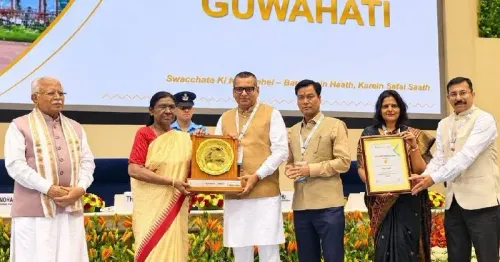
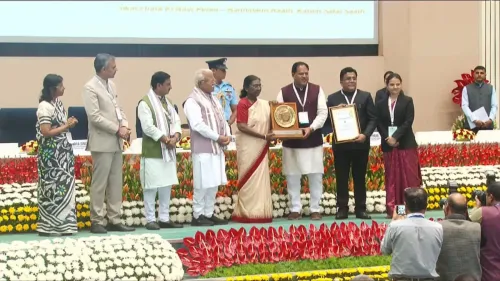
Puri, Bhubaneswar, and Aska have earned national recognition at the Swachh Survekshan Awards 2025–26, with the Odisha Chief Minister's Office highlighting the wins as proof of the state's sustained focus on cleanliness, sanitation, and sustainable waste management.
Key Takeaways
Three Odisha cities — Puri, Bhubaneswar, and Aska — secured national honours at the Swachh Survekshan Awards 2025–26 .
The announcement was made by the Chief Minister's Office of Odisha on 12 November 2026 .
Swachh Survekshan is the Government of India's annual urban cleanliness survey under the Swachh Bharat Mission , launched in October 2014 .
Aska , a smaller town in Ganjam district, signals that Odisha's cleanliness push extends beyond its major urban centres.
Rankings are partly driven by citizen feedback , giving the awards a democratic legitimacy beyond top-down assessments.
Specific category-wise award tiers for the 2025–26 cycle are yet to be published in full detail.
Three Odisha cities just earned a seat at India's cleanliness honours table — and the state government is making sure the country notices. The Chief Minister's Office of Odisha announced on Thursday, 12 November 2026 that Puri, Bhubaneswar, and Aska have secured national recognition at the Swachh Survekshan Awards 2025–26, citing the trio's sustained performance in cleanliness, sanitation infrastructure, and sustainable waste management.
The CMO's post, written in Odia with an English summary, framed the wins as proof that 'transparency and sustainable development are finding a new identity in the people's government.' That framing is deliberate — the awards are scored heavily on citizen feedback, meaning these rankings are, in part, a public verdict on urban governance.
What Swachh Survekshan actually measures — and why it matters
Swachh Survekshan is the Government of India's annual urban cleanliness survey, conducted under the broader Swachh Bharat Mission launched in October 2014. Cities are ranked on waste processing capacity, sanitation infrastructure, open-defecation-free status, and direct citizen satisfaction scores. The survey has grown into one of the most closely watched inter-city competitions in Indian urban governance, with hundreds of municipalities competing for top positions each cycle.
Scoring well is not purely a bragging-rights exercise. High rankings signal to investors and planners that a city maintains functional civic infrastructure — a soft economic signal in an era when ease-of-living indices increasingly influence business location decisions.
Puri, Bhubaneswar, and Aska — three cities, one state's argument
Bhubaneswar, Odisha's capital and administrative heartbeat, has been investing in smart-city infrastructure for years. Puri, home to the iconic Jagannath Temple and one of India's busiest pilgrimage corridors, faces uniquely intense cleanliness pressure given year-round tourist and devotee footfall. Aska, a smaller town in Ganjam district, represents the state's argument that good urban governance is not confined to its headline cities — a point that carries real weight in a country where smaller municipalities often lag badly on civic metrics.
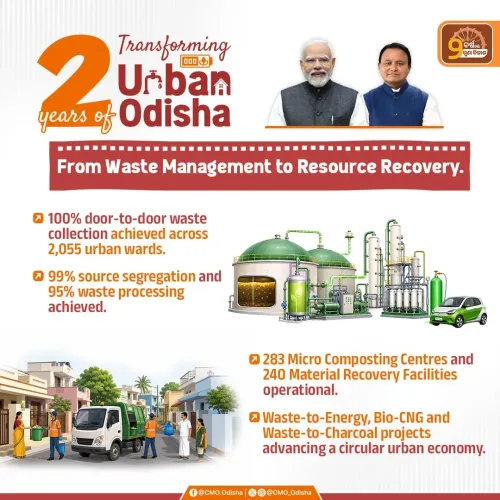
Together, the three wins allow Odisha to present a layered case: scalability across city sizes, sustained effort rather than a one-year spike, and measurable outcomes in waste management and sanitation — the two pillars that survey assessors weight most heavily.
Odisha's place in India's cleanliness competition
Eastern India has historically trailed western and southern states in Swachh Survekshan rankings, making Odisha's recognition in this cycle more than a local milestone. Multiple states compete fiercely each year — the annual awards have become a live benchmark for urban local bodies, pushing municipal commissioners to treat cleanliness as a performance metric with real consequences. Odisha's consistent engagement with the survey framework reflects a state-level political commitment to being measured and found competitive on these indices.
The specific category-wise rankings and award tiers for the 2025–26 cycle are yet to be published in full detail — but the national recognition itself, confirmed by the CMO's office, marks another data point in a state narrative built around civic improvement.
Three cities, one state, one clear message: Odisha is no longer content to watch India's cleanliness conversation from the sidelines.
Point of View
Accountable administration. Including Aska alongside the two headline cities is a subtle but important political choice: it preempts the criticism that good urban governance is a capital-city privilege. As India's urban local body ecosystem matures, Swachh Survekshan rankings are quietly becoming a shorthand for overall civic management capacity — and Odisha has just improved its score on that shorthand.
NationPress
12 Nov 2026
Frequently Asked Questions
Which Odisha cities won Swachh Survekshan Awards 2025–26?
Puri, Bhubaneswar, and Aska received national recognition at the Swachh Survekshan Awards 2025–26, as announced by the Odisha Chief Minister's Office on 12 November 2026.
What is Swachh Survekshan and how are cities ranked?
Swachh Survekshan is an annual Government of India survey under the Swachh Bharat Mission that ranks cities on waste processing, sanitation infrastructure, open-defecation-free status, and citizen feedback scores.
When was Swachh Bharat Mission launched?
Swachh Bharat Mission was launched in October 2014 to promote nationwide cleanliness, eliminate open defecation, and improve solid waste management in urban and rural areas.
Where is Aska located and why is its award significant?
Aska is a town in Ganjam district of Odisha. Its recognition is significant because it demonstrates that Odisha's cleanliness and sanitation efforts extend beyond its major cities to smaller urban centres.
What do Swachh Survekshan rankings mean for a city's governance?
High Swachh Survekshan rankings indicate functional civic infrastructure, strong waste management, and citizen satisfaction — benchmarks that influence urban planning decisions and reflect overall municipal governance quality.