Odisha CM Targets 9 Lakh Saplings Across 2,702 Hectares in 2026-27
Synopsis
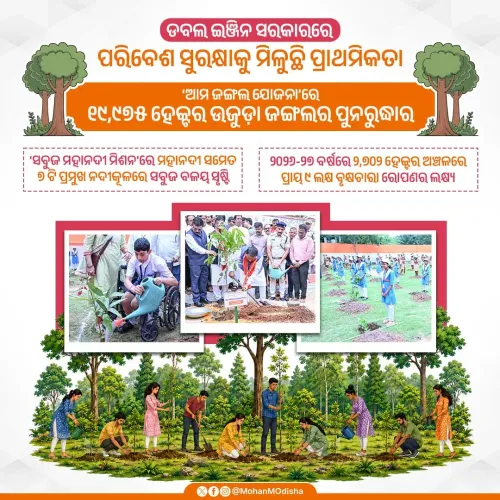
Odisha's Chief Minister has announced that the state will plant nearly 9 lakh saplings across 2,702 hectares in 2026-27, up from 5.65 lakh saplings over 774 hectares in 2025-26. The Bardhita Sabuja Balaya Yojana will cover 358 hectares this year, while a dedicated urban drive targets 6.95 lakh saplings to curb city pollution.
Key Takeaways
In 2025-26 , Odisha planted 5.65 lakh saplings across 774 hectares .
The 2026-27 target is nearly 9 lakh saplings across 2,702 hectares — roughly 3.5 times the previous year's area.
The Bardhita Sabuja Balaya Yojana (Enhanced Green Belt Scheme) will plant 15 lakh 93 thousand saplings across 358 hectares this year.
A dedicated urban component targets 6 lakh 95 thousand saplings to reduce pollution in Odisha's urban areas.
The drives align with the national goal of 33 percent tree cover and India's Paris Agreement commitments.
The State Forest Department is the primary implementing agency, with survival rates to be reviewed mid-year.
The Chief Minister's Office of Odisha announced on Tuesday, 7 July 2026 that the state's Chief Minister has disclosed an ambitious plantation drive for 2026-27, targeting nearly 9 lakh saplings across 2,702 hectares — a sharp scale-up from the 5.65 lakh saplings planted across 774 hectares in 2025-26.
Context
The Chief Minister revealed the figures in a statement shared by the official CMO Odisha account. In the current year, the state's 'Bardhita Sabuja Balaya Yojana' (Bardhita Sabuja Balaya Yojana — Enhanced Green Belt Scheme) will plant 15 lakh 93 thousand saplings across 358 hectares of land. A separate urban greening component targets the planting of approximately 6 lakh 95 thousand saplings specifically to reduce pollution in urban areas.
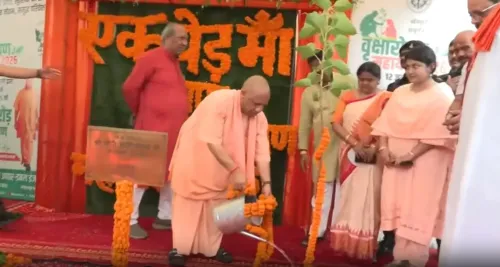
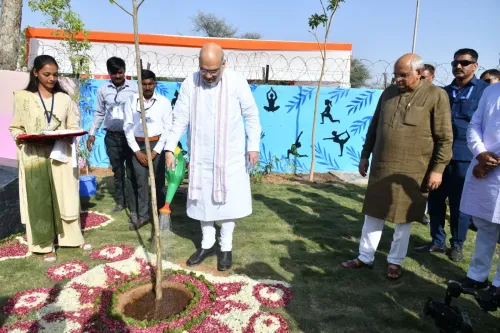
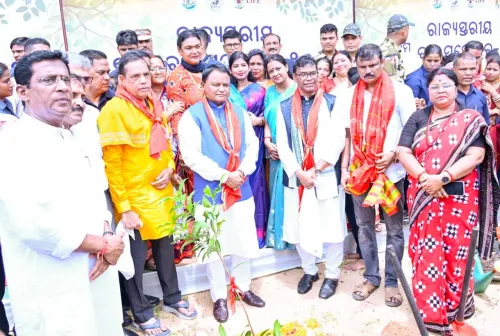
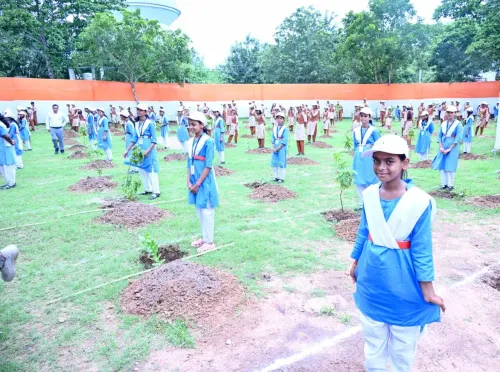
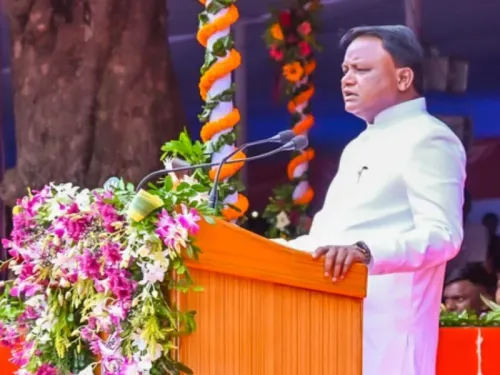
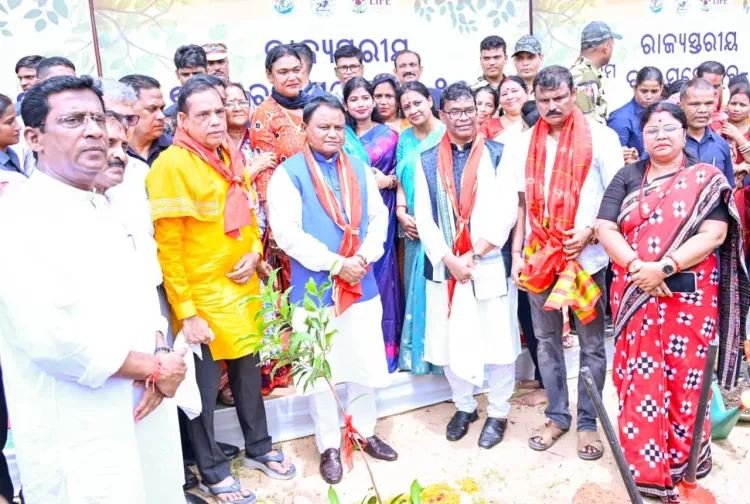
The announcement comes with photographic documentation, with the official post carrying four images illustrating the plantation activity on the ground.
Policy Backdrop
The Bardhita Sabuja Balaya Yojana is an Odisha government scheme designed to expand green belts through targeted tree plantations in rural and semi-urban zones. The state's efforts align with the National Mission for a Green India, a central scheme approved in 2014 that supports states in raising forest and tree cover on degraded lands, improving ecosystem services, and enhancing carbon sequestration.
Odisha, an eastern Indian state with a significant forest cover base, has progressively raised its annual plantation targets in line with the national goal of achieving 33 percent tree cover across the country, as well as India's commitments under the Paris Agreement. The stepped-up targets mirror similar drives seen across other eastern and central states in recent years.
Stakeholders and Impact
Urban residents stand to benefit most directly from the 6.95 lakh sapling urban greening target, which is explicitly aimed at reducing particulate pollution in the state's growing urban centres and industrial clusters. The State Forest Department will bear primary responsibility for executing the plantation drives and monitoring survival rates.
The scale-up from 774 hectares in 2025-26 to 2,702 hectares in 2026-27 represents a nearly three-and-a-half-fold increase in area coverage, signalling a significant mobilisation of departmental resources and community participation. The dual-track approach — rural green belts via the Bardhita Sabuja Balaya Yojana and a dedicated urban pollution-reduction component — reflects an increasingly integrated state strategy for environmental management.
What's Next
Attention will now turn to the 2026-27 state budget allocations for the forest and environment departments, which will indicate whether financial commitments match the scale of the announced targets. A mid-year review of plantation survival rates by the forest department will be a key indicator of on-ground execution quality.
If the 9 lakh sapling target for 2026-27 is met with high survival rates, Odisha could position itself as a benchmark for large-scale state-level green cover expansion in eastern India, potentially influencing how central green mission funds are allocated in future cycles.
Point of View
702 hectares in a single year is a politically significant signal, coming as Indian states compete to demonstrate credible climate action ahead of national forest cover assessments. The explicit carving out of an urban pollution-reduction component reflects growing pressure on state governments to address air quality in tier-2 cities, where industrial and vehicular pollution is rising. The announcement's alignment with the National Mission for a Green India also positions the state to make a stronger case for central funding in the next allocation cycle. However, the real test will be survival rates — large-scale plantation drives in India have historically struggled with post-planting maintenance, and the forest department's capacity to monitor 2,702 hectares will be closely watched.
NationPress
6 Oct 2026
Frequently Asked Questions
What is Odisha's sapling plantation target for 2026-27?
Odisha has set a target of planting nearly 9 lakh saplings across 2,702 hectares in the 2026-27 financial year, as announced by the Chief Minister's Office.
What is the Bardhita Sabuja Balaya Yojana?
The Bardhita Sabuja Balaya Yojana (Enhanced Green Belt Scheme) is an Odisha government scheme that expands green belts through targeted tree plantations in rural and semi-urban zones. This year it aims to plant 15 lakh 93 thousand saplings across 358 hectares .
How many saplings will Odisha plant in urban areas in 2026?
Odisha plans to plant approximately 6 lakh 95 thousand saplings in urban areas this year, specifically to reduce pollution in cities.
How does Odisha's 2026-27 plantation target compare to 2025-26?
In 2025-26, Odisha planted 5.65 lakh saplings across 774 hectares . The 2026-27 target of nearly 9 lakh saplings across 2,702 hectares represents a roughly three-and-a-half-fold increase in area covered.
How does Odisha's plantation drive relate to national environmental goals?
Odisha's drives align with the National Mission for a Green India (approved 2014) and India's national target of 33 percent tree cover, as well as the country's commitments under the Paris Agreement on climate change.