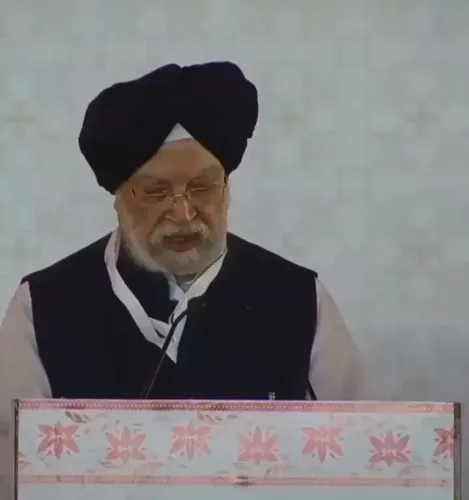
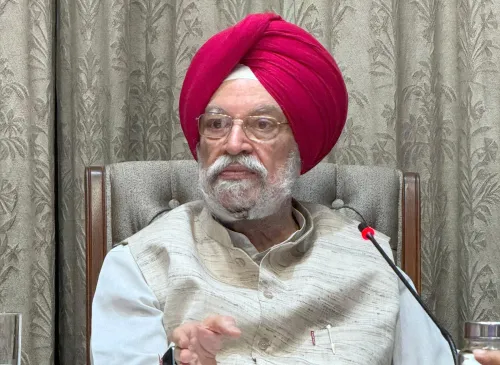
Puri hails Oil India's new gas find in Rajasthan's Dandewala Field
Synopsis
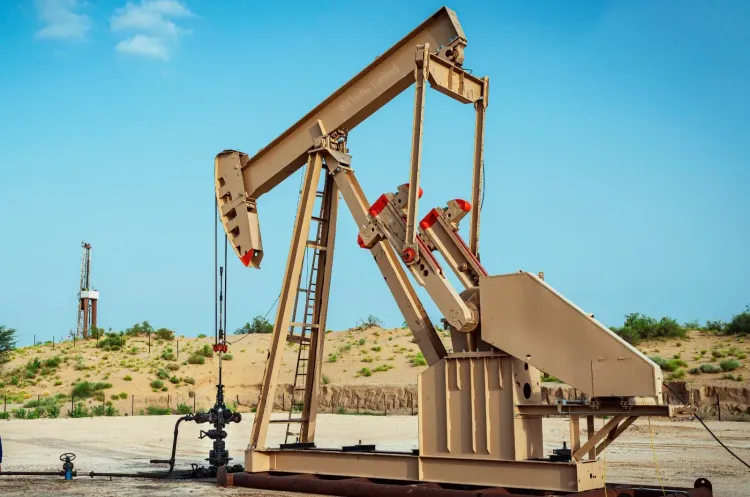
Oil India Limited has unlocked a new gas-bearing pay zone in Rajasthan's Dandewala Field, with the Sanu Formation yielding natural gas for the first time at nearly 25,000 standard cubic metres per day. Union Petroleum Minister Hardeep Singh Puri hailed the find as a milestone in India's drive toward energy self-sufficiency.
Key Takeaways
Oil India Limited has struck natural gas in the Sanu Formation of the Dandewala Field in Rajasthan — a first for this shallower geological horizon.
Initial flow rate stands at nearly 25,000 standard cubic metres per day .
Union Petroleum Minister Hardeep Singh Puri announced the development on 23 May 2026 , crediting technological excellence and PM Modi's energy policy direction.
The discovery sits within the Jaisalmer Basin , a priority upstream zone under the government's Open Acreage Licensing Policy .
India's natural gas import dependence exceeds 45 per cent , making domestic finds like this strategically important.
Appraisal drilling will determine whether the Sanu Formation can support commercial-scale and city-gas-distribution supply in Rajasthan.
Union Petroleum Minister Hardeep Singh Puri on Saturday, 23 May 2026 welcomed a significant upstream energy development in Rajasthan, announcing that Maharatna public-sector undertaking Oil India Limited has successfully unlocked a new gas-bearing pay zone in the Dandewala Field, with natural gas flowing from the shallower Sanu Formation for the very first time at nearly 25,000 standard cubic metres per day.
Context
Puri described the discovery as 'a new chapter' in India's quest to strengthen domestic energy production. In his post on X, the minister credited the achievement to 'the perseverance, technological excellence and unwavering commitment of Team Oil India,' and linked the development to Prime Minister Narendra Modi's broader agenda of energy self-sufficiency. The Dandewala Field sits within the Jaisalmer Basin of western Rajasthan, a sedimentary province that has drawn sustained upstream investment over the past two decades.
The Sanu Formation is a shallower geological horizon that had not previously yielded commercial gas flows in this field. Tapping it represents a technical milestone: improved seismic interpretation and directional drilling have allowed Oil India to access pay zones that were historically bypassed in favour of deeper targets.
Policy Backdrop
The find arrives within a policy framework designed to accelerate monetisation of domestic hydrocarbon resources. The government replaced the New Exploration Licensing Policy with the Hydrocarbon Exploration and Licensing Policy (HELP) in 2016, offering a uniform licence covering conventional and unconventional hydrocarbons and a revenue-sharing model intended to attract both public-sector and private capital.
Subsequent reforms under the Atmanirbhar Bharat package in 2020-21 introduced marketing and pricing freedoms for new gas discoveries, giving producers like Oil India greater flexibility to monetise output. The Open Acreage Licensing Policy has also directed fresh acreage in Rajasthan basins to both ONGC and Oil India, underscoring the government's focus on the region. India's natural gas import dependence still exceeds 45 per cent, making each incremental domestic discovery strategically significant.
Stakeholders and Impact
Oil India Limited, headquartered in Duliajan, Assam, holds Maharatna status — the highest category of operational and financial autonomy granted to central public-sector enterprises. A sustained flow of 25,000 standard cubic metres per day from the Sanu Formation, while modest at this stage, adds to the company's Rajasthan portfolio and could support future city-gas-distribution supply chains in the state.
The Rajasthan state economy stands to benefit through royalties, employment, and downstream industrial gas availability. Industrial gas consumers across the region — from ceramics and glass manufacturers to fertiliser units — are potential end-users as pipeline infrastructure in western Rajasthan continues to expand. Chief Minister Bhajanlal Sharma's office was tagged in the minister's post, signalling coordination between the Centre and the state government.
What's Next
The immediate priority will be appraisal drilling to determine the full extent and long-term deliverability of the Sanu Formation reservoir. If further wells confirm commercial volumes, the discovery could be factored into upcoming bidding rounds for city-gas-distribution networks in Rajasthan. The government's push for higher domestic gas output as a transition fuel — bridging coal dependence and the renewable energy build-out — means successful appraisal here would carry significance well beyond a single field. Analysts and industry observers will watch whether Oil India moves quickly to commit additional drilling capital to the Dandewala area in its next annual plan.
Point of View
The Rajasthan Chief Minister, and the Petroleum Ministry — signals that even incremental upstream wins are being leveraged for political and policy messaging. The broader arc here is the government's multi-year effort to reframe India's public-sector E&P companies as technologically capable actors, not just legacy producers. Whether the Sanu Formation delivers volumes large enough to move the needle on national gas supply will depend on appraisal results that are still pending.
NationPress
22 Sept 2026
Frequently Asked Questions
What is the Dandewala Field and where is it located?
The Dandewala Field is an onshore natural gas field operated by Oil India Limited in the Jaisalmer Basin of western Rajasthan, India.
What is the Sanu Formation and why is this discovery significant?
The Sanu Formation is a shallower geological layer within the Rajasthan sedimentary basin. Its significance lies in the fact that natural gas has flowed from this horizon in the Dandewala Field for the very first time, indicating previously untapped reserves accessible with modern drilling technology.
How much gas has been found in the Dandewala Field Sanu Formation?
The initial flow rate from the Sanu Formation in the Dandewala Field is nearly 25,000 standard cubic metres per day, according to Union Petroleum Minister Hardeep Singh Puri's announcement on 23 May 2026.
What is Oil India Limited's Maharatna status?
Maharatna is the highest category of operational and financial autonomy granted by the Government of India to select central public-sector enterprises, giving Oil India Limited greater freedom in investment decisions and strategic planning.
How does this gas discovery fit into India's energy self-sufficiency goals?
India currently imports more than 45 per cent of its natural gas needs, so domestic discoveries reduce import dependence. The government's Hydrocarbon Exploration and Licensing Policy and Atmanirbhar Bharat reforms are designed to accelerate such finds and their monetisation.