Omar Abdullah: July 13, 1931 was fight against oppression, not religion
Synopsis
J&K Chief Minister Omar Abdullah was blocked from visiting Mazar-e-Shuhada on Martyrs' Day and hit back sharply — calling the restrictions 'uncalled for', questioning the 'normalcy' narrative, and warning that 'those who barred us today will leave tomorrow.' His framing of 1931 as a secular struggle against oppression is a direct counter to attempts, he says, to recast it in religious terms.
Key Takeaways
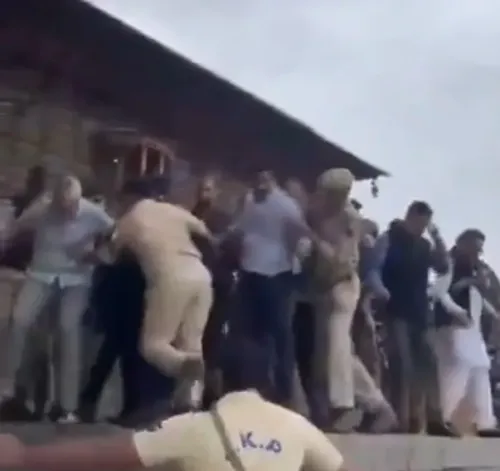
J&K Chief Minister Omar Abdullah was prevented from visiting Mazar-e-Shuhada in Srinagar on 13 July , Martyrs' Day.
He called the restrictions 'uncalled for and unfortunate', saying fewer than 150 people had planned to visit the graveyard.
Abdullah asserted the 13 July 1931 struggle was against oppression and British paramountcy — 'not a religious fight.' He drew a contrast with the Amarnath Yatra , arguing such restrictions had never been imposed during the pilgrimage.
In an oblique reference to the Lt.
Governor 's administration, he said those enforcing restrictions were 'temporary' and that tributes would be paid 'tomorrow or the day after.' The National Conference paid floral tributes at its 'Nawa-e-Subha' headquarters after being blocked from the graveyard.
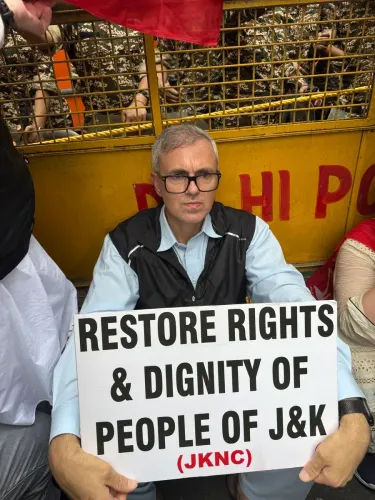
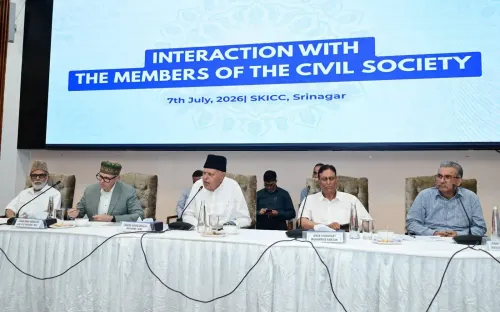
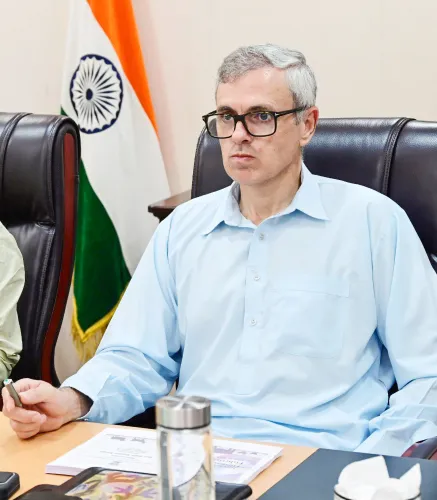
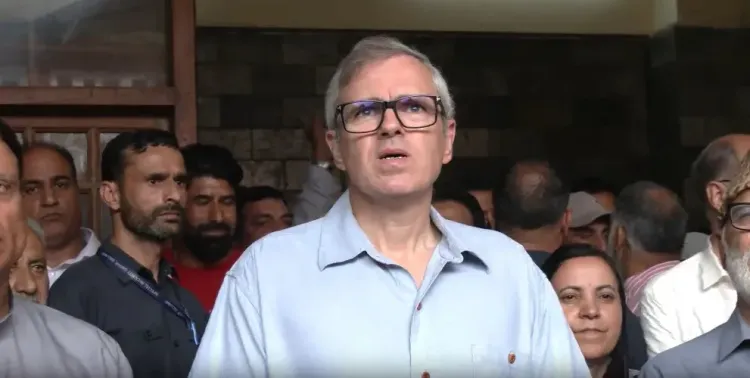
Jammu and Kashmir Chief Minister Omar Abdullah on Monday, 13 July, condemned restrictions imposed in Srinagar as 'uncalled for and unfortunate', asserting that the struggle of 13 July 1931 — observed by the National Conference (NC) as Martyrs' Day — was a fight against oppression and had nothing to do with religion. The Chief Minister spoke to reporters at the NC headquarters, the 'Nawa-e-Subha' complex, after paying floral tributes to the 1931 martyrs.
What Omar Abdullah Said
Speaking after being prevented from visiting Mazar-e-Shuhada (Martyrs' Graveyard), Abdullah said those who enforced the restrictions had failed to grasp the history of Jammu and Kashmir. 'It is unfortunate that those who fought against oppression and to protect the dignity of Jammu and Kashmir are today being denied tributes. Those who decided to seal Mazar-e-Shuhada should have first read the history of Jammu and Kashmir,' he said.
The Chief Minister was unequivocal about the character of the 1931 movement. 'This was not a religious fight. It was a struggle against oppression, for democracy and against British paramountcy. Today, attempts are being made to present it as something else,' he said.
Restrictions Questioned
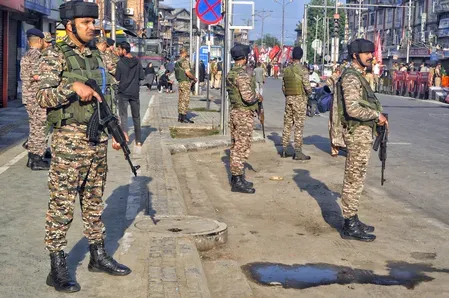
Abdullah challenged the scale of the security response, noting that the number of people intending to visit the graveyard was minimal. 'I don't think more than 150 people would have gone there to pay tributes, yet they treated it as a threat. This itself contradicts the repeated claims that everything is normal,' he said.
In an oblique reference to the Lieutenant Governor-headed security establishment, he added: 'Those who barred us today will leave tomorrow; only the people of Kashmir will remain here.' He reiterated that no barricade or security restriction could erase the sacrifices of the 1931 martyrs.
Contradiction With 'Normalcy' Claims
The Chief Minister drew a pointed comparison with the Amarnath Yatra, arguing that even during the pilgrimage — which involves large-scale movement — such restrictions had historically not been imposed. 'We are repeatedly told everything is normal, but the ground reality says otherwise. Earlier, such restrictions were never imposed during the Yatra. Today they are doing it,' he said.
This comes amid an ongoing tension between the elected state government and the centrally appointed Lieutenant Governor's administration over the exercise of authority in Jammu and Kashmir, which has remained a Union Territory since the revocation of its special status in August 2019.
Historical Context
The events of 13 July 1931 are a foundational moment in Kashmiri political memory. On that date, Dogra rule forces opened fire on a crowd gathered outside the Central Jail in Srinagar, killing multiple protesters — an incident the National Conference has long commemorated as a symbol of resistance against autocratic rule. The day was officially recognised as a state holiday until the J&K government denotified it in 2023, a move that itself sparked political controversy.
Abdullah's remarks signal that the NC intends to continue commemorating the date, and that the Chief Minister sees the restrictions as part of a broader attempt to reframe — and suppress — the political legacy of 1931.
Point of View
He is making a calculated political argument: that the Lt. Governor's administration is selectively tightening control in ways that undercut the elected government's legitimacy. The denotification of Martyrs' Day as a state holiday in 2023 already signalled a deliberate effort to recast J&K's political memory — Abdullah's insistence on the secular character of 1931 is a direct counter to that project. The real tension here is not between religion and history; it is between two competing lines of authority in a Union Territory where the elected Chief Minister's writ runs only as far as the Centre permits.
NationPress
12 Oct 2026
Frequently Asked Questions
Why was Omar Abdullah blocked from visiting Mazar-e-Shuhada on 13 July?
Authorities imposed restrictions in Srinagar on 13 July, preventing Chief Minister Omar Abdullah and other National Conference leaders from visiting Mazar-e-Shuhada (Martyrs' Graveyard) on Martyrs' Day. Abdullah called the restrictions 'uncalled for and unfortunate', noting that fewer than 150 people had planned to visit.
What is the significance of 13 July 1931 in Jammu and Kashmir?
On 13 July 1931, Dogra rule forces opened fire on protesters gathered outside the Central Jail in Srinagar, killing several people. The National Conference has long commemorated the date as Martyrs' Day, viewing it as a foundational moment of resistance against autocratic rule. The J&K government denotified it as a state holiday in 2023.
What did Omar Abdullah say about the nature of the 1931 struggle?
Abdullah was emphatic that the events of 1931 were 'not a religious fight' but 'a struggle against oppression, for democracy and against British paramountcy.' He said attempts were being made to present it as something else, and urged that history be read before decisions are taken to seal the graveyard.
How did Abdullah respond to claims that Jammu and Kashmir is 'normal'?
He directly challenged the normalcy narrative, pointing out that restrictions of this scale had not been imposed even during Amarnath Yatra movements. 'We are repeatedly told everything is normal, but the ground reality says otherwise,' he said.
What did Omar Abdullah say about the Lt. Governor's administration?
Without naming the Lt. Governor directly, Abdullah referred to those enforcing restrictions as 'temporary occupants', saying: 'Those who barred us today will leave tomorrow; only the people of Kashmir will remain here.' He pledged that tributes would be paid to the 1931 martyrs 'today, tomorrow or the day after.'