Omar Abdullah dismisses MLA meet speculation
Synopsis
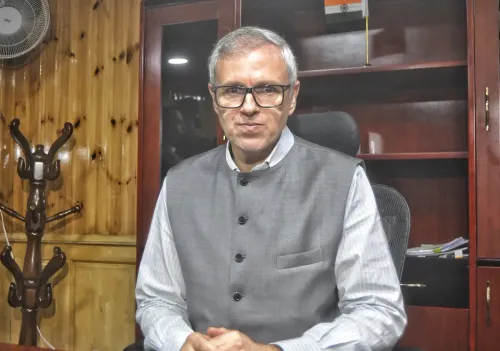
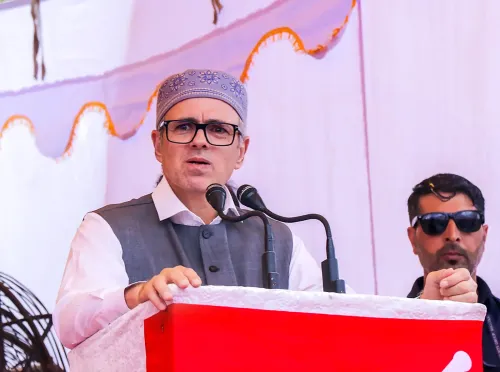
Jammu and Kashmir Chief Minister Omar Abdullah on 31 May 2026 publicly dismissed speculation about a meeting he called with National Conference MLAs, saying uninformed critics are the loudest voices while those with real knowledge stay silent.
Key Takeaways
CM Omar Abdullah called a meeting with National Conference MLAs on or around 31 May 2026 .
He publicly rebuked opposition commentators for speculating about the meeting's agenda without factual basis.
His post drew a pointed distinction: 'those who know don't speak and those who speak sit in the opposition.' Jammu and Kashmir has been a Union Territory since August 2019 ; the National Conference returned to power after the 2024 assembly elections .
MLA meetings in J&K carry heightened political significance given the ongoing demand for full statehood restoration.
The agenda of the MLA meeting was not disclosed by the Chief Minister.
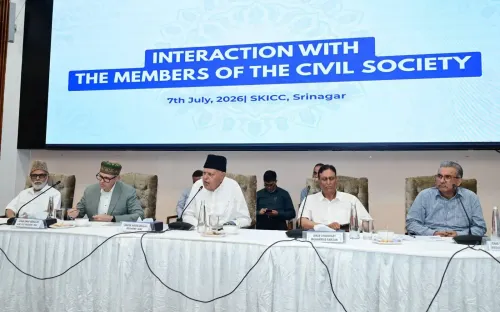
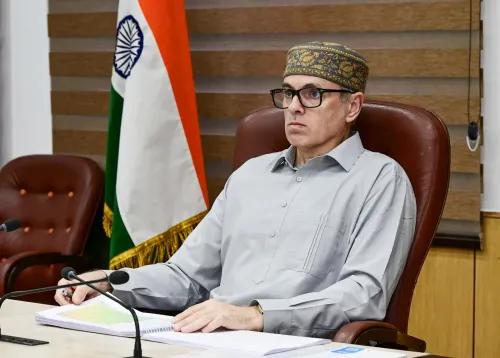
Jammu and Kashmir Chief Minister Omar Abdullah on Sunday, 31 May 2026, publicly rebuked commentators speculating about a meeting he has called with National Conference MLAs, asserting that those with real knowledge of the matter are staying silent while the uninformed are speaking the loudest.
Context
In a pointed post on X, CM Abdullah wrote: 'I love how the people who know the least about the meeting I've called with my MLAs are talking the most. Remember one thing — those who know don't speak and those who speak sit in the opposition.' The remark, accompanied by a wry emoji, was a direct swipe at opposition voices and outside commentators who had been publicly speculating about the purpose and agenda of the MLA gathering.
The Chief Minister did not disclose the agenda of the meeting, but the sharpness of the response signals that the speculation had reached a level he found worth addressing publicly. His framing — 'those who speak sit in the opposition' — draws a clear line between informed insiders and uninformed critics.
Policy Backdrop
Jammu and Kashmir has been governed as a Union Territory since August 2019, when the central government abrogated Article 370 and bifurcated the former state. For nearly six years, the region was under central rule without an elected assembly. The Jammu and Kashmir National Conference won the September–October 2024 assembly elections, restoring elected governance and bringing Omar Abdullah to the Chief Minister's office.
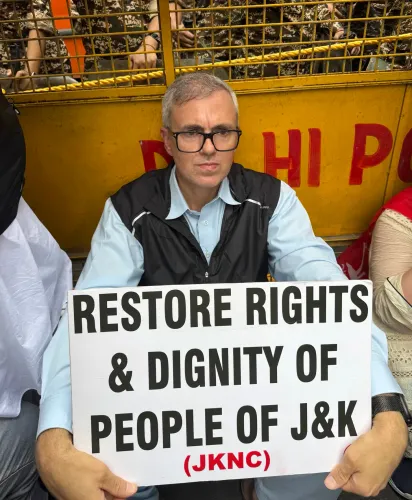
Since taking office, the National Conference government has consistently pushed for the restoration of full statehood — a demand that has shaped nearly every significant political development in the Union Territory. Internal party meetings of MLAs have, in this climate, drawn outsized public and political attention, with speculation routinely centring on legislative strategy and statehood-related resolutions.
Stakeholders and Impact
The primary audience for CM Abdullah's post is the opposition — both within Jammu and Kashmir and at the national level — that has been commenting on the MLA meeting without, as he implies, any factual basis. The post also serves as a signal to his own National Conference MLAs that party deliberations remain internal and disciplined.
For ordinary residents of J&K, the exchange underscores the high political temperature that surrounds even routine party coordination meetings in a region where the elected government's powers remain constrained by its Union Territory status. Every gathering of ruling-party legislators is read, by rivals and observers alike, as a potential move on the statehood chessboard.
What's Next
The outcome and agenda of the MLA meeting, once disclosed, will likely clarify whether the gathering was routine party coordination or something more consequential — such as a resolution or position paper on statehood restoration. The next session of the Jammu and Kashmir Legislative Assembly and any formal National Conference coordination statements will be closely watched for follow-through on whatever was discussed.
Abdullah's willingness to engage critics directly on social media, rather than through formal channels, reflects a broader pattern of using public platforms to shape the political narrative in J&K — a tactic that keeps the Chief Minister visible and in control of the story even when he declines to share the details.
Point of View
He simultaneously discredits critics and reinforces the image of a disciplined, tight-lipped ruling party. The tactic is consistent with a broader pattern in J&K governance: use social media to control the narrative while keeping substantive deliberations internal. Whether this meeting produces a concrete legislative or political move will determine whether the sharp response was a deflection or a genuine signal of something significant in the works.
NationPress
16 Oct 2026
Frequently Asked Questions
Why did Omar Abdullah call a meeting with National Conference MLAs?
The Chief Minister has not publicly disclosed the agenda of the MLA meeting. He did confirm on 31 May 2026 that he called the gathering, but dismissed outside speculation about its purpose as uninformed.
What did Omar Abdullah say about the MLA meeting on X?
He wrote that people who know the least about the meeting are talking the most, and noted that 'those who know don't speak and those who speak sit in the opposition.'
What is the political significance of MLA meetings in Jammu and Kashmir?
Since J&K became a Union Territory in 2019, internal party meetings of ruling MLAs are closely watched as potential indicators of moves on statehood restoration, legislative strategy, or relations with the central government.
Who is Omar Abdullah?
Omar Abdullah is the Chief Minister of Jammu and Kashmir Union Territory and vice-president of the Jammu and Kashmir National Conference, which won the 2024 assembly elections to return to power after six years of central rule.
What is the National Conference's main political demand?
The Jammu and Kashmir National Conference has consistently demanded the restoration of full statehood for J&K, which was downgraded to a Union Territory following the abrogation of Article 370 in August 2019.