Rijiju calls Omar Abdullah 'sensible leader' across ideological divide
Synopsis
Union Minister Kiren Rijiju broke across party lines on June 11, 2026, calling J&K Chief Minister Omar Abdullah a 'sensible leader' — while being explicit that their ideological differences remain firmly in place. The rare compliment from a senior BJP figure toward a National Conference leader draws attention in the politically sensitive J&K context.
Key Takeaways
Kiren Rijiju , Union Minister of Parliamentary Affairs, publicly praised Omar Abdullah as a 'sensible leader' on June 11, 2026 .
The post addressed unnamed individuals, implying they should take lessons from Abdullah 's conduct.
Rijiju explicitly acknowledged 'open' ideological differences between himself and Abdullah , framing the compliment as personal rather than political.
The BJP and National Conference have been on opposing sides since the August 2019 abrogation of Article 370 and reorganisation of J&K into a Union Territory.
The remark is the latest in a pattern of intermittent cross-aisle acknowledgements by central leaders toward J&K regional politicians amid ongoing debates over statehood restoration.
Union Parliamentary Affairs Minister Kiren Rijiju on Thursday, June 11, 2026, publicly praised Jammu and Kashmir Chief Minister Omar Abdullah as a 'sensible leader,' while acknowledging open ideological differences between them — a rare cross-aisle acknowledgement from a senior BJP minister toward a leader of the rival National Conference.
Context
In his post on X, Rijiju wrote: 'Some people need to learn lessons from Omar Abdullah sahab. He is a sensible leader. Although we openly differ on some ideological issues.' The remark was directed at unnamed individuals, implicitly contrasting their conduct with what Rijiju characterised as Abdullah's measured approach. The use of the respectful honorific sahab underscored the personal regard expressed.
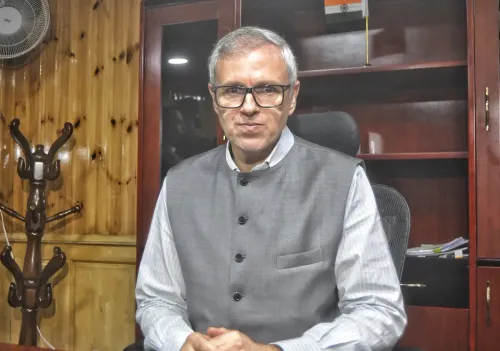
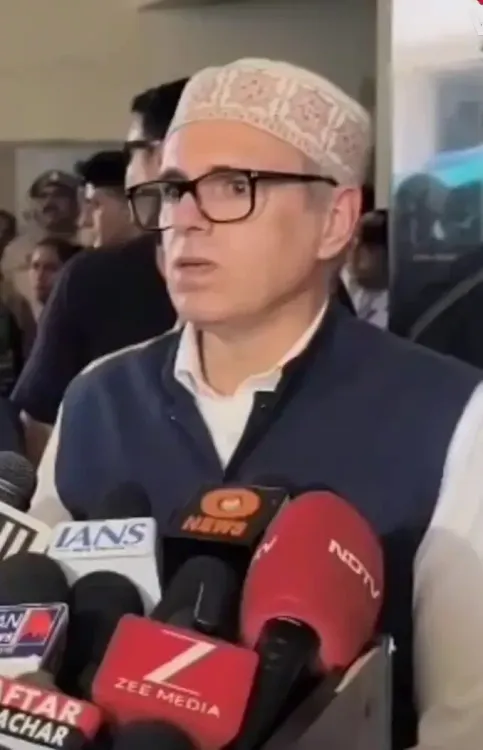
Omar Abdullah is the vice-president of the Jammu and Kashmir National Conference and currently serves as Chief Minister of the Jammu and Kashmir Union Territory. His party and the BJP have been on opposing sides of several consequential political debates, most prominently on the question of restoring full statehood to J&K.
Policy Backdrop
The ideological distance between the National Conference and the BJP sharpened significantly after August 2019, when the central government abrogated Article 370 and reorganised Jammu and Kashmir into a Union Territory, stripping it of its special constitutional status. The National Conference has consistently demanded the restoration of statehood and has questioned the pace of that process.
Despite these differences, Indian political history carries precedents of national leaders offering personal compliments to opponents without softening their party's substantive positions. Such gestures are read in political circles as signals of a willingness to maintain civil inter-party discourse, particularly in a sensitive region like J&K.
Stakeholders and Impact
The statement is significant for J&K's political environment, where relations between the ruling central government and elected regional leadership carry outsized weight given the territory's Union Territory status and ongoing debates over governance and autonomy. National Conference supporters and J&K civil society will note the acknowledgement as a positive signal, even if it carries no policy commitment.
For the BJP's own base, the remark is framed carefully — Rijiju is explicit that ideological differences remain 'open,' ensuring the compliment is read as personal rather than political convergence. The unnamed 'some people' referenced in the post add an implicit critical dimension, suggesting the remark is also aimed at shaping conduct within political discourse more broadly.
What's Next
Observers will watch for responses from other J&K leaders and from within both the National Conference and the BJP. Any follow-up statements from Omar Abdullah acknowledging or responding to Rijiju's remarks could indicate whether this signals a warming of working relations between the central government and the elected J&K administration. Broader parliamentary discussions on statehood restoration remain a live issue, and gestures of personal goodwill between senior leaders on either side will continue to be scrutinised for their implications on that front.
Point of View
And to contrast him with unnamed others, suggests the remark is as much a rebuke directed inward or at political rivals as it is a compliment directed outward. In the context of J&K's delicate governance landscape — where the elected CM operates within the constraints of Union Territory status — such gestures from the Centre can carry weight as informal confidence-building measures. Whether it translates into any shift in the statehood debate or parliamentary dynamics remains the key question to watch.
NationPress
26 Oct 2026
Frequently Asked Questions
Why did Kiren Rijiju praise Omar Abdullah?
Rijiju called Omar Abdullah a 'sensible leader' in a post on June 11, 2026 , implying others should learn from his conduct, though the specific trigger for the remark has not been publicly stated.
Are BJP and National Conference political allies?
No. The BJP and National Conference are ideological opponents, particularly on issues such as the restoration of statehood to Jammu and Kashmir following the 2019 abrogation of Article 370 .
What is Omar Abdullah's current position?
Omar Abdullah is the Chief Minister of Jammu and Kashmir and vice-president of the Jammu and Kashmir National Conference .
What did Rijiju mean by 'open ideological differences'?
Rijiju used the phrase to clarify that his personal praise for Abdullah does not imply political alignment — the BJP 's positions on J&K governance and related issues remain unchanged.
What is the significance of this statement for J&K politics?
Cross-aisle compliments from central ministers toward J&K regional leaders are rare and are closely watched as informal signals about the working relationship between the central government and the elected J&K administration, especially amid ongoing statehood debates.