Omar Abdullah Slams BJP Over 'Interference' in J&K Muslim Religious Affairs
Synopsis
J&K Chief Minister Omar Abdullah publicly condemned a BJP-appointed Chairperson on October 13, 2026, accusing her of interfering in Muslim religious affairs at the direction of party leadership, and demanded an immediate halt — sharpening the ongoing centre-periphery conflict in the Union Territory.
Key Takeaways
CM Omar Abdullah called the BJP's action 'unacceptable interference' in the religious affairs of Muslims in Jammu and Kashmir .
He specifically targeted an unnamed BJP-appointed Chairperson , accusing her of acting to 'please her masters' rather than in the public interest.
Abdullah declared the move 'will not be accepted under any circumstances,' signalling active resistance.
The dispute reflects a broader pattern of centre-region tensions since the J&K Reorganisation Act, 2019 placed the territory under direct central oversight.
The National Conference has a history of opposing BJP appointments to bodies handling religious and community affairs in the UT.
Muslim organisations and opposition parties are expected to watch closely for any formal legal or institutional follow-up.
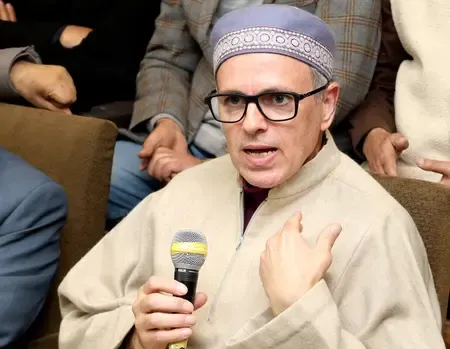
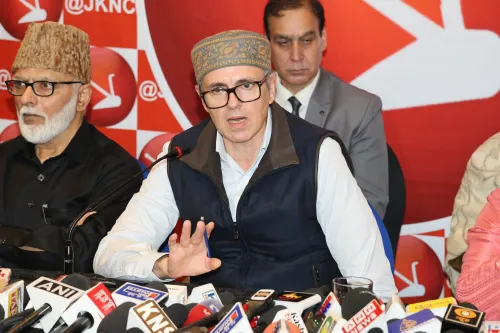
A sharp political confrontation erupted in Jammu and Kashmir on Tuesday, October 13, 2026, as Chief Minister Omar Abdullah publicly condemned what he called an unacceptable attempt by the Bharatiya Janata Party to interfere in the religious affairs of Muslims in the Union Territory — and demanded it stop immediately.
The Charge: A BJP-Appointed Chair 'Pleasing Her Masters'
In a blunt post on X, CM Abdullah targeted a BJP-appointed Chairperson — whose institution was not named — accusing her of acting at the direction of party leadership rather than in the public interest. 'The BJP appointed Chairperson must immediately halt this misplaced attempt to please her masters,' he wrote, leaving no ambiguity about the political target. The language was deliberate and combative: 'masters' is a charged word, framing the unnamed official as an instrument of central diktat rather than an independent functionary.
Abdullah declared the move 'will not be accepted under any circumstances' — a phrase that signals not just protest but a promise of resistance, though the form that resistance will take remains to be seen.
Post-2019 Fault Line: Centre vs Region on Religious Institutions
The confrontation did not emerge in a vacuum. Since the Jammu and Kashmir Reorganisation Act, 2019 stripped the region of statehood and placed it under direct central oversight as a Union Territory, appointments to bodies handling religious and community affairs have become a recurring flashpoint. The National Conference, the party Abdullah leads as vice-president and now heads as Chief Minister, has consistently pushed back against what it characterises as the BJP's steady encroachment on J&K's institutional and cultural landscape.
The pattern is well-established: the central government, through its administrative powers over the UT, makes appointments that regional parties view as politically motivated. The regional party then calls it out publicly, building a narrative of an occupied administration. Today's post fits that arc precisely — but the specific sharpness of invoking 'religious affairs of Muslims' raises the stakes considerably, touching a particularly sensitive nerve in a Muslim-majority region with a fraught political history.
What This Moment Signals
For Abdullah, who won a historic J&K Assembly election and assumed the Chief Ministership after years of President's Rule, the post is also a signal to his constituency: that the elected government will not be a passive spectator to central appointments it considers overreaching. The tension between an elected CM and a central administration that retains significant powers over a Union Territory is structurally unresolved — and moments like this expose that fault line in real time.
Muslim organisations and opposition parties in the region are likely to watch closely for any follow-up action, whether legislative, legal, or through further public pressure. Whether the unnamed Chairperson responds — or the BJP does — will determine if this stays a political volley or escalates into a formal institutional dispute.
A Chief Minister elected to restore normalcy has drawn a very public line. The BJP's next move will define how much that line actually holds.
Point of View
He is also rallying his core constituency at a time when the National Conference needs to demonstrate that electoral victory translated into real governing power. The BJP, for its part, retains substantial administrative levers in J&K precisely because of the UT structure, making such clashes almost inevitable as long as the region's constitutional status remains unchanged. The unresolved tension between an elected Chief Minister and a centrally-appointed administration is the real story beneath the headline.
NationPress
13 Oct 2026
Frequently Asked Questions
Why is Omar Abdullah criticising the BJP over Muslim religious affairs?
CM Omar Abdullah accused a BJP-appointed Chairperson of attempting to interfere in the religious affairs of Muslims in Jammu and Kashmir, calling it unacceptable and demanding it stop immediately.
Who is the BJP-appointed Chairperson Omar Abdullah is referring to?
The specific identity of the Chairperson and the institution involved has not been publicly confirmed; Abdullah's post did not name the individual, and the details remain unverified.
What powers does the BJP have over appointments in Jammu and Kashmir?
Since the Jammu and Kashmir Reorganisation Act, 2019 , J&K became a Union Territory under significant central government oversight, giving Delhi powers over key appointments that a full state government would normally control.
Has the National Conference raised such concerns before?
Yes. Post-2019, the National Conference has repeatedly criticised BJP-led central interventions in J&K institutions, particularly appointments to bodies handling religious or community affairs.
What could happen next after Omar Abdullah's statement?
Possible next steps include statements from Muslim organisations or J&K opposition parties, potential legal challenges to the appointment, and a formal response from the BJP or the central administration.