MP to Hold State-Level Livestock Contest in Every Vrindavan Village Block
Synopsis
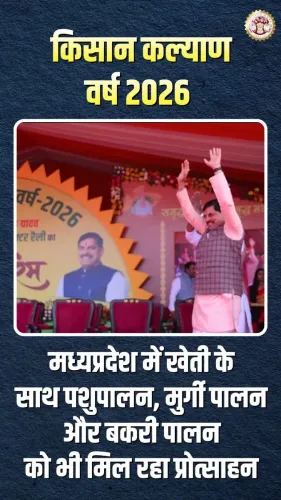
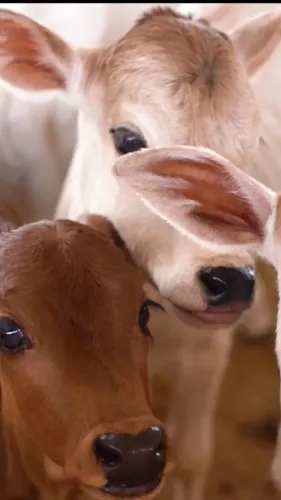
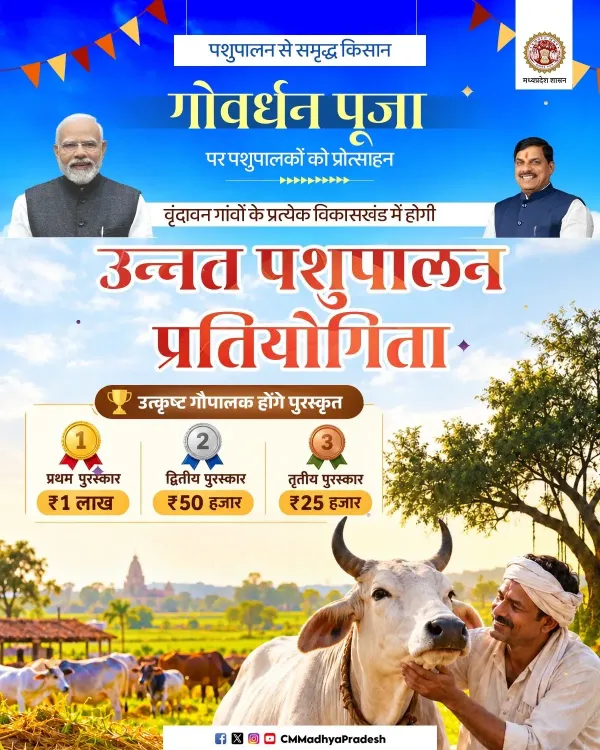
Madhya Pradesh's Chief Minister's Office has announced a state-level animal husbandry competition across every development block in Vrindavan villages, offering the best livestock farmer a ₹1 lakh cash prize to incentivise improved breeding and productivity.
Key Takeaways
The Chief Minister's Office of Madhya Pradesh announced a state-level advanced animal husbandry competition on October 13, 2026 .
The contest will be held in every development block ( vikas khand ) within Madhya Pradesh's Vrindavan villages network.
The top-performing livestock farmer in each competition will receive a prize of ₹1 lakh .
The initiative is linked to Chief Minister Dr.
Mohan Yadav and the MP Department of Animal Husbandry .
The scheme continues Madhya Pradesh's long-standing policy of using incentive-based competitions to improve livestock productivity and diversify rural incomes.
A ₹1 lakh prize now stands between Madhya Pradesh's livestock farmers and national recognition — and the state government is bringing the competition to their doorstep. The Chief Minister's Office of Madhya Pradesh announced on Tuesday, October 13, 2026, that a 'Rajya-stareey unnat pashupaalan pratiyogita' (State-Level Advanced Animal Husbandry Competition) will be held in every development block (vikas khand) falling under Vrindavan villages across the state.
One lakh reasons to raise better livestock
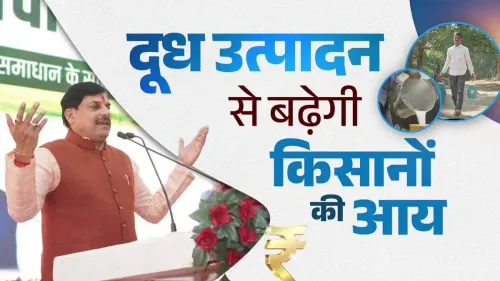
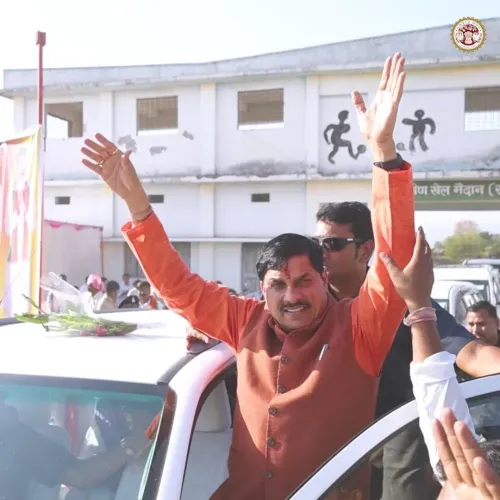
The headline incentive is sharp and deliberate: the most outstanding livestock farmer (utkrish pashupalak) in each competition will take home ₹1 lakh. That is not a token gesture — for a smallholder rural household, it represents a meaningful income supplement and, more importantly, a public validation of skill. The announcement tags Chief Minister Dr. Mohan Yadav and the Madhya Pradesh Department of Animal Husbandry, signalling direct political ownership of the initiative.
The Vrindavan villages framework
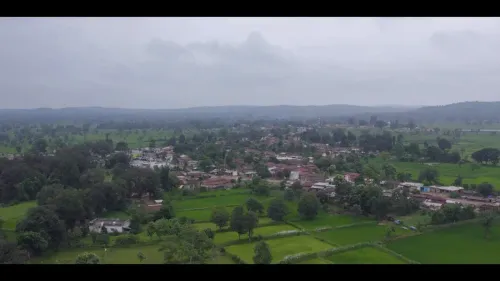
Vrindavan villages is a Madhya Pradesh initiative targeting select rural clusters for enhanced livestock and rural development activity. By anchoring the competition at the development-block level within this network, the government ensures that the contest reaches farmers in the programme's intended geography — rather than concentrating prize money in well-connected district headquarters. This block-level structure matters: it dramatically widens participation for farmers who would otherwise never travel to a state-capital event.
Animal husbandry as an income bridge
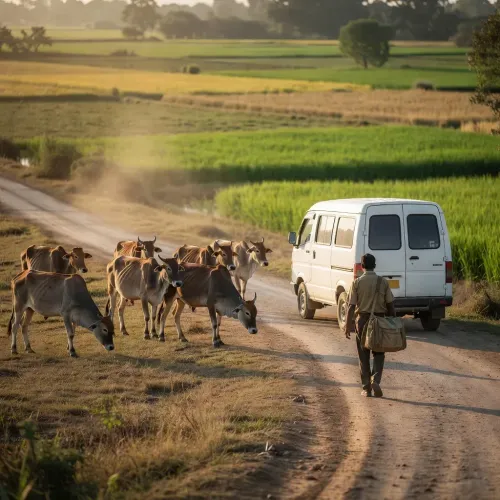
Madhya Pradesh has run livestock improvement and dairy promotion schemes since the 2010s, part of a broader Indian-state strategy to diversify rural incomes beyond crop cultivation. With large cattle populations and persistent farm-income volatility, animal husbandry offers a buffer — milk yield, wool, or draught power can sustain a household through a poor harvest. Incentive-based competitions like this one are designed to shift farmer behaviour: reward best practices in breeding and productivity, and those practices spread through peer observation. The prize money is the carrot; the competition format is the classroom.
Details on competition schedules, exact selection criteria, and the number of blocks covered are yet to be formally announced by the department.
For Madhya Pradesh's rural households, the message from Bhopal is unambiguous: raise your livestock better, and the state will come to you — with a stage, a judge, and a cheque.
Point of View
Madhya Pradesh is making a deliberate bet on bottom-up behavioural change — rewarding farmers where they live rather than where the government offices are. The ₹1 lakh prize point is politically smart: large enough to generate local buzz, modest enough to be fiscally scalable across dozens of blocks. Anchoring the scheme within the Vrindavan villages framework also signals that the state is layering its rural welfare interventions rather than launching standalone programmes. The real test will be in the execution details — transparent selection criteria and timely prize disbursement will determine whether this becomes a genuine income catalyst or another announcement cycle.
NationPress
13 Oct 2026
Frequently Asked Questions
What is the state-level animal husbandry competition announced by MP government?
The Madhya Pradesh government has announced a 'Rajya-stareey unnat pashupaalan pratiyogita' (State-Level Advanced Animal Husbandry Competition) to be held in every development block within Vrindavan villages across the state, with a ₹1 lakh prize for the best livestock farmer.
How much prize money will the winner of the MP livestock competition get?
The outstanding livestock farmer (utkrish pashupalak) in each competition will receive ₹1 lakh as prize money.
What are Vrindavan villages in Madhya Pradesh?
Vrindavan villages is a Madhya Pradesh government initiative targeting select rural clusters for enhanced livestock and rural development activities; the competition will cover every development block within this network.
Who announced the animal husbandry competition in Madhya Pradesh?
The announcement was made by the Chief Minister's Office of Madhya Pradesh, tagging Chief Minister Dr. Mohan Yadav and the MP Department of Animal Husbandry.
When will the MP animal husbandry competition be held?
The government has announced the competition but the exact schedule and selection criteria are yet to be formally released by the Madhya Pradesh Department of Animal Husbandry.